There is a profound difference between a standard bowl of rice and a professional-grade fried rice recipe that sings with the smoky essence of a seasoned wok. When you look at a truly masterpiece dish, you see individual, glistening grains of jasmine rice that have been toasted to golden-brown perfection.
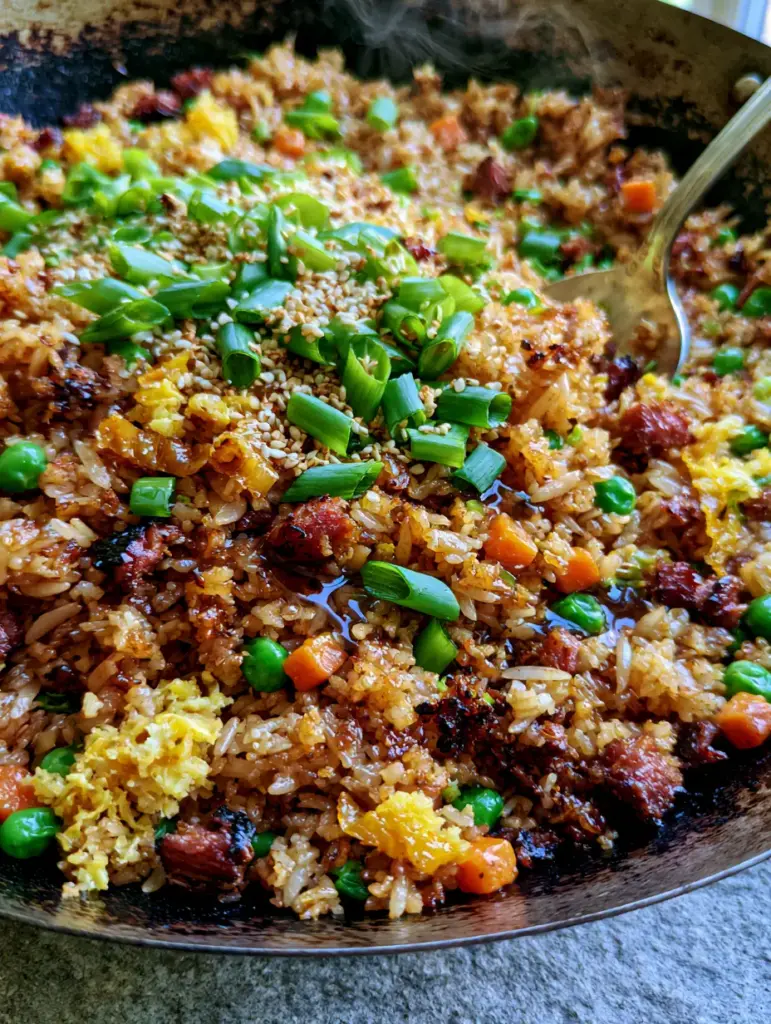
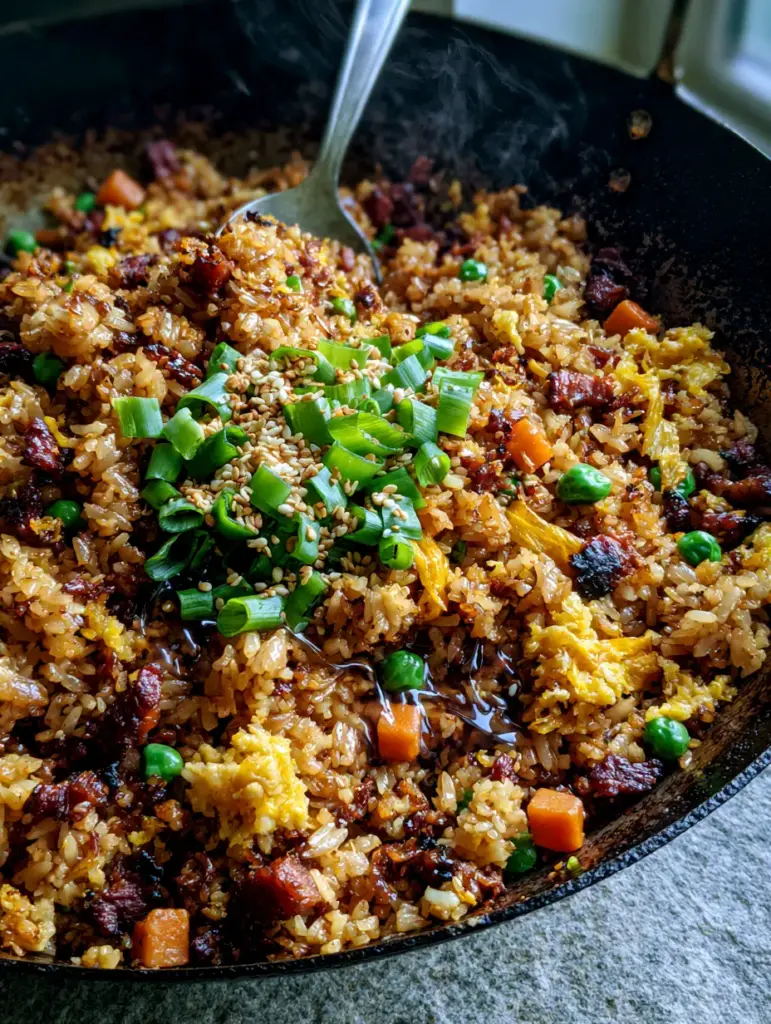
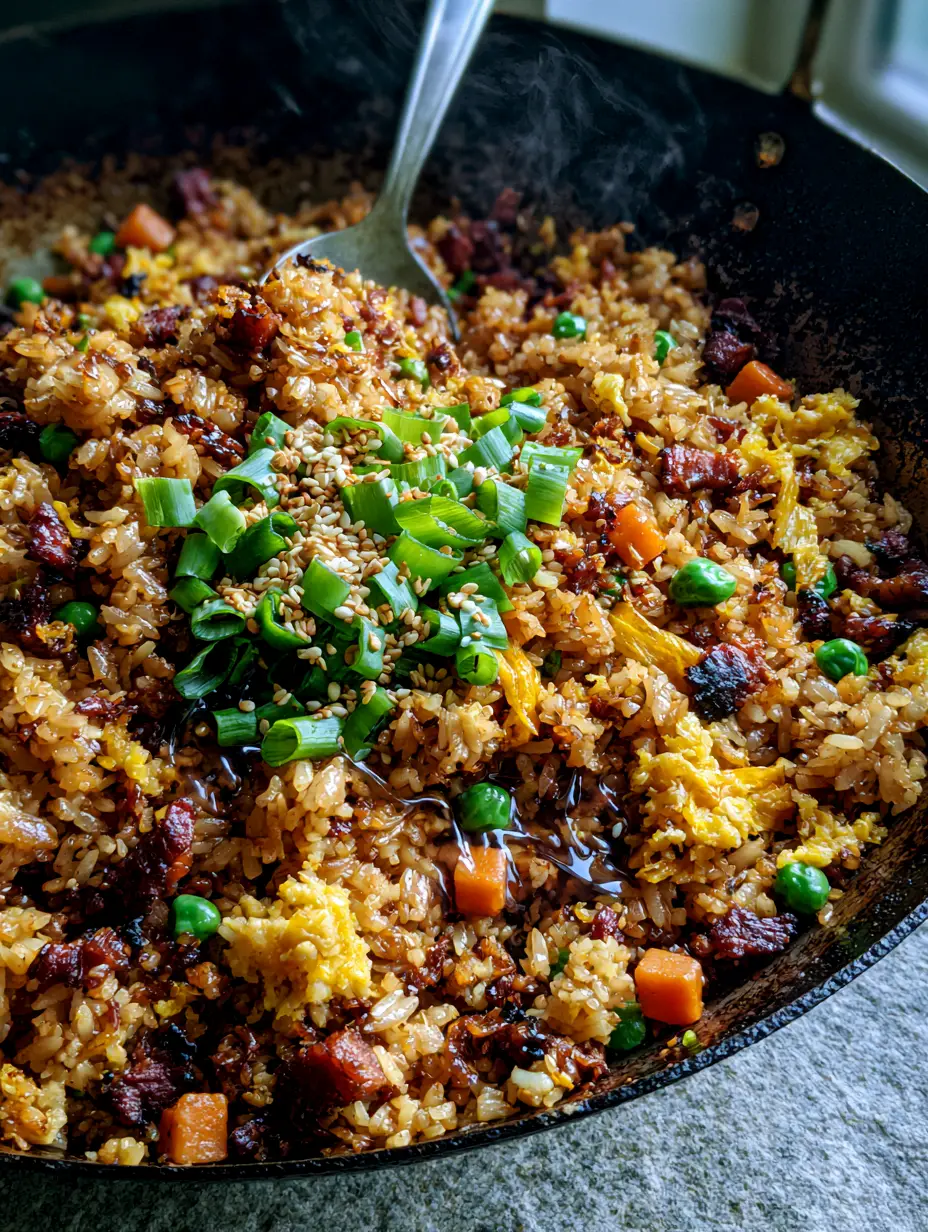
This fried rice recipe isn’t just a way to use leftovers; it is a culinary exercise in texture, temperature, and timing. We are aiming for that specific visual of charred char siu pork bits nestled against vibrant orange carrots and bright emerald green peas.
Every bite should offer a symphony of textures, from the fluffy ribbons of golden scrambled egg to the crunch of freshly sliced scallions. By following this guide, you will achieve that restaurant-quality “wok hei” aroma right in your own kitchen.
Why This Toasted Jasmine Stir-Fry Works Every Single Time
- Distinct Grain Architecture: We utilize specific drying techniques to ensure every grain of jasmine rice remains individual, toasted, and never clumped or mushy.
- Charred Protein Depth: The inclusion of savory char siu pork provides a smoky, sweet, and caramelized flavor profile that standard proteins simply cannot match.
- Visual Vibrancy: The contrast between the deep golden rice, the bright orange carrots, and the emerald green peas creates a plate that looks as good as it tastes.
- The Savory Glaze: A thin, translucent soy-based sauce coats the rice without making it soggy, maintaining that critical “macro” texture.
The Essential Pantry for Authentic Fried Rice
Long-Grain Jasmine Rice: 4 cups (600g) of cooked, chilled rice is the backbone of this fried rice recipe. Cold rice has a lower moisture content on the surface, which is essential for achieving that toasted, golden-brown exterior without steaming the grain.
Char Siu Pork: 1 cup (150g) of diced Chinese BBQ pork provides the savory-sweet punch and those iconic charred bits. If you cannot find char siu, a thick-cut smoked ham or Korean ground beef can act as a flavor-dense substitute.
Aromatic Base: 2 tbsp (30ml) of high-smoke point oil, such as peanut or vegetable oil, is required to sear the ingredients at intense heat. We also incorporate 3 cloves of minced garlic and 1 tsp of grated ginger for an invisible layer of aromatic complexity.
The Vegetable Medley: 1/2 cup (75g) of finely diced orange carrots and 1/2 cup (75g) of bright green peas offer pops of color and sweetness. These are classic components that provide a structural contrast to the soft rice and chewy pork.
Golden Egg Ribbons: 3 large eggs, beaten with a pinch of salt, create the fluffy golden ribbons. Cooking the eggs separately and folding them in at the end preserves their vibrant color and delicate texture.
Finishing Touches: Freshly sliced scallions and 1 tsp (5g) of toasted white sesame seeds provide the final aromatic and visual flourish. A thin savory soy glaze, made from soy sauce and a hint of sesame oil, ties the entire dish together.
Must-Have Tools for the Ultimate Wok Sear
To achieve the results seen in our professional photography, a seasoned black carbon steel wok is the gold standard. Carbon steel responds instantly to heat changes, allowing you to toast the rice grains rapidly without overcooking the interior.
If you do not own a wok, a large cast-iron skillet is the best alternative due to its superior heat retention. You will also need a wide metal spatula or “hoak” to toss the rice effectively, ensuring every grain makes contact with the hot surface.
Step-by-Step Mastery: Achieving Wok Hei
Preparing the Canvas and Aromatics
Start by breaking up your chilled jasmine rice with wet hands to ensure there are no large clumps. This step is vital for this fried rice recipe to ensure the heat can reach every individual grain during the toasting phase.
Heat 1 tbsp (15ml) of oil in your wok over medium-high heat until it just begins to shimmer. Pour in your beaten eggs and swirl the wok to create a thin sheet; once set, remove, slice into ribbons, and set aside.
Charring the Protein and Sautéing the Vegetables
Wipe the wok clean and add another 1 tbsp (15ml) of oil, cranking the heat to high. Add the diced char siu pork, spreading it out to maximize surface contact until you see those signature charred, crispy edges forming.
Toss in the diced carrots and peas, stir-frying for 2-3 minutes until the carrots are tender-crisp. The vibrant orange and emerald green colors should start to pop against the seasoned black surface of the wok.
The Art of Toasting the Rice
Push the ingredients to the side and add the final splash of oil if the wok looks dry. Add the rice and use your spatula to press it against the hot metal, listening for the distinct “crackling” sound of the grains toasting.
Toss the rice frequently for 4-5 minutes until you see the grains turning a beautiful golden-brown. This high-heat contact is what creates the “macro” distinctness and prevents the dish from becoming a monolithic mass.
The Final Glaze and Garnish
Drizzle your soy sauce mixture around the edges of the wok so it sizzles and caramelizes before hitting the rice. This technique ensures a thin, savory soy glaze that coats without saturating the grains.
Fold the egg ribbons and charred pork back into the mixture, tossing gently to combine. Finish with a heavy garnish of freshly sliced scallions and a dusting of toasted white sesame seeds, observing the wisps of steam rising from the heat.
Expert Tips for Fried Rice Perfection
- The “Day-Old” Rule: Always use rice that has been refrigerated for at least 12 hours. This dehydrates the grain, which is the secret to why this fried rice recipe yields such distinct, glistening results.
- High Heat is Non-Negotiable: If your stove isn’t hot enough, the rice will soak up the oil rather than searing in it. Wait for the oil to reach the smoking point before adding your rice.
- Don’t Overcrowd: If you are doubling the recipe, cook it in two batches. Overcrowding the wok drops the temperature and leads to “boiled” rice rather than fried rice.
- Visual Cues: Look for the rice grains to “jump” or dance in the pan; this indicates that the moisture has evaporated and the toasting process is successful.
Preserving the Texture: Storage and Reheating
This fried rice recipe keeps remarkably well in the refrigerator for up to 3 days when stored in an airtight container. To maintain the “toasted” texture during reheating, avoid the microwave if possible.
Instead, return the rice to a hot skillet with a teaspoon of water and a lid for 1 minute to steam, then remove the lid and fry for 2 minutes to recrisp the grains. This method preserves the structural integrity of the jasmine rice.
Perfect Pairings for a Complete Feast
While this dish is a powerhouse on its own, it serves as an incredible base for a larger spread. For a protein-heavy meal, serve it alongside General Tso’s Chicken or a beautifully glazed Teriyaki Salmon.
If you want to keep the meal light and refreshing, a crisp watermelon salad provides a sweet contrast to the salty umami of the soy glaze. For those who enjoy a bit of heat, pairing this with Buldak noodles creates a trendy and fiery “half-and-half” bowl.
Frequently Asked Questions
Yes! While a carbon steel wok is ideal for heat distribution, a large cast-iron skillet is an excellent substitute because it retains the high heat necessary to toast the rice grains effectively.
The key is high heat and patience. Let the diced char siu pork sit undisturbed in the hot wok for 30-60 seconds before tossing; this allows the sugars to caramelize and create those savory charred bits.
Jasmine is preferred for its aroma and long-grain structure which stays distinct. However, any long-grain white rice will work. Avoid short-grain or sushi rice, as they are naturally stickier and more prone to clumping.
You need an oil with a high smoke point to achieve the ‘charred’ effect. Peanut oil, vegetable oil, or grapeseed oil are perfect choices. Avoid butter or extra virgin olive oil as they will burn at the required temperatures.
Mushy fried rice is usually caused by using freshly cooked rice which has too much moisture. For best results, use jasmine rice that has been chilled in the fridge overnight to dry out the surface of the grains.
The Ultimate Toasted Jasmine Fried Rice Recipe
Fried Rice Recipe: Mastering the Art of Toasted Grains and Charred Char Siu
Ingredients
Equipment
Method
- Using slightly damp hands, break apart any clumps in the chilled jasmine rice to ensure individual grains.
- Heat 1/2 tbsp of oil in the wok. Pour in beaten eggs, cook into a thin omelet, remove, slice into golden ribbons, and set aside.
- Add 1/2 tbsp oil to the wok on high heat. Add char siu pork bits and sear until charred and crispy.
- Add carrots and peas to the wok. Stir-fry for 2 minutes until the orange and green colors are vibrant.
- Add remaining oil and the rice. Press the rice against the wok surface to toast until golden-brown and glistening.
- Drizzle soy sauce and sesame oil around the edges. Toss in egg ribbons, scallions, and sesame seeds. Serve with rising steam.
Notes
Ensure the wok is smoking hot before adding rice to prevent sticking.
Join the CrispChop Culinary Community
Mastering this fried rice recipe is a milestone for any home cook looking to elevate their weekday dinner rotation. The combination of toasted jasmine rice and charred char siu creates a sensory experience that rivals any high-end bistro.
If you enjoyed this tutorial, we would love to hear your thoughts in the comments below! Don’t forget to follow us on Pinterest for more visually stunning recipe blueprints and culinary science tips.
Sharing your recreations on social media helps our community grow, so tag us and show off those glistening golden grains! Happy cooking!