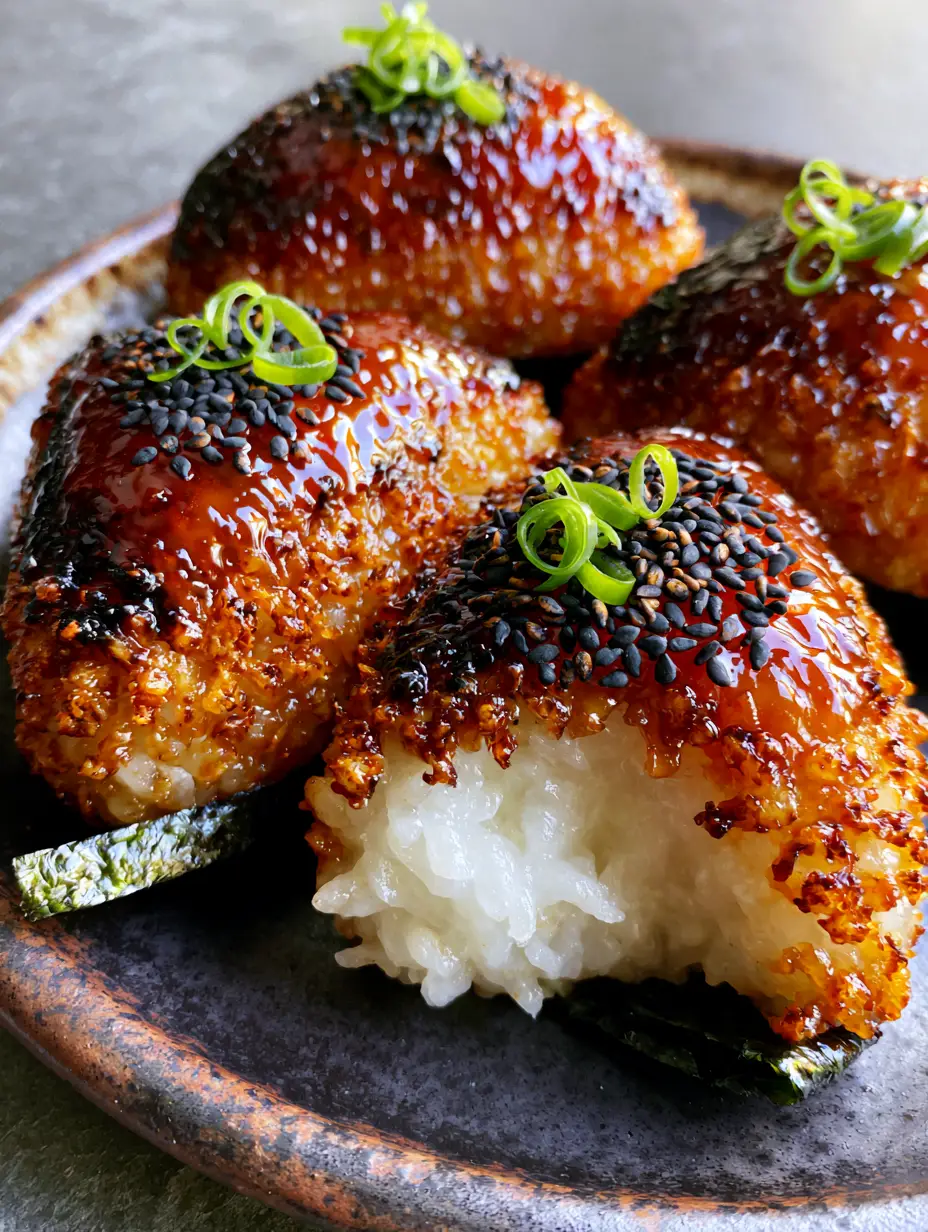
Yaki Onigiri is the soulful, crunchy cousin of the traditional Japanese rice ball. This recipe transforms humble short-grain rice into a gourmet experience featuring a glass-like amber glaze and a deep, smoky char.
There is nothing quite like the sensory contrast of biting through a shattered-glass crispy exterior into a steaming, fluffy, pure white interior. It is the ultimate comfort food that bridges the gap between a snack and a centerpiece.
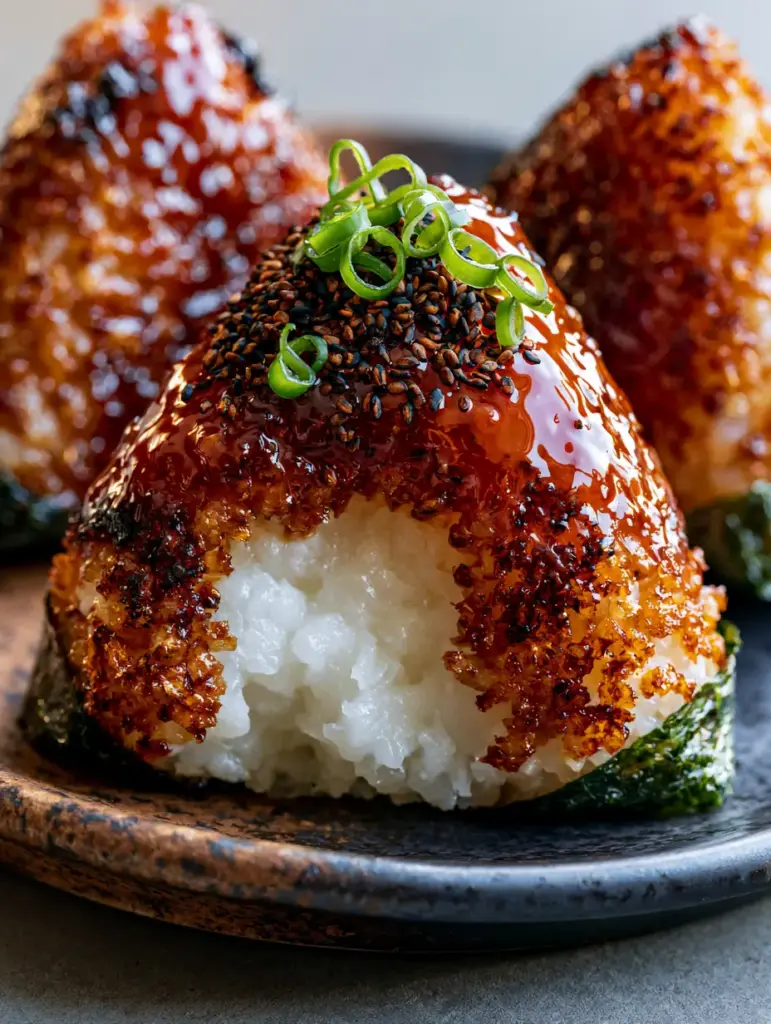
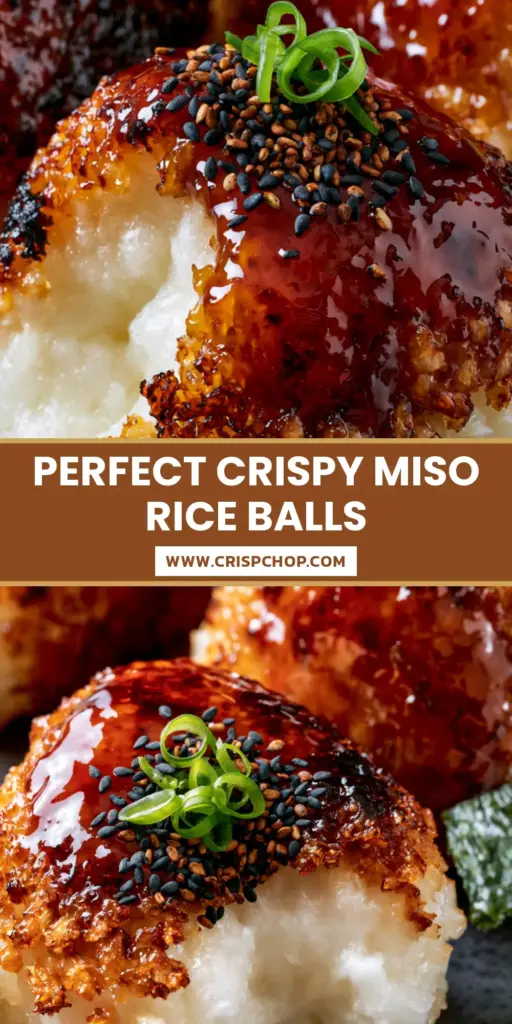
To achieve the hyper-realistic textures seen in professional Japanese kitchens, we focus on the Maillard reaction. By combining high-quality miso with the natural sugars in mirin, we create a thick, glossy finish that glistens under soft light.
Why You Will Crave This Crispy Rice Ball Experience
- Textural Perfection: Experience the satisfying crunch of golden-brown charred rice grains against a soft, moist center.
- Umami Bomb: The thick, glossy miso glaze provides a salty-sweet depth that caramelizes beautifully under heat.
- Visual Masterpiece: Garnished with precision-cut scallions and toasted black sesame seeds, these are as beautiful as they are delicious.
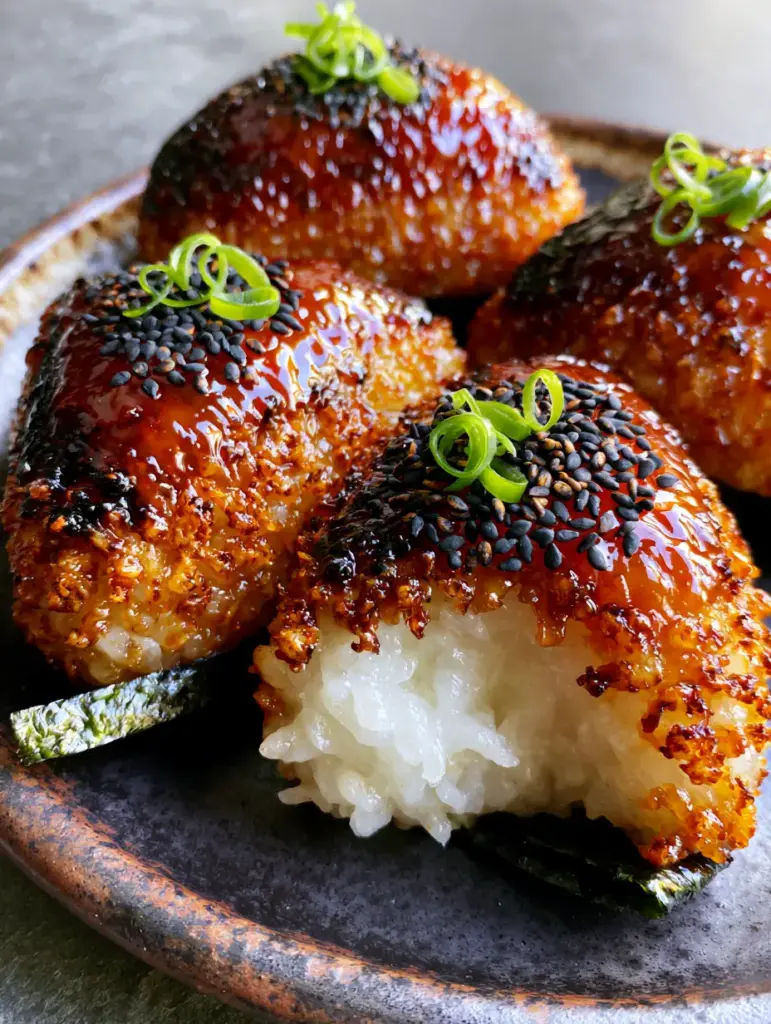
- Aromatic Steam: When split open, the trapped heat releases a fragrant vapor that signals perfect freshness.
The Anatomy of a Flawless Miso Glaze
The secret to that “glass-like” deep amber finish lies in the balance of your glaze ingredients. We use a specific ratio of fermented paste and liquid aromatics to ensure the sauce clings to the rice without soaking in too quickly.
Short-grain Japanese Rice: 2 cups (400g). Essential for its high starch content, which allows the grains to stick together firmly during the searing process. Use a variety like Koshihikari for the best results.
Red or Awase Miso Paste: 2 tbsp (35g). This provides the foundational savory funk. Red miso offers a deeper, more robust char color compared to white miso.
Mirin (Japanese Sweet Rice Wine): 1 tbsp (15ml). The sugar content in mirin is what creates that high-shine, glossy finish you see in professional food photography.
Soy Sauce: 1 tsp (5ml). This adds a hit of salt and helps darken the glaze to that perfect deep amber hue during caramelization.
Granulated Sugar: 1 tsp (4g). An extra boost of sugar ensures the “glass-like” texture forms quickly before the rice dries out.
Neutral Oil: 1 tbsp (15ml). Use avocado or grapeseed oil for the pan. A high smoke point is required to achieve those charred, caramelized edges without scorched flavors.
Toasted Black Sesame Seeds: 1 tsp (3g). These provide a visual and textural pop against the golden glaze.
Fresh Scallions: 1 stalk. Finely sliced into micro-rounds to provide a bright green contrast and a sharp, fresh bite.
Nori Seaweed: 3 strips. Crisp strips wrapped around the base provide a functional “handle” and a classic oceanic snap.
Precision Tools for Triangular Shaping
While you can shape rice balls by hand, certain tools help achieve the “precise triangle” aesthetic found in high-end izakayas. Using a dedicated mold ensures uniform density, which is critical for even searing.
A seasoned cast-iron skillet or a high-quality non-stick pan is your best friend here. These surfaces distribute heat evenly, allowing the rice grains to toast into a golden-brown crust rather than sticking and tearing.
If you enjoyed the technical process of shaping rice, you might also find the delicate texture of chewy Japanese mochi fascinating to work with in the kitchen.
Step-by-Step Mastery: Achieving the Golden Char
Preparing the Perfect Rice Foundation
Rinse your short-grain rice under cold water until the runoff is clear. This removes excess surface starch, preventing the interior from becoming a gummy mass. Cook the rice with 2 cups (480ml) of water until fluffy.
Allow the rice to cool slightly, but shape it while it is still warm. Warm rice releases starches that act as a natural glue. If the rice is too cold, your Yaki Onigiri will crumble the moment they hit the hot pan.
Shaping the Iconic Triangles
Wet your hands with lightly salted water to prevent sticking. Scoop approximately 1/2 cup (100g) of rice and compress it firmly into a thick triangle. The edges should be sharp and the faces flat to maximize surface area contact with the skillet.
Ensure there are no loose grains on the edges. These loose grains will burn quickly and ruin the “clean” look of your charred rice grains.
The Two-Stage Searing Process
Heat your oil in the skillet over medium-high heat. Place the rice balls in the pan. Do not add the glaze yet! Sear the plain rice for 3-4 minutes per side until a “crust” forms. This initial sear creates the structural integrity needed to hold the heavy glaze.
Whisk your miso, mirin, soy sauce, and sugar in a small bowl. Once the rice is crispy and golden-brown, brush a thick layer of the glaze onto the top surface. Flip and sear for 30-60 seconds until the sugar bubbles and turns into a deep amber glass.
Finishing with Precision Garnishes
Remove the rice balls from the heat. Immediately sprinkle with the toasted black sesame seeds while the glaze is still tacky. This ensures they “set” into the surface. Add the micro-sliced scallions for a burst of color.
Wrap a crisp strip of nori around the base. Serve immediately to capture the steam vapor that escapes when the first bite reveals the pure white interior.
Expert Tips for Success
- Don’t Over-Glaze: Only brush the glaze on during the final minute of cooking. The high sugar content burns easily; you want caramelization, not carbonization.
- Pressure Matters: Pack the rice balls tighter than you think. If they feel “squishy,” they will fall apart when you flip them.
- Sizzle Cues: Listen for a sharp crackling sound when the rice hits the pan. If it’s silent, your pan isn’t hot enough to create that “shattered glass” crust.
- The “Bite” Test: A perfect Yaki Onigiri should have a distinct “snap” when bitten into, followed by the soft, pillowy texture of the interior grains.
Storage, Reheating, and Freshness
Yaki Onigiri is best enjoyed immediately while the nori is crisp and the rice is steaming. However, you can store leftovers in an airtight container in the refrigerator for up to 2 days.
To reheat and reclaim the crunch, avoid the microwave. Re-toast them in a dry skillet over medium heat or use an air fryer at 350°F (175°C) for 3-5 minutes. This restores the Maillard crust without making the interior rubbery.
Elevating Your Japanese Feast
While these rice balls are a meal in themselves, they pair beautifully with other textured dishes. Serve them alongside a chicken and zucchini stir-fry for a balanced dinner.
For those who love a spicy kick, the charred notes of the rice complement the heat of spicy Korean buldak surprisingly well. If you prefer a lighter pairing, a perfectly baked rainbow trout adds a clean protein element to the plate.
Looking for a complete rice-based menu? Compare the textures here to our aromatic coconut chicken rice bowl for a study in global rice techniques.
Frequently Asked Questions
No, long-grain rice (like Jasmine or Basmati) does not have enough starch to stick together. You must use short-grain Japanese rice (sushi rice) to maintain the triangular shape.
While traditional onigiri often have fillings, Yaki Onigiri is frequently served plain to let the charred miso flavor shine. However, you can add tuna mayo, salmon, or pickled plum (umeboshi) if you prefer.
The trick is to sear the rice balls plain first to create a crust. Only brush the miso glaze on in the last 60 seconds of cooking, as the sugar and miso will burn quickly if exposed to heat for too long.
It can be! Simply ensure you are using a gluten-free certified miso paste and swap the soy sauce for tamari. The rice and other ingredients are naturally gluten-free.
This usually happens because the rice wasn’t compressed firmly enough during shaping or the rice was too cold. Always shape the rice while it is warm and use a mold or significant hand pressure.
The Ultimate Yaki Onigiri Recipe Card
Yaki Onigiri Recipe: The Ultimate Crispy Miso Grilled Rice Balls
Ingredients
Equipment
Method
- Using wet, salted hands or a mold, firmly compress warm cooked rice into 3 even triangles. Ensure the edges are sharp and surfaces are flat.
- Heat oil in a skillet over medium-high. Add rice balls and sear for 3-4 minutes per side until a golden-brown crispy crust forms.
- Whisk miso, mirin, soy sauce, and sugar. Brush a thick layer on the rice balls. Flip and sear for 30-60 seconds until the glaze is glossy and deep amber with charred edges.
- Wrap with nori, sprinkle with sesame seeds and scallions. Serve while steaming.
Notes
Do not add the glaze too early or it will burn before the rice is crispy.
Join the Crisp & Chop Community
Did your Yaki Onigiri achieve that perfect glass-like glaze? We want to see your charred masterpieces! Tag us on social media or leave a comment below with your favorite fillings.
For more visual culinary inspiration and step-by-step guides, follow us on Pinterest. Don’t forget to sign up for our newsletter to get elite recipes delivered straight to your inbox!