Za’atar Flatbread is the ultimate sensory experience, combining the earthy aroma of Middle Eastern herbs with the comforting warmth of fresh, skillet-charred dough. If you have been searching for a recipe that delivers pillowy wheat flatbread with glossy extra virgin olive oil and that iconic dark green zaatar spice blend, you are in the right place. This recipe is designed to help you recreate the authentic flavors of a traditional traditional Arabic breakfast right in your own kitchen.
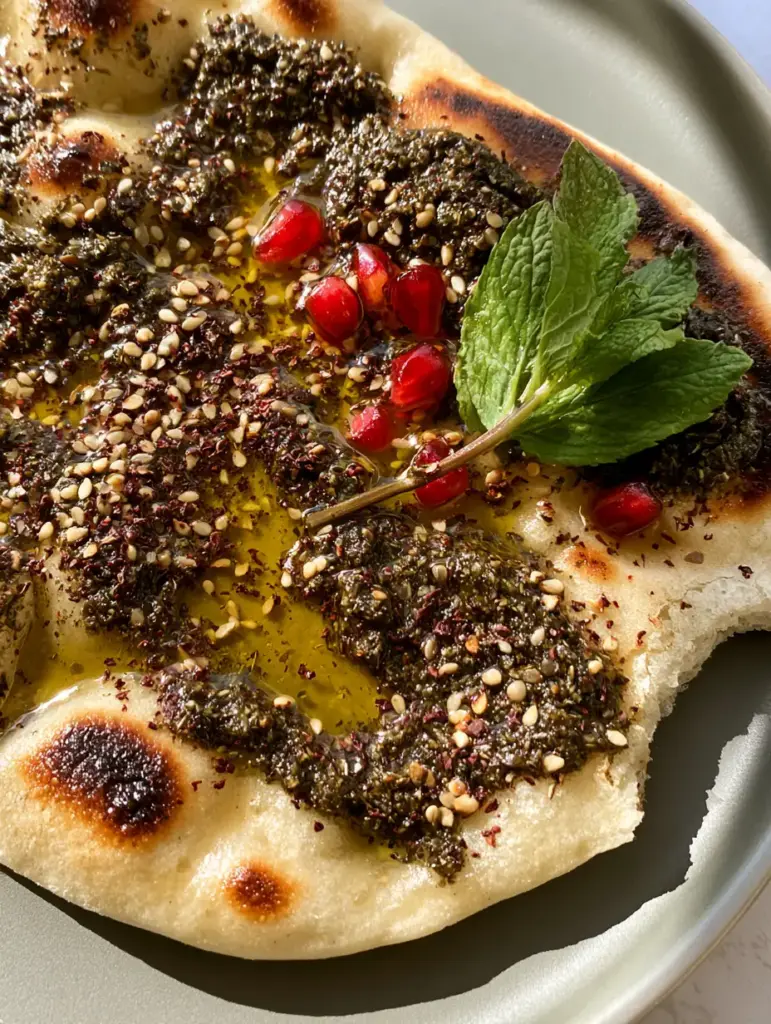
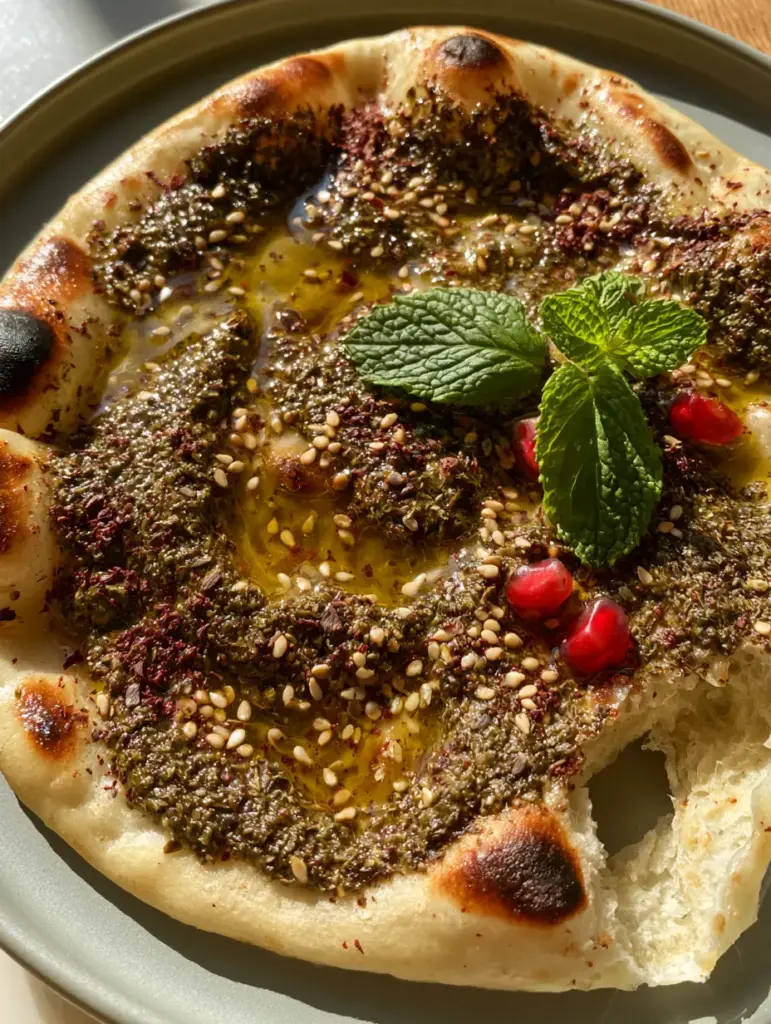
The beauty of a Za’atar Flatbread (often called Manakish) lies in the contrast of textures. Imagine biting into a warm, pillowy Lebanese flatbread that features skillet-charred bubbles and golden-brown spots, only to be met with a thick, textured paste of toasted white sesame seeds, dried purple sumac flakes, and rich oil. To finish, we add a burst of freshness with a fresh mint garnish and ruby red pomegranate arils that pop with every bite.
Why This Vibrant Herb Flatbread Works
- The Perfect Crumb: We use a high-hydration dough to ensure the bread surface is beautifully uneven with soft air bubbles.
- Aromatic Intensity: The dark forest-green zaatar herbs are bloomed in premium oil to unlock maximum flavor.
- Visual Brilliance: The addition of bright red pomegranate seeds and green mint makes this a showstopper for brunch.
- Skillet Magic: No fancy pizza oven required; a hot skillet creates those essential golden-brown charred spots.
The Secret Ingredients for Authentic Za’atar Flatbread
To achieve the forensic visual accuracy of a professional bakery, you need high-quality ingredients. Each component serves a culinary purpose to ensure your Za’atar Flatbread is both delicious and beautiful.
The Pillowy Dough Base: We use All-Purpose flour (or Bread Flour for more chew) combined with yeast and a touch of sugar. This creates the steamy interior texture seen when the bread is torn.
Premium Za’atar Blend: Look for a blend that is heavy on wild thyme and oregano. The dark green zaatar should be fragrant and fresh.
Extra Virgin Olive Oil (EVOO): This is the vehicle for the spices. It needs to be glistening, golden-hued extra virgin olive oil that pools slightly in the bread’s craters.
Textural Toppers: We add extra toasted white sesame seeds for crunch and dried purple sumac flakes for a signature citrusy tang.
Fresh Garnishes: A single sprig of fresh, vibrant green mint and scattered pomegranate seeds provide the necessary acid to cut through the rich oil.
How to Achieve Perfect Skillet Char and Pillowy Texture
1. Crafting the High-Hydration Dough
Start by whisking 1 cup (240ml) of warm water with yeast and sugar. Once foamy, mix in 2.5 cups (312g) of flour and 1 teaspoon (5g) of salt. Knead the dough until it is smooth and elastic. Cover and let it rise in a warm spot for about 60-90 minutes. You want the dough to double in size so it produces those soft air bubbles later.
2. Preparing the Glistening Za’atar Paste
In a small bowl, combine 4 tablespoons (30g) of dark forest-green zaatar with 1/4 cup (60ml) of glossy extra virgin olive oil. Stir until it forms a thick, textured paste. This paste will eventually pool slightly in the bread’s craters, creating pockets of intense flavor.
3. Shaping and Searing for Skillet-Charred Bubbles
Divide the dough into equal balls. On a lightly floured surface, roll them into circles about 1/4 inch thick. Heat a heavy-bottomed skillet over medium-high heat. Place the dough in the dry skillet. Watch closely as the pillowy wheat flatbread begins to puff up, creating skillet-charred bubbles on the bottom.
4. The Infusion Technique
Once the bottom is charred, flip the bread briefly, then flip back. While the bread is still in the pan, spread a generous spoonful of the zaatar paste over the beautifully uneven surface. The heat will help the oil soak into the soft air bubbles. Sprinkle with additional toasted ivory sesame seeds and tiny flakes of dried sumac.
5. Finishing with Freshness
Remove the bread from the heat. The bread is torn slightly at one edge to check for that perfect steam. Top with a fresh mint garnish and ruby red pomegranate arils. The contrast between the matte light-grey ceramic plate and the vibrant toppings is what makes this dish a Pinterest favorite.
Pro Bakery Secrets for Success
- Don’t Over-Flour: Keep the dough slightly tacky to ensure a soft, steamy interior texture.
- Hot Skillet is Key: You need high heat to get those golden-brown charred spots without drying out the center.
- Quality Sumac: Use dried purple sumac flakes that are bright and tart; old sumac loses its color and flavor.
- Wait to Garnish: Only add the fresh vibrant green mint and pomegranate right before serving so they don’t wilt from the heat.
What to Serve With Your Za’atar Flatbread
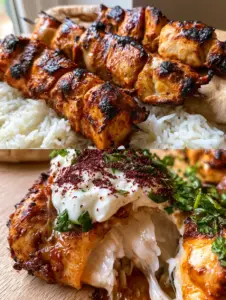
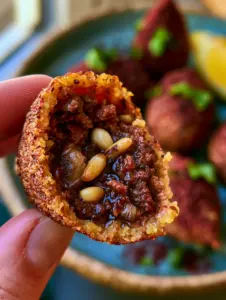
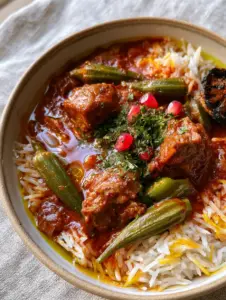
This flatbread is a versatile star. For a full Levantine spread, serve it alongside Batata Harra or a crispy Kafta Burger. If you are hosting a large dinner, it acts as the perfect vessel for scooping up Maklouba or even traditional Mansaf. For those who love variety, pair it with homemade cheese fatayer for the ultimate “Sfiha” and “Manakish” platter.
Storage, Reheating & Freezing
To Store: Keep leftover Za’atar Flatbread in an airtight bag at room temperature for up to 2 days. The extra virgin olive oil keeps the bread moist.
To Reheat: For the best results, place the flatbread back in a dry skillet for 1-2 minutes until the skillet-charred bubbles become crisp again. Avoid the microwave, as it can make the pillowy wheat chewy.
To Freeze: You can freeze the baked flatbreads (without fresh garnishes) for up to 3 months. Wrap tightly in foil and plastic wrap.
Frequently Asked Questions
Yes, you can use store-bought dough in a pinch. However, ensure it is at room temperature before rolling it thin to achieve the correct pillowy texture.
Press the pomegranate arils and fresh mint lightly into the warm zaatar paste immediately after removing the flatbread from the skillet. The oil acts as a natural glue.
Use a high-hydration dough and a very hot, dry cast iron skillet. The high heat causes the moisture in the dough to turn to steam rapidly, creating those iconic bubbles and golden-brown spots.
They are essentially the same thing! ‘Manakish’ is the traditional Arabic name for the dish, which refers to the process of ‘pressing’ or ‘indenting’ the dough with fingertips to create craters for the topping.
Za’atar can turn bitter if the spices burn. Ensure you apply the paste after the first flip or toward the end of cooking, and use a high-quality extra virgin olive oil to protect the herbs.
The Ultimate Za’atar Flatbread Recipe Card
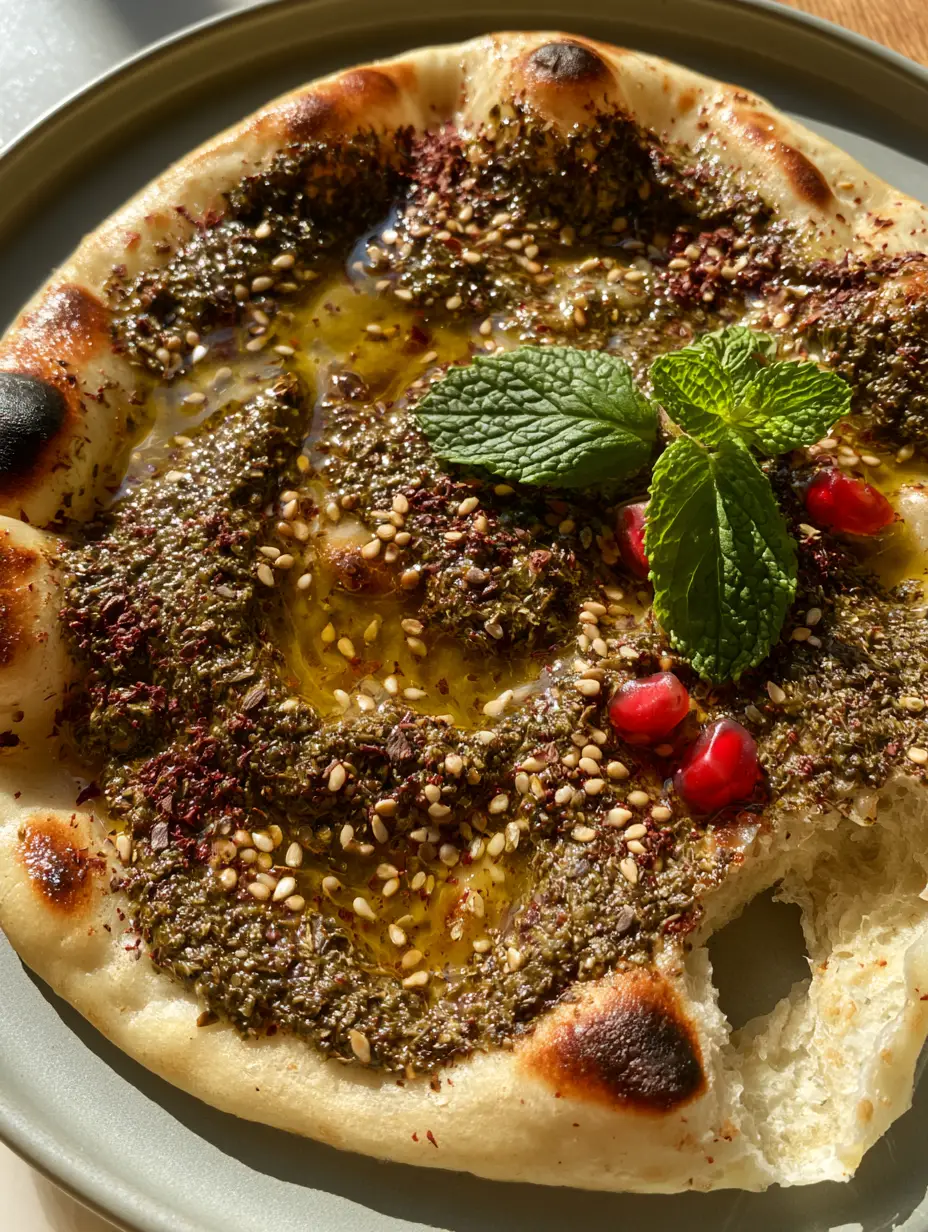
Za'atar Flatbread: Pillowy Lebanese Manakish with Sumac and Pomegranate
Ingredients
Equipment
Method
- Combine warm water, sugar, and yeast in a bowl. Let sit for 5-10 minutes until foamy.
- Add flour and salt. Knead by hand or mixer for 8 minutes until smooth. Cover and let rise for 90 minutes.
- Preheat a skillet over medium-high heat. Divide dough into 4 balls and roll into flat circles.
- Place dough in skillet. Cook until skillet-charred bubbles appear on the bottom, about 2 minutes.
- Spread the mixture of zaatar and olive oil over the surface. The oil should pool in the craters.
- Top with toasted sesame seeds, sumac flakes, fresh mint, and pomegranate arils.
Notes
If the za'atar paste is too thick, add a teaspoon more of olive oil.
Save This Recipe to Pinterest!
If you loved this Za’atar Flatbread, don’t forget to save it to your Pinterest boards! Following @crispchop for more authentic Middle Eastern inspiration helps us grow. Did you make this? Share a photo in the comments or tag us—we love seeing those skillet-charred bubbles and ruby red pomegranate arils in action! Please leave a 5-star rating in the recipe card above if you enjoyed this pillowy delight.