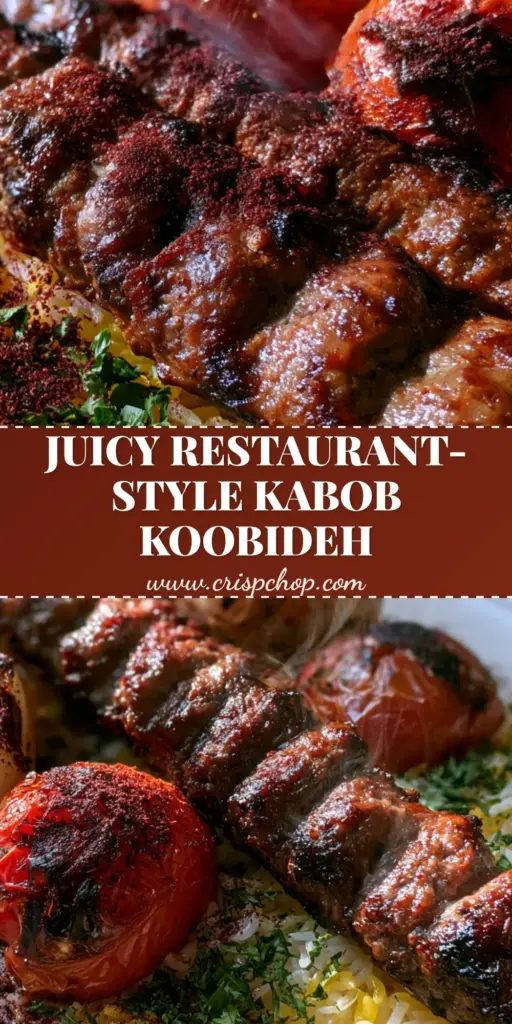
Kabob Koobideh is the undisputed crown jewel of Persian street food and family gatherings alike. This legendary dish features succulent ground beef, expertly seasoned and molded onto long, flat metal skewers, then grilled over an open flame until the edges are beautifully charred.
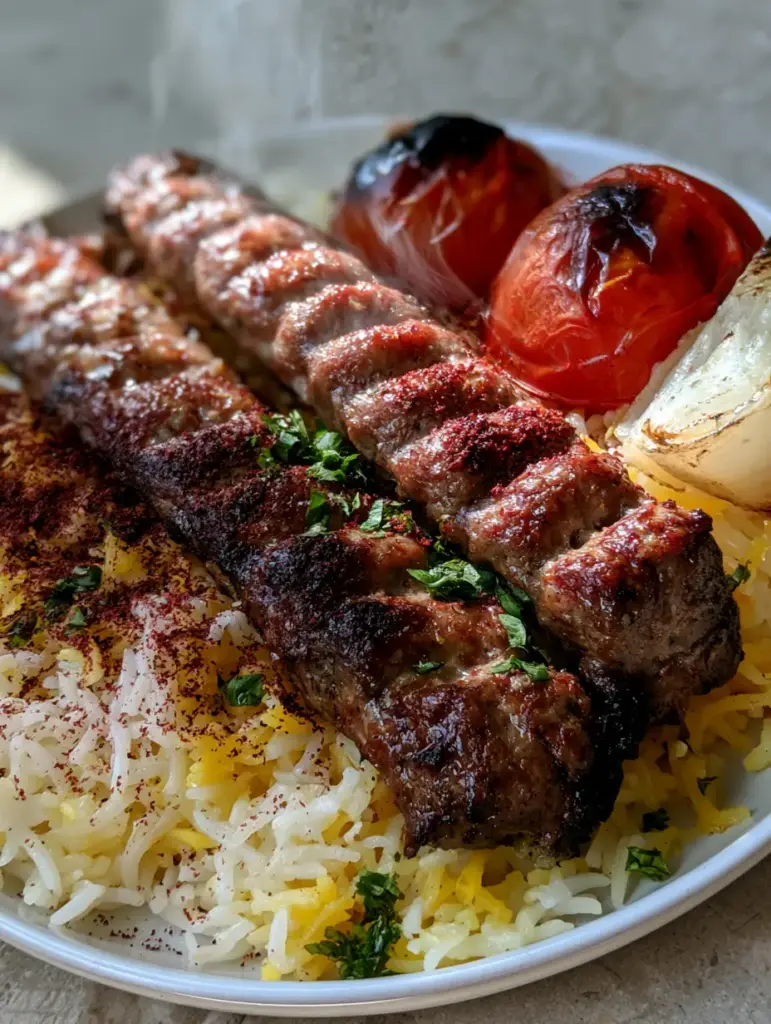
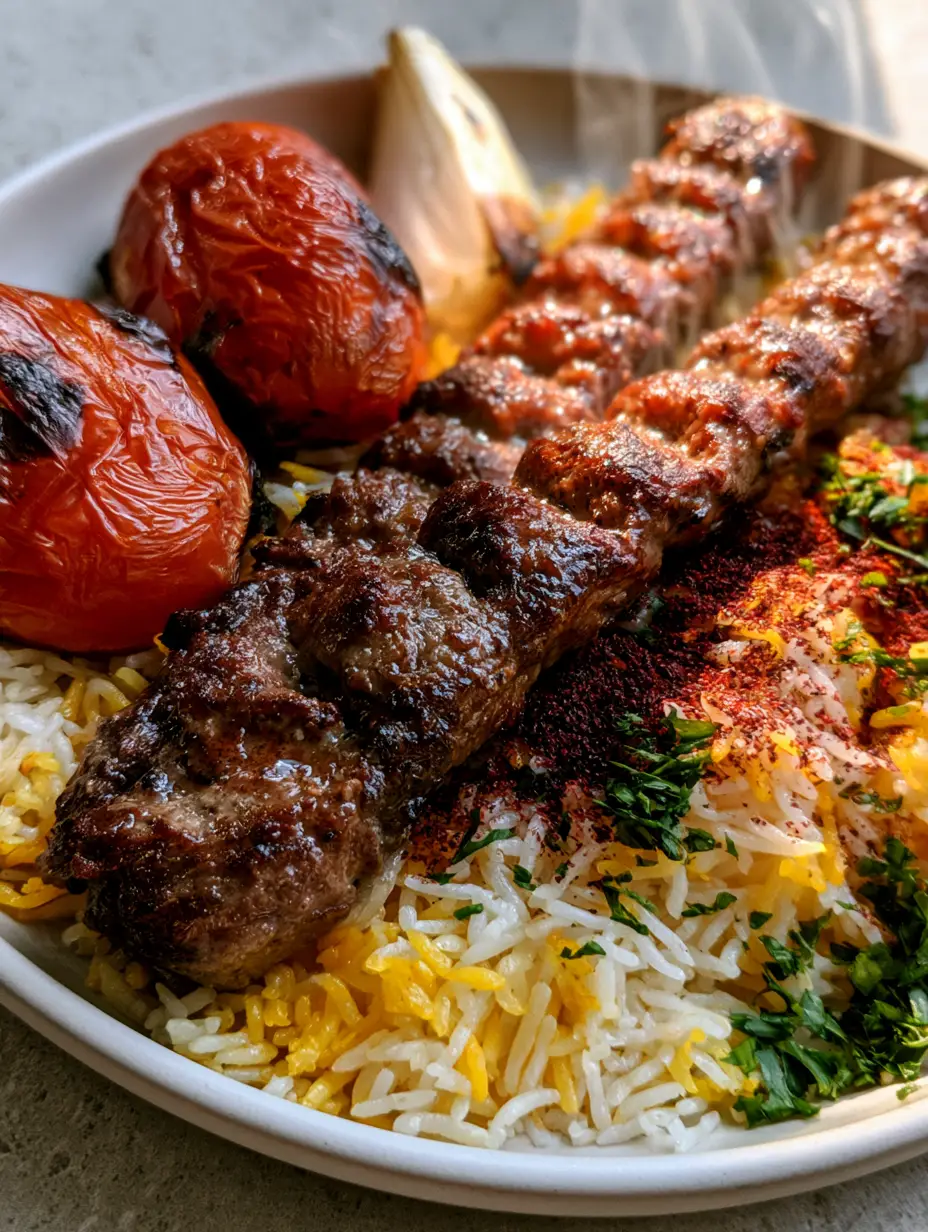
When done correctly, each bite of Kabob Koobideh releases a burst of glistening meat fat and aromatic spices. The visual of these long skewers resting on a bed of fluffy saffron-infused basmati rice, accompanied by steam wisps and blistered tomatoes, is enough to entice any food lover.
In this guide, we will break down the culinary forensics of achieving those signature finger-pressed ripples and the perfect meat-to-fat ratio. Whether you are a seasoned griller or a kitchen novice, you are about to master the art of the Persian grill.
The Unmistakable Allure of Perfectly Grilled Koobideh
- Signature Texture: The deep brown charred edges provide a smoky contrast to the tender, juicy interior of the meat.
- Visual Mastery: Learn to recreate the traditional finger-press indentations that define the look of authentic Kabob Koobideh.
- Aromatic Excellence: The combination of dark red sumac and saffron-stained rice creates a sensory experience that is both royal and rustic.
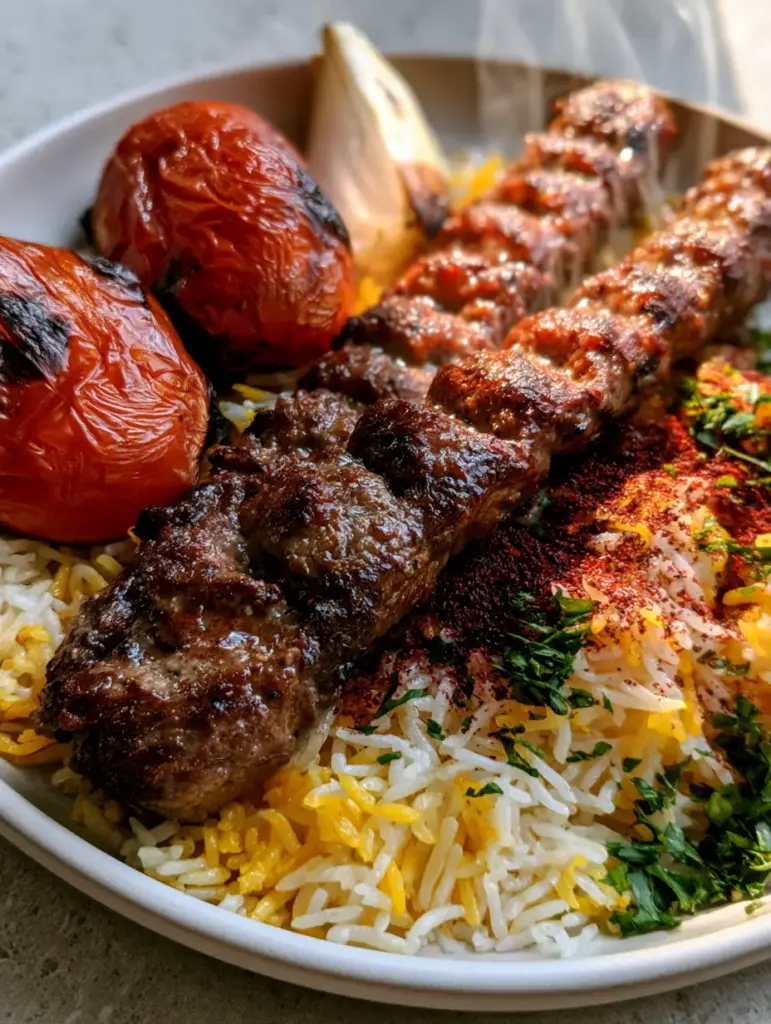
- Glistening Juices: Using the correct fat percentage ensures your skewers are never dry and always feature that mouthwatering sheen.
The Secret Science of Your Koobideh Ingredients
To achieve the result seen in professional Persian kitchens, we must look beyond just the meat. Every ingredient in this Kabob Koobideh recipe serves a structural or flavor-enhancing purpose.
80/20 Ground Beef (900g / 2 lbs): You need a higher fat content to ensure the meat stays on the skewer and remains moist under high heat. The fat acts as the “glue” and provides the glistening finish seen in our visual blueprint.
Grated Yellow Onions (2 large): Onions provide moisture and sweetness, but they must be processed correctly. You will need to squeeze every drop of juice out to prevent the meat mixture from becoming too watery and falling off the skewers.
Ground Sumac (2 tbsp / 12g): This dark red spice provides a necessary acidic tang that cuts through the richness of the beef fat. It is both an ingredient in the meat and a final dusting over the finished plate.
Basmati Rice (3 cups / 540g): Long-grain basmati is essential for that fluffy, individual-grain texture. We will parboil and then steam it to achieve the perfect bed for our skewers.
Saffron Threads (1/2 tsp): Bloomed in a small amount of warm water, saffron provides the vibrant yellow staining for the rice and a floral aroma that defines Persian cuisine.
Whole Red Tomatoes and White Onion: These are not just garnishes; they are grilled until blistered and charred to provide a jammy, smoky side that complements the savory meat.
Fine Sea Salt and Black Pepper: Critical for seasoning; the salt also helps denature the meat proteins, allowing them to bind together more effectively during the kneading process.
Essential Tools for the Persian Grill Experience
Achieving the authentic look of Kabob Koobideh requires specific equipment that differs from your standard backyard BBQ setup.
You absolutely must use Wide Flat Metal Skewers. Round skewers will cause the meat to spin and eventually fall into the coals; the flat surface provides the “shelf” the meat needs to grip.
A high-heat charcoal grill is preferred for that authentic smoky char, though a gas grill with a heavy-duty griddle can work in a pinch. You will also need a fine-mesh grater or food processor for the onions and a clean kitchen towel to squeeze out the onion juice.
Step-by-Step Guide to Mastering Kabob Koobideh
Preparing the Meat Matrix
Start by grating your onions into a fine pulp. Place the pulp into a clean kitchen towel and squeeze with all your might until no more liquid emerges; the remaining “onion sawdust” is what goes into the beef.
Combine the beef, squeezed onions, 1 tablespoon of sumac, salt, and pepper in a large bowl. Knead the mixture by hand for at least 10 minutes, or until the meat becomes “sticky” and changes color slightly—this is the protein bonding that prevents it from falling off the skewer.
The Art of the Skewer and Finger-Pressing
Divide the meat into equal-sized balls (roughly 150g each). Wet your hands with cold water to prevent sticking, then mold the meat around the flat skewer, spreading it evenly along the length.
Now, create the signature look: use your thumb and forefinger to pinch the meat at 1-inch intervals. This creates the traditional ripples or “indentations” that allow the heat to penetrate evenly and give the Kabob Koobideh its iconic silhouette.
Grilling for Char and Glisten
Prepare your grill for high, direct heat. Place the skewers—and your whole tomatoes and onion wedges—directly over the flames. Do not walk away; the fat will begin to render and drip, creating small flare-ups that contribute to the charred edges.
Turn the skewers every 30 seconds for the first 2 minutes to “set” the meat on the metal. Continue grilling until the meat is browned with deep char marks and the tomatoes are blistered and soft.
Fluffing the Saffron Rice
While the meat rests for 2-3 minutes, prepare your rice. Take a small portion of your cooked white basmati rice and fold it into your bloomed saffron water until it turns a brilliant yellow. Layer this over the white rice to create a beautiful contrast.
Expert Tips for Koobideh Success
- Temperature Control: Ensure your meat mixture is very cold when you put it on the skewers; warm fat is slippery and will cause the kabobs to slide off.
- The “Sticky” Test: If your meat doesn’t feel tacky or sticky after kneading, keep going. This “paste” consistency is vital for structural integrity.
- The Resting Period: Let the meat rest on the skewers for 10 minutes in the fridge before grilling to further set the proteins.
- Don’t Overcrowd: Leave space between the skewers on the grill to allow the “steam wisps” to escape, ensuring a sear rather than a steam.
What to Serve with Your Persian Feast
A plate of Kabob Koobideh is best enjoyed with traditional accompaniments that balance the richness of the meat. A side of creamy mast-o-khiar (cucumber yogurt dip) is the most common pairing, providing a cool contrast to the hot grill marks.
For those looking to expand their Persian repertoire, consider serving this alongside saffron chicken joojeh kebabs for a mixed grill platter. If you have leftovers, the meat is incredible tucked into flatbread, much like a gourmet steak sandwich but with much more aromatic complexity.
Finally, a generous scatter of finely chopped fresh green parsley and an extra dusting of sumac adds the final pop of color and freshness that mirrors our visual blueprint perfectly.
Frequently Asked Questions
While you can bake them on a broiler rack, you will lose the signature smoky char and ‘glistening’ texture provided by an open flame grill.
Yes, flat metal skewers are essential. Round skewers do not provide enough surface area to grip the ground meat, causing it to spin or fall.
Sumac has a bright, citrusy, and slightly astringent flavor. It acts similarly to lemon juice, cutting through the richness of the grilled beef.
An 80/20 lean-to-fat ratio is ideal. The fat provides the moisture and ‘glue’ needed to keep the meat on the flat metal skewer.
This usually happens if the onion juice wasn’t fully squeezed out or the meat wasn’t kneaded long enough to develop the necessary protein ‘tackiness’.
Authentic Kabob Koobideh Recipe Card
Kabob Koobideh: The Ultimate Guide to Authentic Persian Ground Beef Skewers
Ingredients
Equipment
Method
- Grate onions and use a kitchen towel to squeeze out every drop of juice until only dry pulp remains.
- Combine beef, onion pulp, 1 tbsp sumac, salt, and pepper. Knead for 10 minutes until the mixture is tacky and sticky.
- Wet hands and mold meat balls onto flat skewers. Press with thumb and forefinger to create 1-inch ripples along the length.
- Place skewers and vegetables on high heat. Turn meat every 30 seconds initially to set the proteins.
- Cook until the meat features deep brown charred edges and glistening juices, and tomatoes are blistered.
Notes
Squeeze onions thoroughly to prevent meat from falling off.
The Final Sizzle: Bring the Taste of Tehran Home
Mastering Kabob Koobideh is a rite of passage for any home cook interested in the art of the grill. The combination of charred, juicy beef and aromatic saffron rice creates a meal that is as visually stunning as it is delicious.
If you enjoyed this deep dive into Persian grilling, please leave a comment below and let us know how your finger-pressed ripples turned out! Don’t forget to share your creations and follow us on Pinterest for more culinary inspiration.