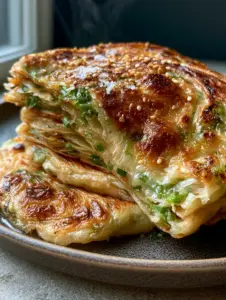
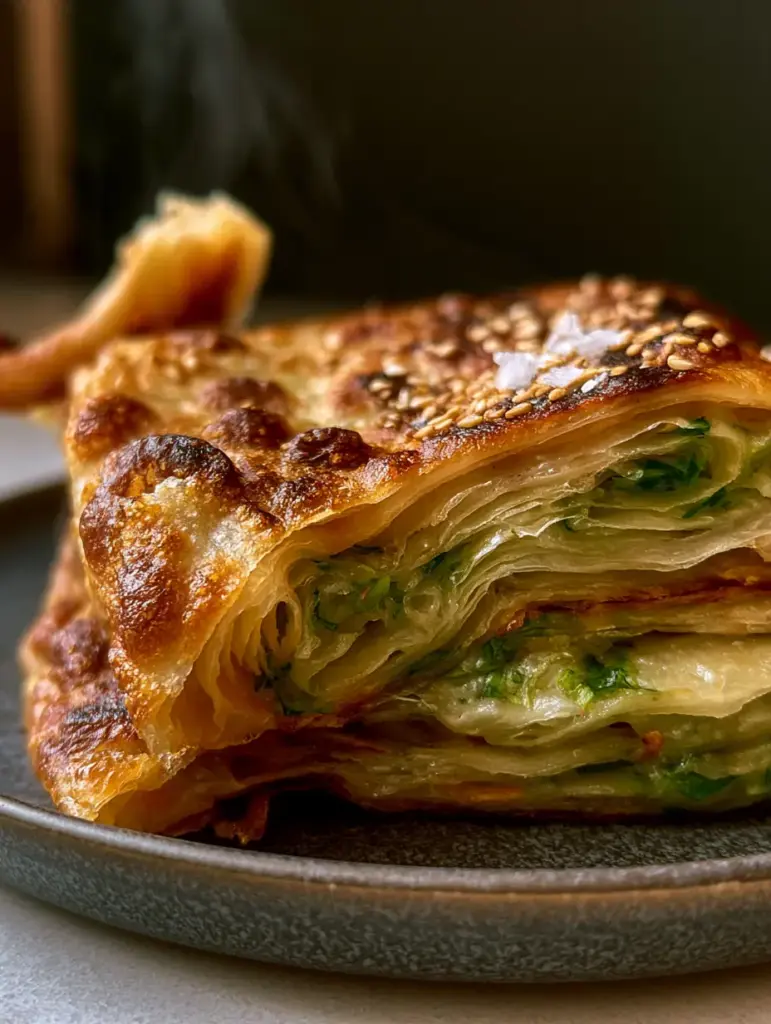
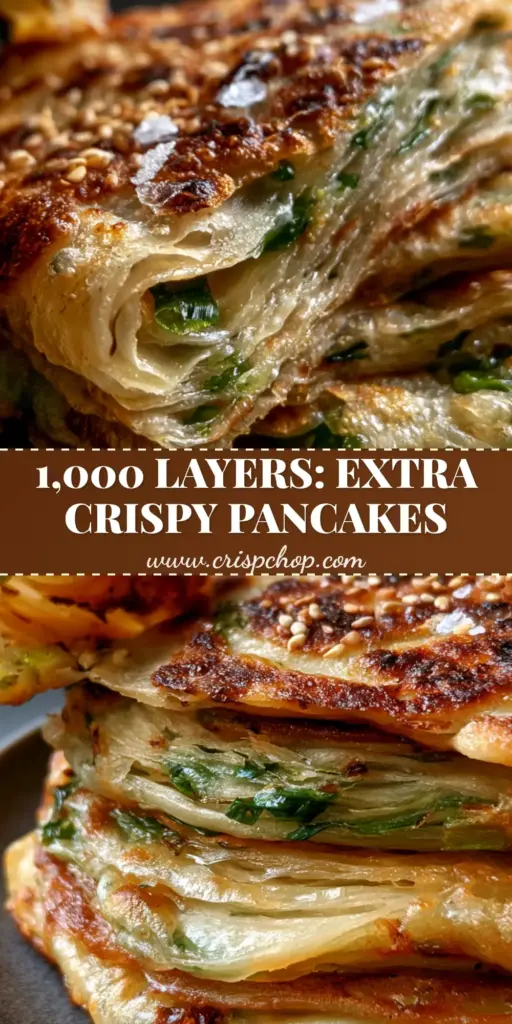
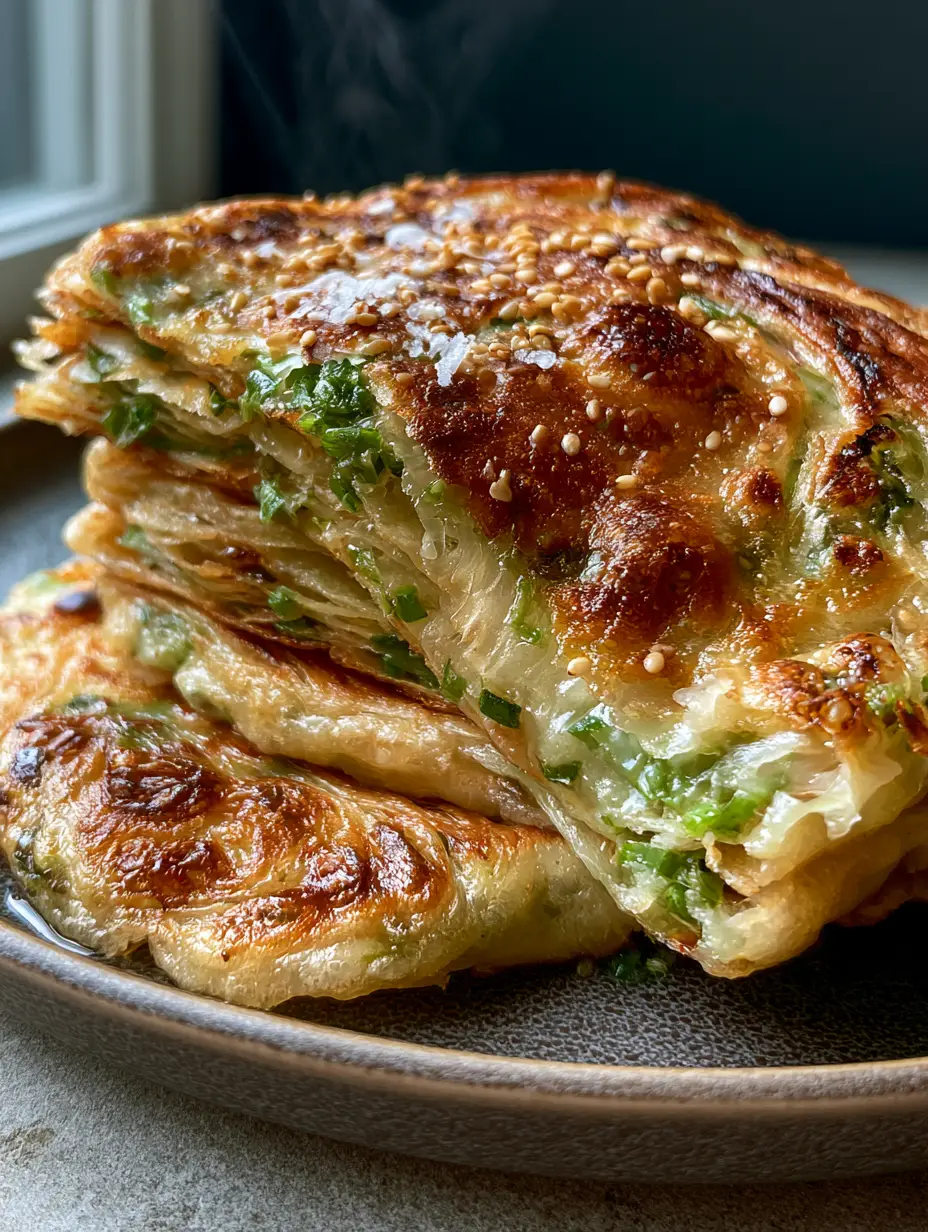
Scallion pancakes are the ultimate test of texture, and when done right, they are a sensory masterpiece. Imagine a stack of golden-brown discs, torn open to reveal hundreds of paper-thin, translucent flaky layers that shatter like glass when you bite into them. These aren’t just flatbreads; they are a labor of love, utilizing a specific lamination technique that traps bright green, finely chopped scallions between sheets of delicate wheat dough. Whether you are a fan of traditional street food or looking to upgrade your appetizer game, this recipe delivers a deep golden-brown charred crust with visible crispy bubbles that pop with every mouthful.
Why You Will Crave These Laminated Scallion Pancakes
- Shattered-Glass Texture: The exterior features crispy bubbles and a charred crust that provides a satisfying crunch.
- Translucent Lamination: Using an oil-paste method creates paper-thin layers that are visible when the pancake is torn open.
- Aromatic Depth: The combination of toasted sesame oil and fresh scallions creates an irresistible fragrance that fills your kitchen.
- Perfectly Seasoned: A final dusting of toasted white sesame seeds and flaky sea salt elevates the flavor profile to restaurant-quality.
If you enjoy the crispy nature of these pancakes, you might also want to explore our rice paper scallion pancakes for a gluten-free alternative that uses a completely different technique. While I often find myself dreaming of French comfort food, the distinct, savory pull of a Chinese scallion pancake is unmatched when you need a hearty, oily, and salty snack.
Essential Ingredients for the Ultimate Scallion Pancake
To achieve that specific visual recipe blueprint, every ingredient serves a functional culinary purpose. We aren’t just mixing flour and water; we are engineering a texture that allows for visible steam to rise from the center once served.
The Foundations of the Dough
All-Purpose Flour: 3 cups (375g). This provides the necessary gluten structure. We use a hot water dough method to partially denature the proteins, resulting in a dough that is both pliable and soft.
Boiling Water: 1 cup (240ml). Boiling water is the secret to a tender interior. It allows the laminated wheat dough to remain soft even after the exterior has been fried to a deep golden-brown.
Cold Water: 1/4 cup (60ml). This helps stabilize the dough temperature after the initial hot water mix, making it easier to handle.
The Lamination “Roux” (Oil Paste)
Toasted Sesame Oil: 4 tablespoons (60ml). This is the aromatic heartbeat of the recipe. It separates the layers so they don’t fuse back together during the rolling process.
All-Purpose Flour: 3 tablespoons (25g). Mixed with the oil, this creates a paste that ensures the paper-thin layers remain distinct.
Flaky Sea Salt: 1 teaspoon (5g). This is added to the paste to season the pancake from the inside out.
The Aromatics and Finish
Fresh Scallions: 2 cups (100g), very finely chopped. Use both the white and green parts for a balance of sharp and sweet onion flavor. These will be embedded between the laminations.
Vegetable Oil: For frying. You need a high-smoke point oil to achieve those shattered-glass crispy bubbles without burning the dough.
Toasted White Sesame Seeds: 1 tablespoon (10g). These add a nutty crunch and a beautiful visual contrast against the golden-brown charred crust.
Mastering the Lamination: Step-by-Step Instructions
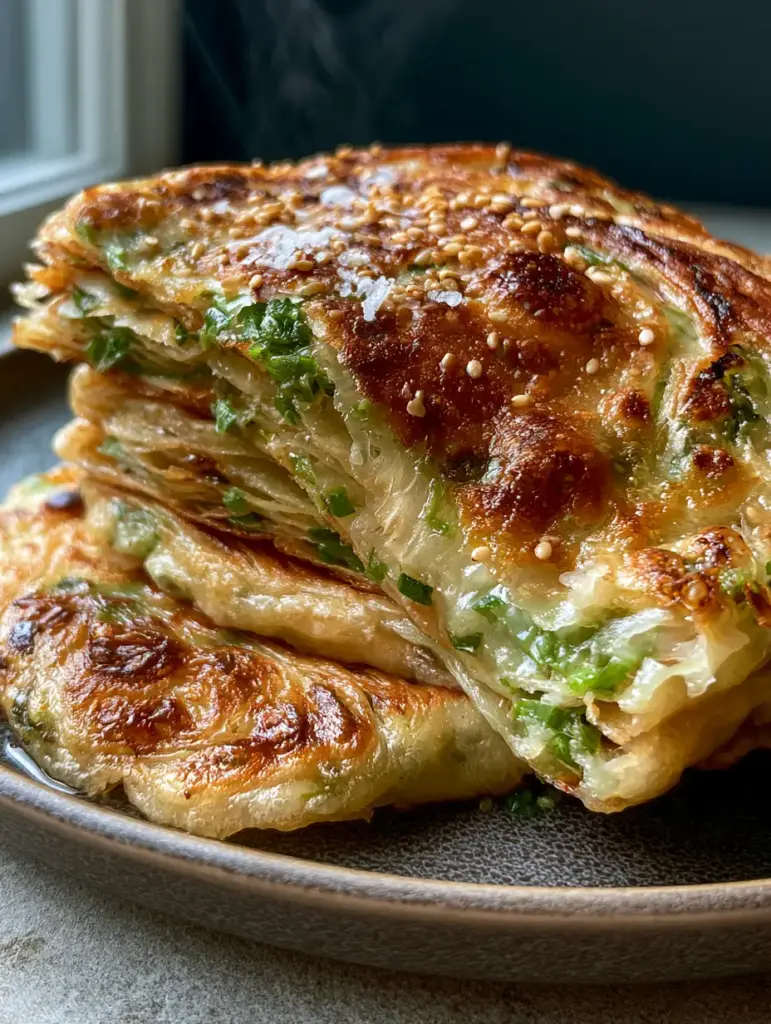
Creating Scallion pancakes is a process of folding and rolling. Follow these steps closely to ensure your final product matches the Midjourney prompt visual of a stacked, torn-open pancake with steam rising.
Step 1: Preparing the Hot Water Dough
Place your flour in a large heat-proof bowl. Slowly pour in the boiling water while stirring constantly with chopsticks or a fork. The flour will look shaggy and clumpy.
Add the cold water and begin kneading by hand. Knead for about 5-8 minutes until the dough is smooth and elastic. Cover with a damp cloth and let it rest for 30 minutes. Resting is mandatory; it allows the gluten to relax so you can roll the dough thin enough to become translucent.
Step 2: Creating the Layering Paste
In a small bowl, whisk together the toasted sesame oil, 3 tablespoons of flour, and a pinch of salt. This creates a thin roux. This paste is what creates the hundreds of paper-thin layers by preventing the dough from sticking to itself during the second roll.
Step 3: The Rolling and Filling Technique
Divide the rested dough into 4 equal portions. Work with one piece at a time, keeping the others covered. Roll the dough out on a lightly floured surface until it is a large, very thin rectangle. It should be almost translucent.
Brush a thin layer of the sesame oil paste across the entire surface. Sprinkle a generous handful of finely chopped fresh scallions over the paste. Press them down slightly so they stick.
Step 4: The “Snail” Coil Lamination
Starting from the long edge, roll the dough up tightly into a long cigar shape. Once you have a long rope, twist the rope slightly to create more tension. Now, roll the rope into a spiral shape, similar to a snail shell.
Tuck the end underneath and let the coil rest for another 15 minutes. This second rest is the “pro tip” for Scallion pancakes—it prevents the dough from snapping back when you roll it into its final pancake shape.
Step 5: Frying for Shattered-Glass Bubbles
Gently press the snail coil down with your palm, then roll it out into a circle about 1/4 inch (6mm) thick. You should see the bright green scallions peeking through the thin layers of dough.
Heat 3 tablespoons of vegetable oil in a heavy-bottomed skillet or cast iron pan over medium-high heat. Carefully place the pancake in the pan. Press down with a spatula to ensure even contact. Fry for 2-3 minutes per side until you see a deep golden-brown charred crust and those iconic crispy bubbles.
Expert Tips for Success
- The Fluff Factor: After frying, place the pancake on a cutting board and “scrunch” it from the sides toward the center using two spatulas. This releases the visible steam and separates the layers for that perfect torn-open look.
- Temperature Control: If the oil is too cold, the pancake will be greasy. If it’s too hot, the scallions will burn before the dough cooks through. Aim for a shimmering oil surface.
- Don’t Skimp on Oil: Authentic Scallion pancakes are essentially shallow-fried. The oil is what creates the “shattered-glass” texture.
- Serving Suggestion: Pair these with a zesty Turkish sumac onion salad to cut through the richness of the fried dough.
Storage, Reheating & Freezing
Scallion pancakes are best served immediately while the steam is still rising. However, if you have leftovers, wrap them tightly in foil and store them in the refrigerator for up to 3 days. To reheat, avoid the microwave! Place them back in a dry skillet over medium heat until the charred crust regains its crunch.
To freeze, place pieces of parchment paper between uncooked, rolled-out pancakes and store them in a freezer bag. You can fry them directly from frozen—just add a few extra minutes to the cooking time.
What to Serve With This
These savory pancakes are incredibly versatile. While they are often served with a soy-ginger dipping sauce, they also make an excellent side for Jamaican cabbage or even a light watermelon smoothie bowl if you’re doing a fusion-style brunch. If you are exploring global flavors, consider how these savory notes might complement Turkish onion salad.
Frequently Asked Questions
Yes! You can store the dough in the refrigerator for up to 24 hours. Just make sure it comes to room temperature before rolling, or it will be too stiff to laminate properly.
Yes. Boiling water partially cooks the flour (denaturing the gluten), which results in a softer, more tender interior that contrasts perfectly with the crispy fried exterior.
Use a neutral oil with a high smoke point, such as vegetable, canola, or grapeseed oil. Avoid using toasted sesame oil for the actual frying, as it has a low smoke point and will turn bitter.
Toughness usually comes from overworking the dough or not letting it rest long enough. The rest periods allow gluten to relax, which is essential for rolling the dough thin enough to create flaky layers.
The Ultimate Crispy Scallion Pancake Recipe
Scallion pancakes: The Ultimate Crispy, Flaky, Laminated Guide
Ingredients
Equipment
Method
- Combine flour with boiling water, stirring constantly. Add cold water and knead for 5-8 minutes until smooth.
- Cover the dough and let it rest for 30 minutes to relax the gluten.
- Roll a portion of dough into a thin rectangle. Spread sesame oil paste and sprinkle with scallions.
- Roll into a tight log, then twist into a snail-shaped coil. Let rest for 15 minutes before rolling flat.
- Fry in vegetable oil over medium-high heat until deep golden-brown with crispy bubbles.
- Scrunch to release steam, garnish with sesame seeds and flaky salt.
Notes
Use a high-heat oil like vegetable or canola to get the shattered-glass crust.
Join the CrispChop Community!
Did your Scallion pancakes achieve those paper-thin layers? We want to see your results! Save this recipe to your Pinterest boards so you never lose the secret to the perfect lamination. Follow @crispchop for more high-crunch recipes. If you made this, please drop a photo in the comments below and leave us a 5-star rating—it helps our community grow!