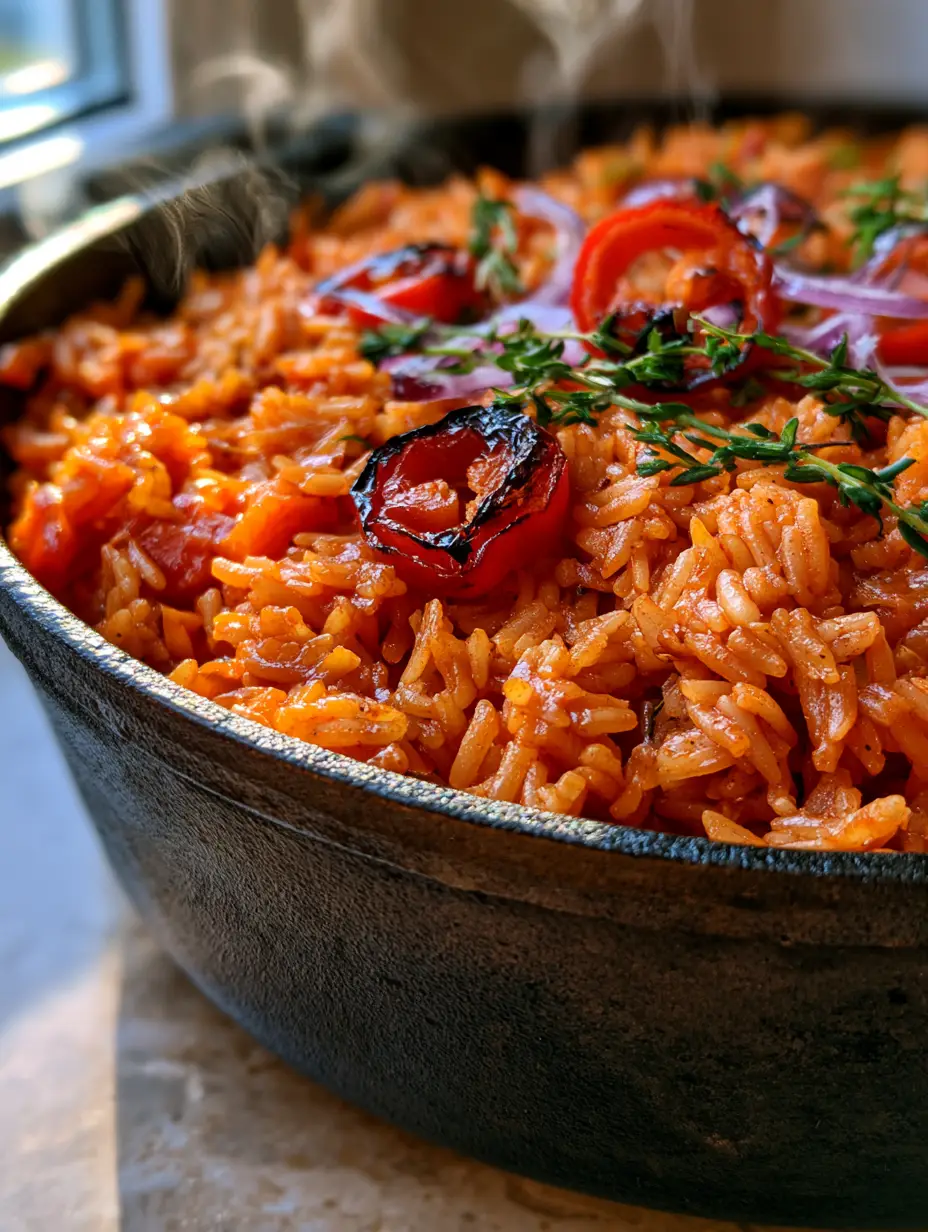
There is nothing quite like the sight of a steaming pot of vegan jollof rice, its grains glistening with a vibrant orange-red hue and each kernel standing perfectly distinct. When you lift the lid of a heavy cast iron pot, the first thing that hits you is a fragrant cloud of steam, carrying the scents of earthy thyme, sweet bell peppers, and the unmistakable fruity heat of scotch bonnets.
This recipe isn’t just a meat-free alternative; it is a celebration of West African culinary science, designed to replicate the deep umami and “party rice” smokiness that defines the world’s most debated rice dish. Whether you are a fan of Nigerian Jollof rice or prefer the variations found in Ghanaian Jollof rice, this vegan adaptation focuses on the intricate texture of the grains and a concentrated tomato-pepper reduction that coats every millimeter of rice.
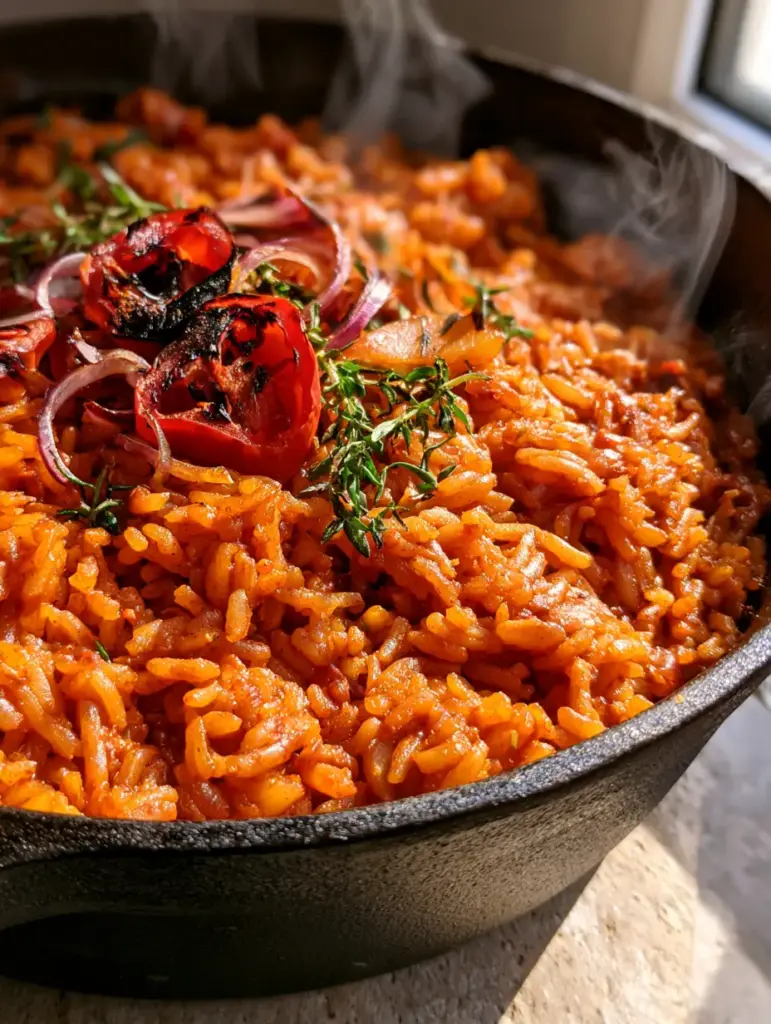
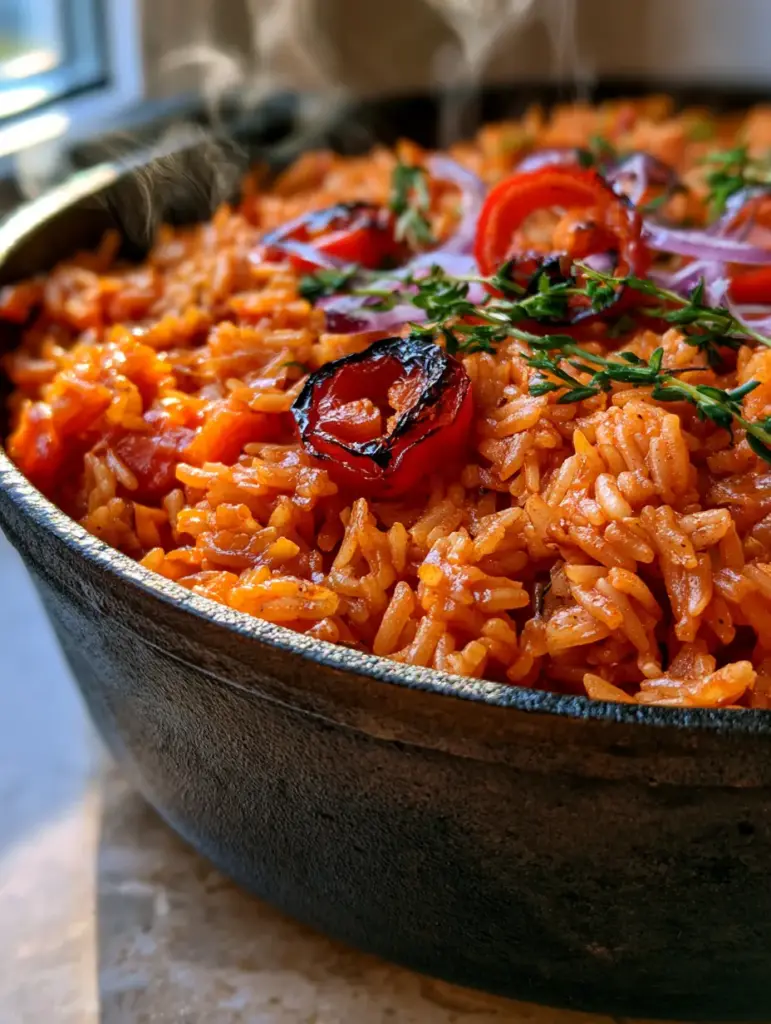
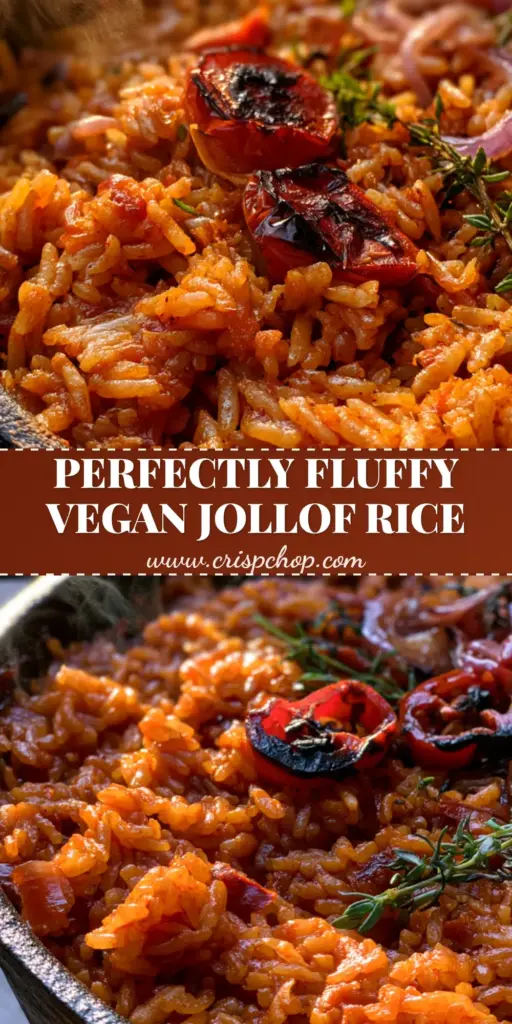
Imagine an extreme macro view of your dinner: parboiled long-grain rice that is tender but never mushy, topped with translucent slivers of raw red onion and charred peppers that add a layer of sophisticated bitterness to the sweetness of the base. This is the gold standard of plant-based West African cooking.
The Visual and Sensory Blueprint of Perfect Vegan Jollof Rice
- The Signature “Party” Texture: Every grain of parboiled rice is coated in a glistening, concentrated sauce, ensuring they remain separate and fluffy rather than clumping together.
- A Spectrum of Heat: We use charred halves of red scotch bonnet peppers to provide a smoky, visual flair and a controlled heat that permeates the dish.
- The Aromatic Garnish: Thin, translucent slices of raw red onion and fresh green thyme sprigs are added at the very end to provide a sharp, fresh contrast to the slow-cooked rice.
- Visible Steam & Gloss: By using a specific ratio of vegetable oils and a tight steam-seal, the rice emerges with a beautiful sheen that catches the light.
The Anatomy of Flavor: Essential Ingredients for Vegan Jollof Rice
Parboiled Long-Grain Rice: This is the non-negotiable foundation for the texture seen in our visual blueprint. Unlike standard white rice, parboiled rice (like Uncle Ben’s or similar brands) has been partially boiled in the husk, which gelatinizes the starch and ensures the grains stay firm and individual after the long steaming process.
Red Bell Peppers (Tatashe): We use 3 large red bell peppers to create the “Obasapo” or the base sauce. They provide the vibrant red-orange color and a natural sweetness that balances the acidity of the tomatoes.
Scotch Bonnet Peppers (Atarodo): These provide the floral heat. For our visual result, we use some blended into the sauce and others halved and charred on the surface to serve as a warning and a garnish.
Concentrated Tomato Paste: This is the secret to the deep color. Frying the tomato paste in oil for several minutes removes the raw tinny taste and creates a rich, “burnt” sugar depth that is essential for vegan jollof rice.
Aromatic Base (Onions, Ginger, Garlic): A massive amount of sliced red onions is used—half for the sauté and half for the final raw garnish—alongside fresh ginger and garlic for a sharp, aromatic backbone.
Vegetable Bouillon and Umami Boosters: Since we aren’t using meat stock, a high-quality vegetable bouillon or even a dash of liquid aminos ensures the rice has a savory “meatiness” that lingers on the tongue.
Foundational Invisible Ingredients: You will need 1/2 cup (120ml) of neutral vegetable oil to sear the rice and fry the sauce, and 1 tsp (6g) of sea salt to draw out the moisture from the peppers.
The Gear: Why a Cast Iron Pot Matters
To achieve the “rustic black cast iron” look and the perfectly cooked grain, a heavy-bottomed pot is essential. A Dutch oven or cast iron pot distributes heat evenly, preventing the bottom from burning too quickly while the top remains raw.
You will also need a high-speed blender to achieve a silky-smooth pepper reduction and heavy-duty aluminum foil. The foil is the “secret weapon” that traps the steam, allowing the rice to cook in its own vapors rather than boiling in excess water.
The Culinary Science: How to Master the Pepper Reduction
Step 1: The “Obasapo” Pepper Base
In a blender, combine 3 large red bell peppers, 3 medium tomatoes, 1 red onion, and 2 scotch bonnets. Blend until completely smooth. Pour this mixture into a pot and simmer over medium heat for 15-20 minutes until the water evaporates and you are left with a thick, concentrated paste. This concentration is what gives the vegan jollof rice its intense color.
Step 2: Frying the Aromatics and Charring the Peppers
Heat 1/2 cup (120ml) of oil in your cast iron pot. Add sliced onions and sauté until translucent. Throw in two halved scotch bonnets, cut side down, and sear them until the skins are slightly blistered and charred. Remove the charred peppers and set them aside for the final garnish. Stir in 6 oz (170g) of tomato paste and fry for 5-8 minutes, stirring constantly, until the oil begins to separate and turns a deep red.
Step 3: Searing the Grains
Add your washed parboiled rice (ensure you have washed it at least 5 times until the water runs clear!) into the fried tomato base. Stir well to coat every grain in the oil and sauce. Searing the rice for 2-3 minutes before adding liquid helps to “lock” the shape of the grain, contributing to that glistening, macro-perfect texture.
Step 4: The Steaming Phase
Pour in 3 cups (720ml) of hot vegetable broth and add 3 bay leaves and 4 sprigs of fresh thyme. The liquid should just barely cover the rice—do not over-saturate! Place a piece of foil over the pot, then press the lid down firmly. Turn the heat to the lowest possible setting. The vegan jollof rice must steam, not boil, for 30-35 minutes.
Step 5: The Final Flourish
Once the rice is tender, turn off the heat. Do not stir immediately! Lay the charred scotch bonnets back on top, along with very thin slices of raw red onion and fresh thyme sprigs. Replace the lid for 5 minutes. This allows the raw onions to soften slightly from the residual steam while remaining translucent and crisp.
Expert Tips for the Fluffiest Rice Grains
- The Foil Seal: If you don’t use foil, the steam escapes, and you’ll end up with hard grains in the center. The foil forces the moisture back down into the rice.
- The “Wash” Rule: Wash your rice until the water is crystal clear. Removing the surface starch is the only way to get those distinct grains seen in the macro photos.
- Don’t Peek: Every time you lift the lid, you lose the precise temperature required to cook the rice evenly. Resist the urge to check until at least 30 minutes have passed.
- The Bottom Crust: In West Africa, the slightly burnt bottom (concon) is a delicacy. If you smell a slight toastiness at the end, don’t panic—it adds a smoky flavor to the whole pot.
What to Serve with Your Vegan Jollof
While this vegan jollof rice is a star on its own, it pairs beautifully with traditional sides. For a sweet and spicy contrast, try it with spicy fried plantains. If you’re looking for something lighter, a grilled avocado salad (minus the shrimp for vegans) provides a creamy texture that cuts through the heat of the scotch bonnets.
You can also explore other regional variations like Cameroonian Jollof or even compare the textures to a Persian Jeweled Rice for a global rice tasting experience.
Frequently Asked Questions
While you can, Basmati is much starchier and more fragile. For the distinct, separate grains shown in the photos, parboiled long-grain rice is highly recommended as it withstands the long steaming process better.
The smokiness comes from ‘frying’ the tomato paste until it almost burns, using charred scotch bonnets, and allowing the bottom of the rice to slightly toast (creating the concon) in the cast iron pot.
Traditional jollof has a kick. This recipe uses scotch bonnets which are very hot; however, by leaving them whole or charred on top, you can control the heat more easily than by blending them all into the sauce.
The vibrant red-orange color comes from a concentrated blend of red bell peppers (Tatashe) and high-quality tomato paste that has been fried in oil to darken its pigment.
Mushiness is usually caused by using too much water or not washing the rice enough. Ensure you wash the rice until the water is clear and use the foil-seal method to steam the rice rather than boiling it.
The Official Vegan Jollof Rice Recipe
Vegan Jollof Rice: The Ultimate Guide to Smoky, Fluffy West African Rice
Ingredients
Equipment
Method
- Blend bell peppers, tomatoes, one onion, and one scotch bonnet until smooth.
- Boil the mixture in a pot for 15 mins until thickened into a paste.
- Heat oil in cast iron pot, sauté half the sliced onions, and char the halved scotch bonnets.
- Add tomato paste and fry until it turns deep red and oil separates.
- Stir in washed rice and coat with the sauce. Add broth and herbs.
- Cover with foil and a lid. Simmer on low for 30-35 minutes.
Notes
The foil seal is critical for even steaming without mushiness.
Closing & Call to Action
Mastering the vegan jollof rice is a rite of passage for any home cook looking to explore the depths of West African flavors. The combination of the smoky charred peppers, the fluffy parboiled grains, and the rich tomato reduction creates a dish that is as visually stunning as it is delicious. If you enjoyed this deep dive into culinary forensics, please leave a comment below and share your results!
Don’t forget to follow us on Pinterest for more vibrant, plant-based inspirations. Pin this recipe to your “Dinner Ideas” board so you never lose the secret to the perfect Jollof!