There is a specific kind of culinary magic that happens when buttery, laminated pastry meets a rich, vanilla-flecked custard. This croissant bread pudding isn’t just a dessert; it is a study in textures. Imagine jagged, torn croissant peaks that have been toasted to a deep, mahogany golden-brown, offering a shattering crunch with every bite.
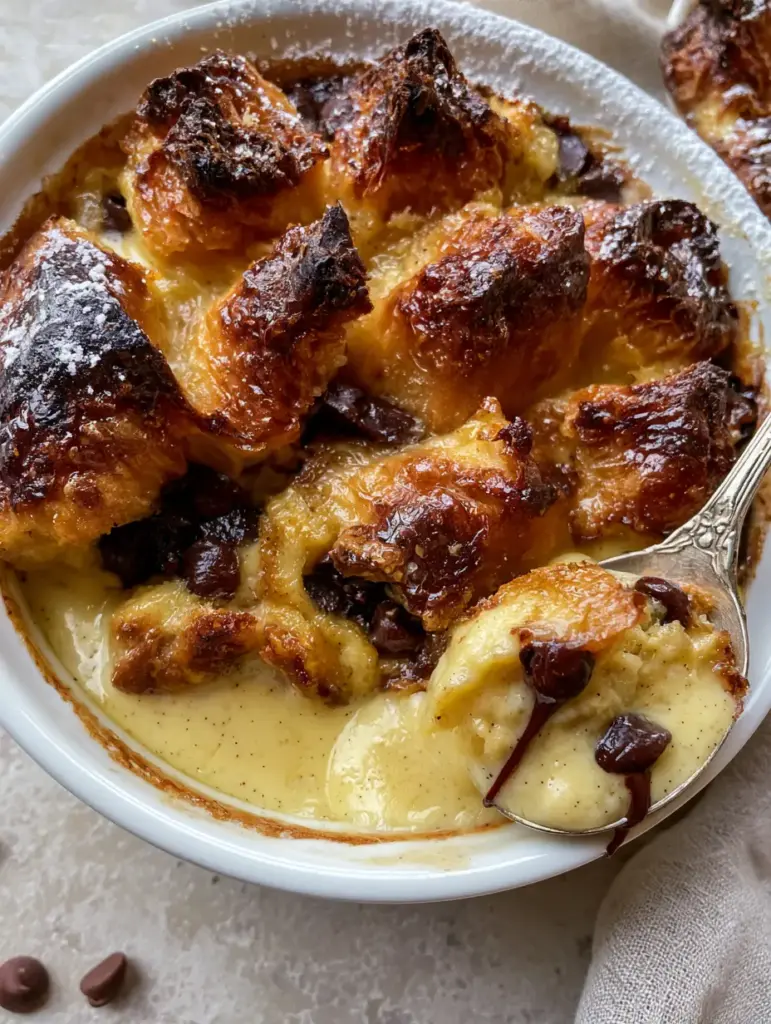
Beneath that crispy exterior lies a contrasting world of soft, pillowy layers soaked in a pale yellow vanilla bean custard. As you dive deeper with a vintage silver spoon, you discover pockets of semi-melted dark chocolate chips that create luxurious, silken strings of cocoa. The final flourish of a glistening honey glaze and a snowfall of powdered sugar elevates this dish into a centerpiece worthy of the finest brunch table.
Whether you are looking to impress guests or simply craving the ultimate comfort food, this recipe delivers a restaurant-quality experience right from your own oven. We have meticulously designed this guide to ensure your pudding achieves that perfect “wobble” in the center while maintaining those iconic toasted peaks described in our visual blueprint.
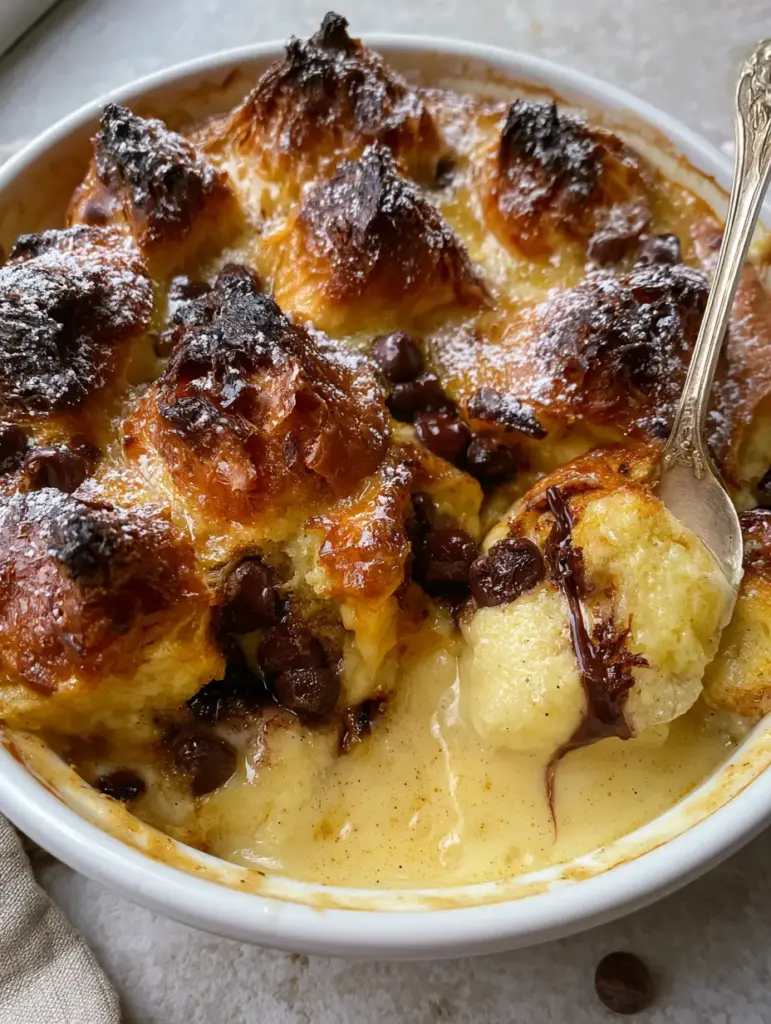
Why This Is The Ultimate Croissant Bread Pudding Experience
- The Texture Contrast: By tearing the croissants rather than slicing them, we create “jagged peaks” that catch the heat, resulting in a dual-texture masterpiece of crunch and cream.
- Vanilla Bean Sophistication: We move beyond basic extracts to use real vanilla bean caviar, providing those beautiful black specks and a deep, floral aroma throughout the custard.
- Honey-Glazed Radiance: A specialized honey glaze is applied in the final minutes of baking, ensuring the pastry glints under the light and provides a floral sweetness that complements the dark chocolate.
- Bittersweet Balance: The use of high-quality dark chocolate chips cuts through the richness of the buttery croissants and heavy cream, preventing the dish from becoming cloying.
The Luxury Pantry: Essential Ingredients and Substitutions
Day-Old Large Croissants (6-8 pieces / approx. 12 oz / 340g): Stale croissants are actually superior here as they act like a sponge, absorbing the custard without disintegrating into mush. If you only have fresh ones, toast the torn pieces in a low oven for 10 minutes first.
Heavy Cream (2 cups / 480ml) and Whole Milk (1 cup / 240ml): This specific ratio provides the necessary fat content for a silky mouthfeel. Using only milk will result in a thinner, less stable custard that lacks the “pooling” effect seen in professional photography.
Granulated Sugar (3/4 cup / 150g): This sweetens the base custard while allowing the natural butteriness of the pastry to shine through. You can substitute with light brown sugar for a deeper molasses note, though it will darken the custard’s pale yellow hue.
Large Egg Yolks (6 total): We use only yolks to achieve a richer, more custard-like consistency similar to a crème brûlée. This prevents the “rubbery” texture that sometimes occurs when using whole eggs in bread pudding.
Vanilla Bean (1 whole pod): Split and scraped, the seeds provide intense flavor and visual elegance. If unavailable, use 1 tablespoon (15ml) of high-quality vanilla bean paste as a direct substitute.
Dark Chocolate Chips (3/4 cup / 130g): Opt for at least 60% cacao to provide that sophisticated bitterness. These should be “nestled” between layers to ensure they melt into the custard rather than just sitting on top.
High-Quality Honey (2 tbsp / 42g): This is warmed and brushed onto the toasted peaks. It creates a “glistening” finish that is a hallmark of our visual recipe blueprint.
Powdered Sugar (for dusting): A fine mesh sieve is required to apply this “dusting” only to the crispy edges, highlighting the jagged geometry of the torn pastry.
Professional Tools for the Perfect Bake
To achieve the aesthetic of a high-angle hero shot, the choice of vessel is paramount. A white ceramic baking dish (approx. 9×13 inch / 23×33 cm) is recommended because ceramic distributes heat more evenly than metal, preventing the edges from scorching before the center sets. The white background also makes the golden-brown tones of the croissant bread pudding pop visually.
You will also need a heavy-bottomed saucepan to scald the dairy, a fine-mesh sieve for the powdered sugar, and a pastry brush to apply the honey glaze with precision. A vintage silver spoon is the preferred serving tool to capture those “strings of melted chocolate” during the first reveal.
Architecting the Pudding: Step-by-Step Instructions
Preparing the Pastry Foundation
Begin by manually tearing your croissants into large, irregular chunks (roughly 2-inch / 5cm pieces). Avoid using a knife; the rough, torn edges are what create those “toasted peaks” during the baking process. Place the torn pieces into your buttered white ceramic baking dish, ensuring many of the points are facing upward to catch the heat.
Infusing the Vanilla Bean Custard
In a medium saucepan, combine the heavy cream (480ml) and whole milk (240ml). Split the vanilla bean lengthwise and scrape the seeds into the liquid, then toss the pod in as well. Heat over medium until tiny bubbles form around the edges (scalding), but do not let it reach a rolling boil. Remove from heat and let infuse for 10 minutes to extract maximum flavor.
Tempering the Yolks
In a large bowl, whisk the 6 egg yolks with the sugar (150g) until the mixture turns a pale, creamy yellow. Slowly drizzle the warm cream mixture into the yolks, whisking constantly. This “tempering” process ensures the eggs don’t scramble. Strain the mixture through a fine-mesh sieve to remove the vanilla pod and any potential stray egg bits.
The Soak and Chocolate Integration
Scatter half of your dark chocolate chips (65g) amongst the croissant pieces. Pour the custard over the bread, ensuring every piece is coated. Press down lightly with a spatula to help the bread submerge. Let the dish sit for at least 20 minutes at room temperature. This rest period is vital; it allows the interior to become “moist and steaming” while the tops stay dry enough to crisp up.
Baking for Toasted Perfection
Preheat your oven to 350°F (175°C). Scatter the remaining chocolate chips on top, tucking them slightly into crevices. Bake for 35-45 minutes. Watch for the visual cue: the custard should be “pooling at the base” but set to a slight jiggle, while the croissant peaks should be deeply toasted and flaky.
The Glistening Honey Finish
Five minutes before the pudding is finished, warm the honey (42g) until fluid. Carefully brush the honey over the exposed toasted peaks of the croissants. Return to the oven for the final 5 minutes until the glaze is bubbling and glistening. Once removed from the oven, let it cool for 10 minutes before applying a light dusting of powdered sugar.
Expert Tips for Bakery-Style Success
- The “Wobble” Test: To ensure a custardy interior, pull the dish when the center still has a slight jiggle. It will continue to firm up as it cools.
- Avoid Over-Soaking the Tops: When pouring the custard, leave the very tips of the top croissants dry. This ensures they achieve the “shattering” crispness required for the visual blueprint.
- Use Room Temperature Eggs: This helps the custard emulsify more smoothly with the warm cream.
- Quality of Chocolate: Since we are looking for “strings of melted chocolate,” use high-quality chips or chopped bars rather than “imitation” chocolate which contains waxes that prevent a smooth melt.
How to Store and Reheat Your Masterpiece
If you have leftovers, this croissant bread pudding stores beautifully. Cover the ceramic dish tightly with foil or transfer portions to an airtight container and refrigerate for up to 3 days. To maintain the crispy peaks, avoid the microwave if possible.
For the best results, reheat in a 300°F (150°C) oven for 10-15 minutes. This will revive the honey glaze and the flakiness of the croissant layers. If you are in a rush, a quick 30-second burst in the microwave will soften the interior, but you will lose that signature crunch on top.
What to Serve With Croissant Bread Pudding
This dish is exceptionally rich, so it pairs well with items that offer acidity or brightness. For a complete brunch spread, consider serving it alongside a refreshing strawberry acai refresher to cleanse the palate between bites of buttery pastry.
If serving this as a dessert following a hearty meal like lemon garlic roast chicken, a simple dollop of unsweetened whipped cream or a side of fresh berries is all you need. For those who enjoy a variety of baked goods, adding sweet carrot muffins to the table provides a nice vegetable-based sweetness contrast to the dark chocolate. You might even start the meal with some toasted crusty French bread and salted butter to lean into the carbohydrate celebration!
Frequently Asked Questions
You can assemble the pudding and let it soak in the fridge overnight. However, wait to apply the honey glaze and bake it just before serving for the best texture contrast.
Yes, but you should tear them and toast the pieces in a 300°F (150°C) oven for about 10 minutes first. This dries them out so they can absorb the vanilla custard without becoming soggy.
The key is the ‘torn’ geometry and the white ceramic dish. By keeping the peaks pointed upward and leaving them dry when pouring the custard, they crisp quickly while the submerged base stays moist.
Reheat in a 300°F (150°C) oven for 10-15 minutes. This restores the crunch of the croissant flakes and the stickiness of the honey glaze better than a microwave.
Egg yolks contain more fat and lecithin, which creates a richer, silkier custard that ‘pools’ beautifully. Whole eggs can sometimes lead to a firmer, more rubbery texture.
The Complete Croissant Bread Pudding Recipe Card
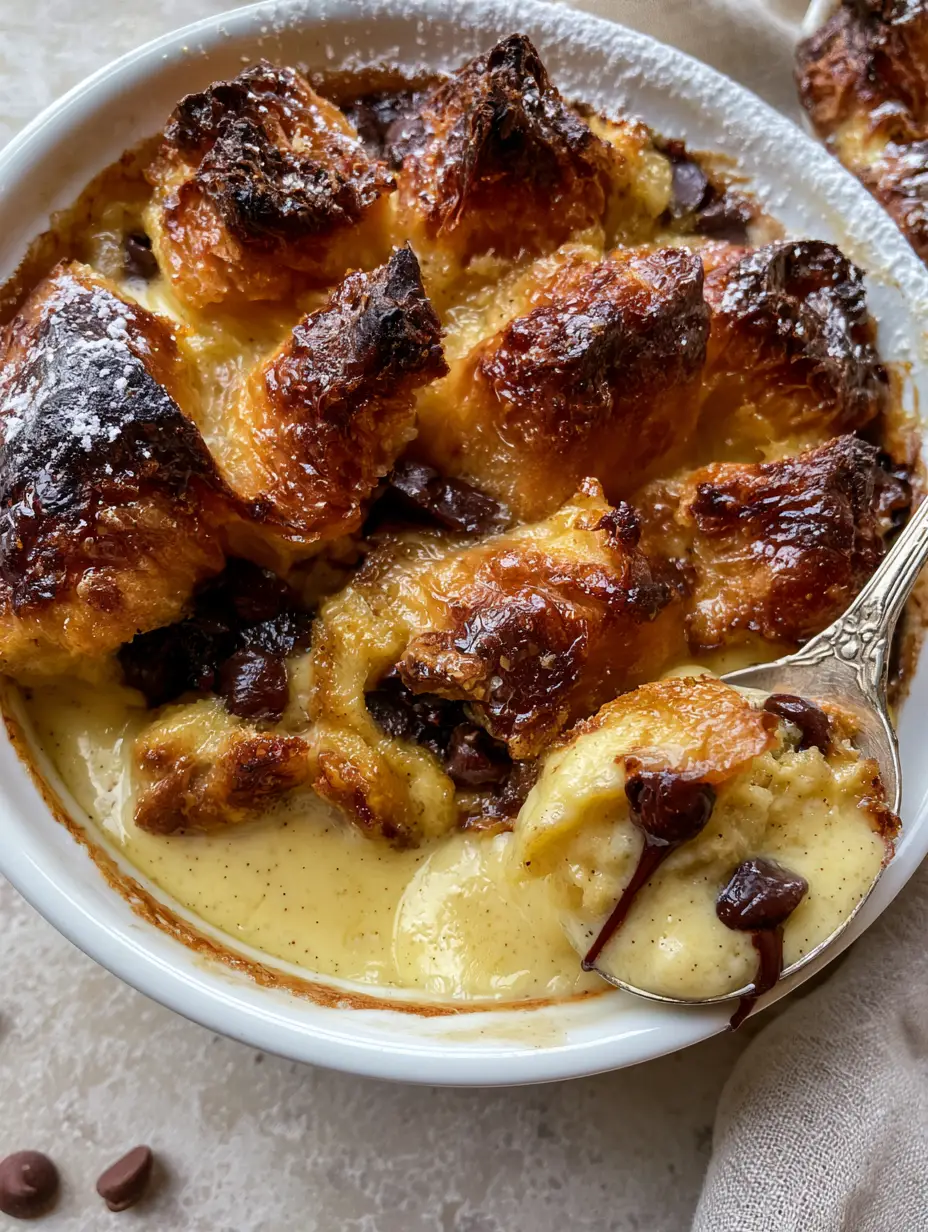
Croissant Bread Pudding with Dark Chocolate and Honey Glaze
Ingredients
Equipment
Method
- Manually tear day-old croissants into 2-inch pieces and place in a buttered white ceramic dish, keeping peaks pointed upward.
- Heat cream, milk, and vanilla bean seeds/pod until scalding; remove from heat and steep for 10 minutes.
- Whisk yolks and sugar until pale; slowly whisk in the warm dairy, then strain through a sieve.
- Scatter half the chocolate chips over the bread, pour over the custard, and let sit for 20 minutes to absorb.
- Bake at 350°F (175°C) for 35 minutes. Brush peaks with honey and bake 5-10 minutes more until glistening and golden-brown.
- Cool slightly and dust with powdered sugar before serving with a vintage spoon.
Notes
Use high-quality dark chocolate to balance the sweetness of the honey glaze.

Final Thoughts on This Decadent Delight
This croissant bread pudding represents the pinnacle of home-baked luxury. By combining the flaky, buttery structure of croissants with a sophisticated vanilla bean custard and the richness of dark chocolate, you create a dish that appeals to every sense. The visual contrast of the white ceramic dish against the golden-brown pastry and the glistening honey glaze makes it an instant social media star.
We invite you to share your results with us! Did your chocolate create those perfect silken strings? Were your croissant peaks as jagged and toasted as you hoped? Head over to Pinterest to follow us for more visual recipe blueprints and culinary inspiration. Don’t forget to leave a comment below with your favorite variations!