If you are searching for a dish that perfectly balances rustic comfort with a sophisticated profile, look no further than Kapuska. This traditional Turkish cabbage stew is a masterpiece of humble ingredients transformed through slow braising into a rich, silk-textured experience.
Unlike standard cabbage soups that can often feel thin or uninspired, this Kapuska recipe yields translucent cabbage ribbons bathed in a concentrated tomato and red pepper sauce. The addition of deeply browned ground beef crumbles provides a savory counterpoint to the natural sweetness of the softened vegetables.
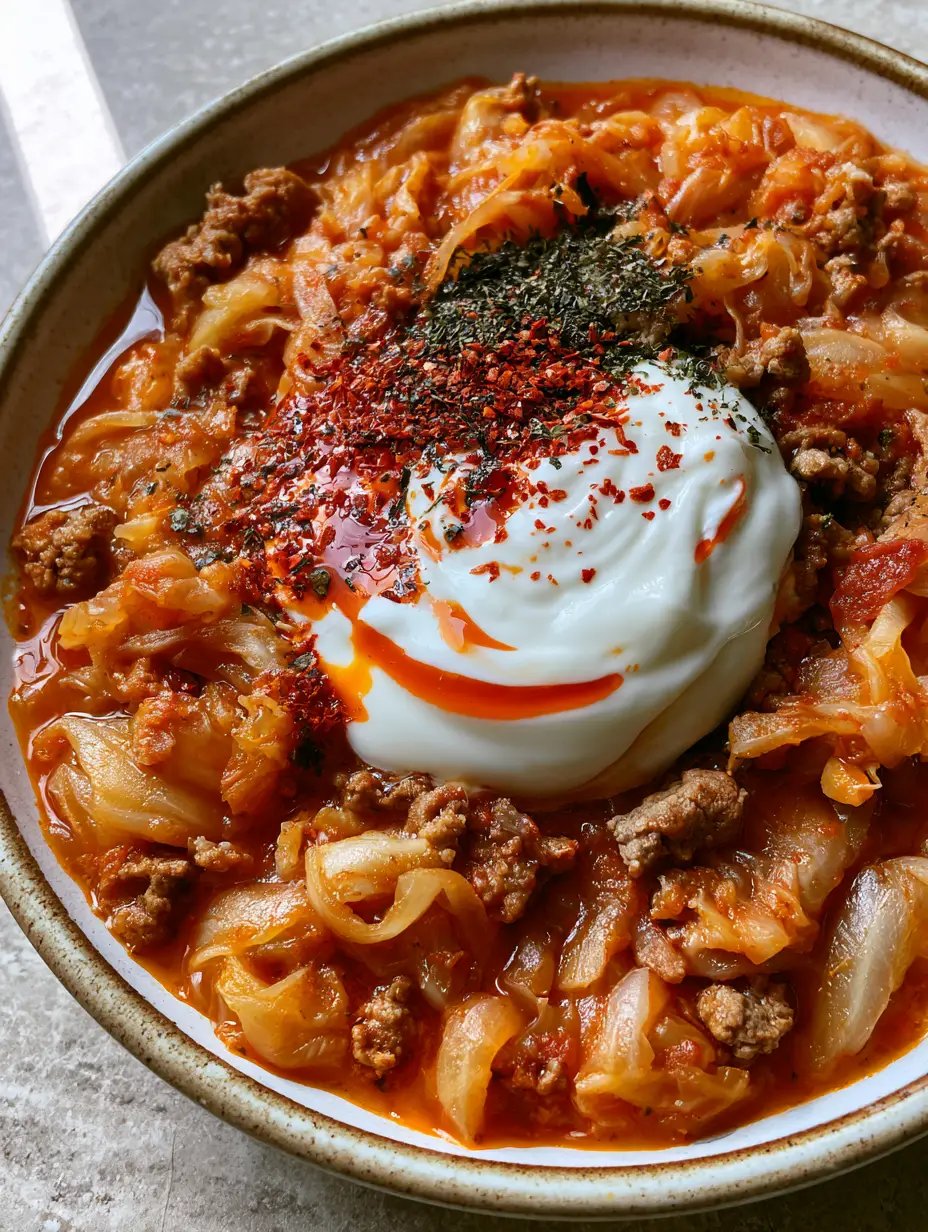
Every spoonful of this dish offers a visual and sensory journey, from the stark white dollop of thick strained yogurt to the vibrant dusting of dried mint and the glossy glow of Aleppo pepper-infused oil. It is a staple in Turkish households for a reason—it is nourishing, incredibly flavorful, and visually stunning.
What Makes This Authentic Turkish Cabbage Stew So Irresistible?
Before we dive into the pot, let’s look at why this specific version of Kapuska stands out in the world of comfort food. The secret lies in the layering of textures and the careful balance of acidity and heat.
- The Texture: We move beyond “soft” to achieve “silk-textured” cabbage ribbons that melt in your mouth while maintaining their structural integrity.
- The Umami Base: By using a combination of tomato and Turkish red pepper paste, we create a deep-orange sauce that is far more complex than a standard tomato base.
- The Contrast: The heat from the Aleppo pepper and the warmth of the beef are cut perfectly by the cooling, creamy presence of strained Greek yogurt.
- The Finishing Touch: A drizzle of infused red chili oil adds a professional, glossy finish that makes this dish look like it came straight from a high-end Istanbul bistro.
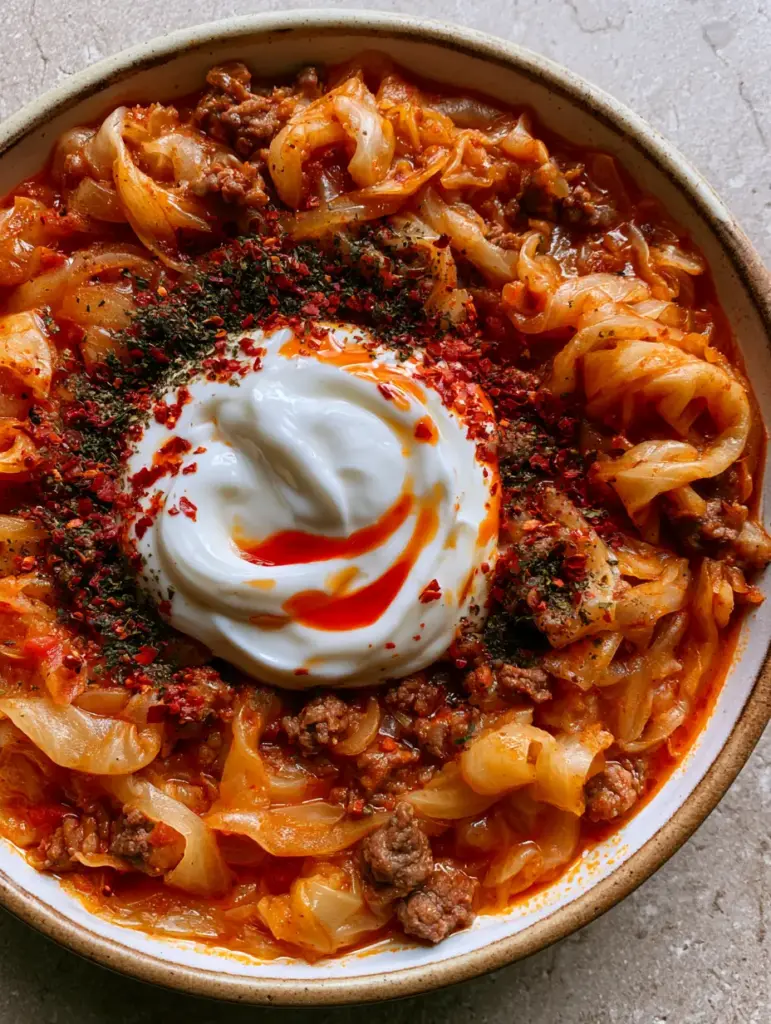
Essential Elements for a Traditional Kapuska Experience
To achieve the visual and flavor profile described in our blueprint, you need specific ingredients that bring both color and depth. Here is what you will need for your grocery list.
Green Cabbage (approx. 2 lbs / 900g): This is the heart of the dish; look for a heavy, dense head that will yield those long, translucent ribbons once braised. When shredded, it provides the “silk-textured” volume that defines a great Kapuska.
Ground Beef (1 lb / 450g): Choose a 20% fat content if possible to ensure the beef crumbles stay moist and savory. Browning the beef thoroughly is essential for creating the “savory crumbles” seen in our visual prompt.
Yellow Onions (2 medium / 300g): These should be finely diced and cooked until they are completely softened and translucent. They provide a subtle sweetness that balances the acidity of the pepper pastes.
Tomato Paste & Red Pepper Paste: You will need 2 tbsp (30g) of tomato paste and 1 tbsp (15g) of Turkish red pepper paste (Biber Salçası). This combination creates the vibrant, deep-orange sauce that coats every ribbon of cabbage.
Strained Greek Yogurt (1 cup / 240ml): Use the thickest yogurt you can find, often labeled as “Süzme” in Turkish markets. A “stark white dollop” in the center provides the perfect temperature and texture contrast.
Aleppo Pepper (Pul Biber): This mild, fruity chili flake is essential for that “bright red scatter” across the top. It provides a gentle heat without overwhelming the delicate cabbage flavors.
Dried Mint Flakes: A fine dusting of dark green dried mint adds a traditional Turkish herbal note. It cuts through the richness of the beef and the oil, providing a refreshing aromatic finish.
Extra Virgin Olive Oil (or Butter): Used for both the base sauté and the final chili oil drizzle. This provides the “glossy, thin drizzle” that reflects light beautifully on the finished plate.
The Science of the Silk-Textured Cabbage
Why do some cabbage stews feel watery while this Kapuska feels luxurious? It comes down to the braising technique. Cabbage contains a high amount of water and sulfur compounds.
By sautéing the cabbage ribbons before adding liquid, you allow some of the moisture to evaporate and the sugars to lightly caramelize. This prevents the “boiled cabbage” smell and instead develops a mellow, sweet flavor profile similar to Turkish stuffed peppers.
The addition of the tomato and pepper pastes adds acidity, which helps the cabbage fibers break down into a “silk-like” consistency without turning into mush. This is a culinary principle also found in slow-cooked sauces like an African spaghetti sauce (coming soon), where time and acid transform the vegetable base.
Kitchen Tools Required for Culinary Realism
To recreate the macro, top-down visual perfection of our prompt, you need the right tools for the job. A heavy-bottomed pot is non-negotiable for even heat distribution.
- Large Dutch Oven or Heavy Pot: This is necessary for the long, slow braise that renders the cabbage translucent.
- Sharp Chef’s Knife: You will need this to slice the cabbage into the long, thin ribbons required for the visual “silk” texture.
- Small Skillet: This is used at the very end to bloom the Aleppo pepper in oil or butter for the glossy finish.
- Rustic Ceramic Bowl: To match the visual blueprint, serve this in a neutral-toned ceramic bowl to make the red sauce and white yogurt pop.
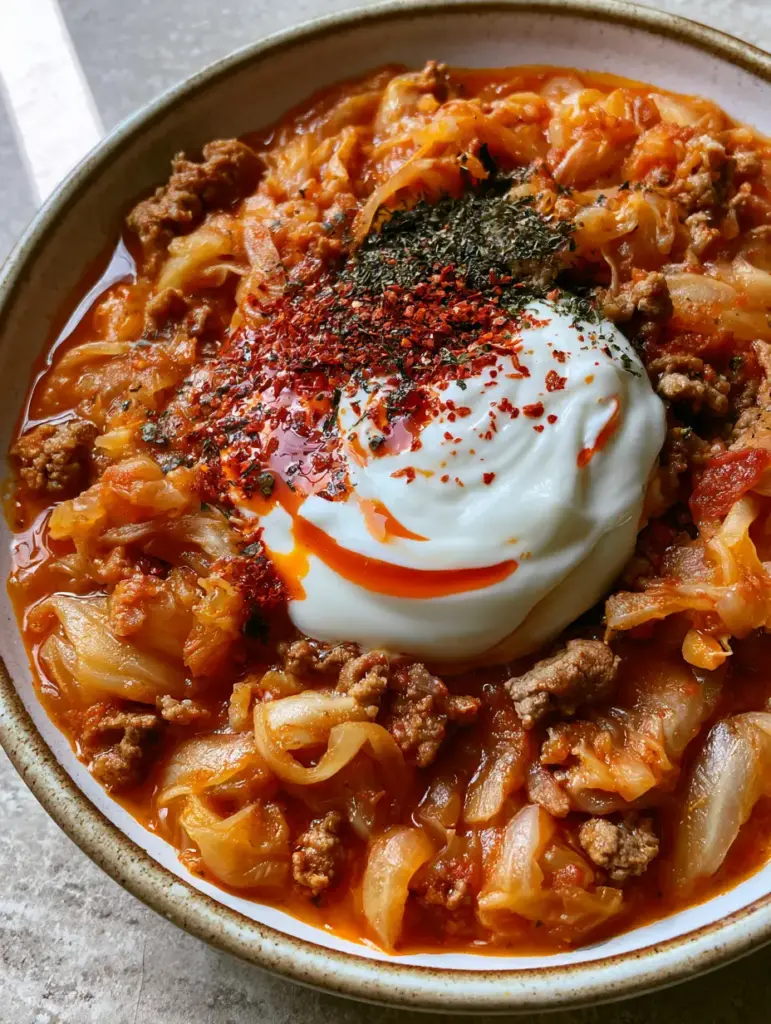
Mastering the Art of Braised Kapuska: Step-by-Step
1. Searing the Savory Beef Crumbles
Heat 2 tbsp (30ml) of olive oil in your Dutch oven over medium-high heat. Add the ground beef and cook, breaking it into small crumbles with a wooden spoon.
Continue cooking until the beef is well-browned and has developed a deep crust. This step is vital for the “savory crumbles” that will be interspersed throughout the stew.
2. Softening the Aromatics
Lower the heat to medium and add the finely diced yellow onions. Sauté them in the rendered beef fat until they are completely softened and have lost their bite.
Stir in the tomato paste and red pepper paste. Cook for 2-3 minutes, stirring constantly, until the pastes turn a shade darker and the oil starts to separate—this indicates the flavors have concentrated.
3. Braising the Cabbage Ribbons
Add the shredded cabbage ribbons to the pot in batches, stirring to coat them in the vibrant orange-red sauce. Season with 1 tsp (6g) of salt and a pinch of black pepper.
Pour in 1.5 cups (350ml) of water or beef broth. Cover and simmer on low for 40-50 minutes. You are looking for the cabbage to become “translucent and silk-textured” while the liquid reduces into a thick, rich sauce.
4. Creating the Infused Red Chili Oil
While the stew rests, melt 2 tbsp (30g) of butter or heat 2 tbsp (30ml) of oil in a small pan. Add 1 tsp (2g) of Aleppo pepper flakes.
Wait until the oil begins to sizzle and turns a bright, glossy red. Remove from heat immediately to prevent the pepper from burning, which would turn the oil bitter.
5. The Final Assembly and Garnish
Ladle the Kapuska into a rustic bowl. Place a “thick, heavy dollop” of the strained Greek yogurt directly in the center of the stew.
Dust the entire dish with the dark green dried mint flakes and another scatter of red Aleppo pepper. Finally, drizzle the glossy red-tinted chili oil over the yogurt and cabbage, allowing it to reflect the light beautifully.
Expert Tips for Success
- Don’t Rush the Cabbage: If the cabbage still has a “crunch,” it isn’t Kapuska yet. Keep simmering until it looks glassy and ribbons feel like silk.
- The Paste Ratio: If you cannot find Turkish red pepper paste, you can substitute with extra tomato paste and a teaspoon of smoked paprika, though the flavor will lose some of its authentic “Turkish” bite.
- Yogurt Temperature: Always serve the yogurt cold. The “cool contrast” against the hot, savory stew is a hallmark of the dish’s sensory appeal.
- Liquid Control: Kapuska should be a thick stew, not a soup. If you have too much liquid at the end, simmer uncovered for 5-10 minutes to concentrate the sauce.
What to Serve With Your Turkish Cabbage Stew
To turn this into a full feast, pair it with elements that complement the rich, braised textures. A crusty loaf of French bread is perfect for mopping up the last bits of the red-tinted chili oil and yogurt.
If you are looking for a lighter side, consider other Greek dishes or Mediterranean salads that feature fresh cucumbers and lemon. For a unique flavor contrast, some home cooks serve a small bowl of rice or even a hearty portion of jambalaya if they are feeling adventurous with fusion flavors.
Storage, Reheating, and Freezing
Like many stews, Kapuska actually tastes better the next day as the flavors of the mint and Aleppo pepper penetrate the cabbage ribbons even further.
Store leftovers in an airtight container in the refrigerator for up to 4 days. When reheating, do so on the stovetop over low heat. Avoid reheating the yogurt; always add a fresh dollop of cold yogurt to the hot stew just before serving.
You can freeze this stew (without the yogurt) for up to 3 months. Thaw overnight in the fridge before reheating to maintain the delicate texture of the cabbage.
Frequently Asked Questions
Yes! Simply omit the ground beef. You can add extra bulgur or rice to provide more body, or simply enjoy the cabbage and onions in the rich tomato-pepper sauce.
Aleppo pepper is considered medium-mild. It has a fruity, raisin-like undertone with a slow-building heat that is much more gentle than standard red pepper flakes.
Standard green cabbage is the traditional choice. It has the right fiber structure to become translucent and silk-textured without completely falling apart during the long braising process.
You can find it at Mediterranean or Middle Eastern grocery stores, or online. It comes in ‘Acı’ (spicy) or ‘Tatlı’ (sweet) varieties; ‘Tatlı’ is most common for Kapuska.
This usually happens if the cabbage wasn’t sautéed long enough or too much broth was added. Simmer the pot uncovered for the last 10 minutes to reduce and concentrate the sauce.
The Ultimate Kapuska Recipe Card
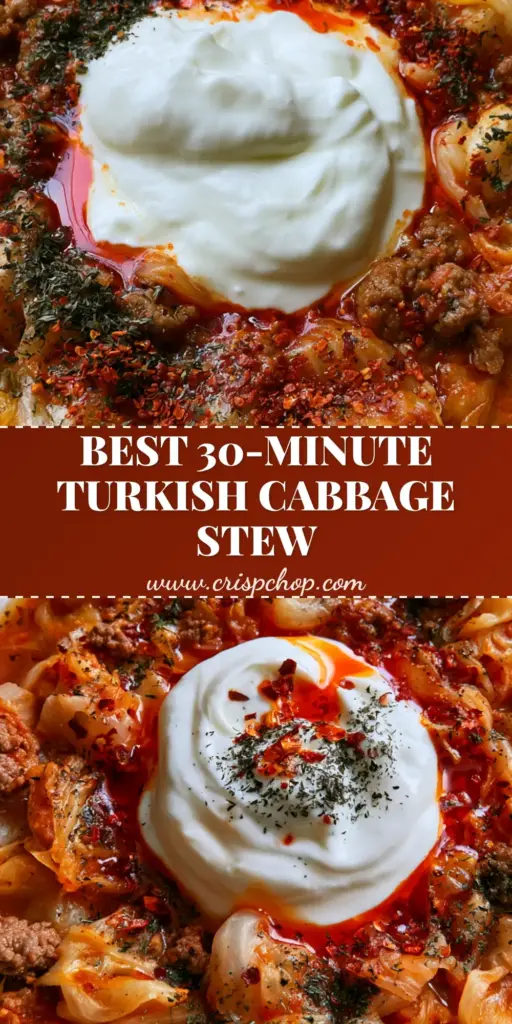
Kapuska: The Ultimate Turkish Cabbage Stew with Savory Ground Beef
Ingredients
Equipment
Method
- Heat 2 tbsp oil in a Dutch oven. Add ground beef and cook until deeply browned and savory crumbles form.
- Add onions to the pot. Sauté until translucent and softened. Stir in the tomato and red pepper pastes, cooking for 2 minutes.
- Fold in the shredded cabbage ribbons. Add water or broth. Cover and simmer on low for 45-50 minutes until cabbage is translucent and silk-textured.
- In a small skillet, heat butter/oil with Aleppo pepper until sizzling and bright red. Remove immediately.
- Ladle stew into bowls. Top with a heavy dollop of yogurt, dried mint, Aleppo flakes, and a drizzle of the infused oil.
Notes
If you want more heat, increase the red pepper paste amount.
Conclusion and Join the Community
Kapuska is a testament to the power of slow cooking and quality ingredients. From its silk-textured cabbage ribbons to the vibrant, infused red chili oil, every element of this dish is designed to provide comfort and culinary delight.
If you enjoyed making this authentic Turkish cabbage stew, please leave a comment below and let us know how yours turned out! Don’t forget to share your photos on Pinterest and follow us for more world-class recipes.