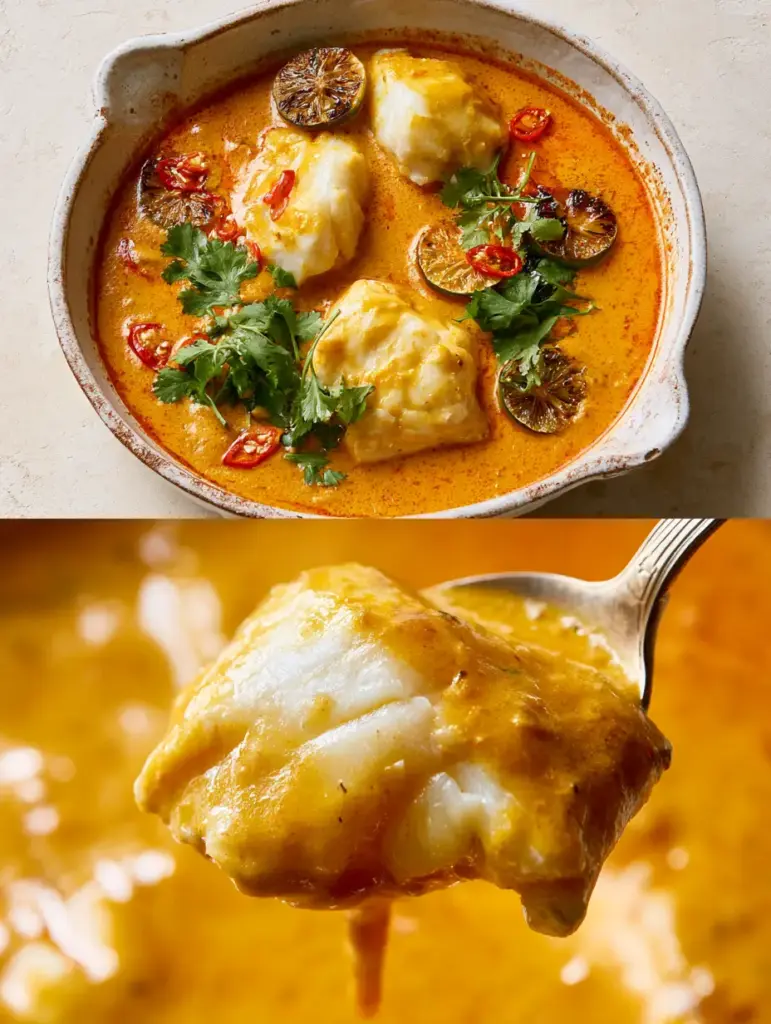
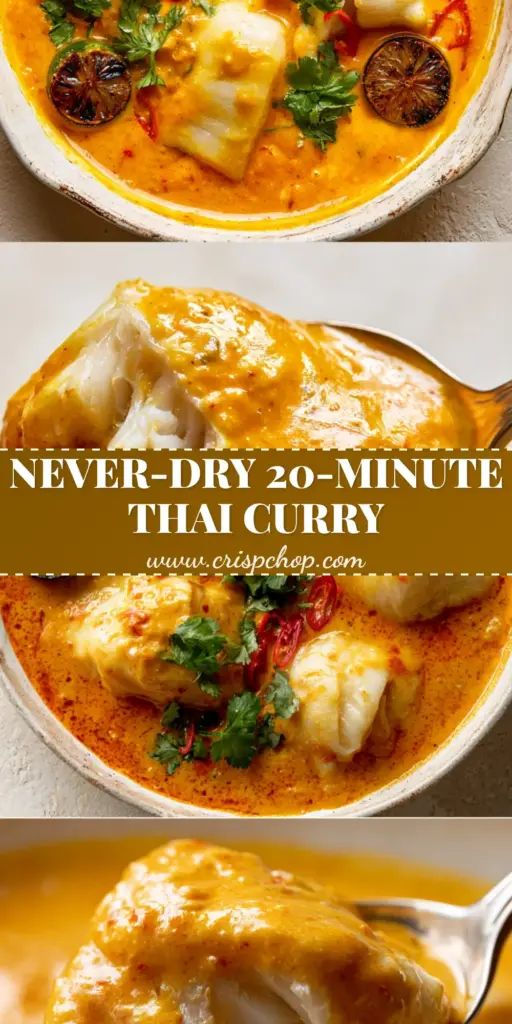
There is a specific kind of magic that happens when succulent white fish meets a vibrant, aromatic broth. This Thai coconut cod curry is the embodiment of that culinary synergy, offering a visual and sensory experience that rivals the best seaside bistros in Phuket. Imagine a shallow ceramic skillet filled with a thick, glossy golden-orange sauce, where steam wisps rise to carry the scent of lemongrass and ginger across your kitchen.
The beauty of this dish lies in its contrasts. You have the gentle, buttery flakes of poached white cod nestled against the fiery heat of thin red bird-eye chili slices. The richness of the coconut milk is perfectly cut by the smoky, acidic punch of charred lime wedges, making every spoonful a balanced masterpiece. Whether you are a seasoned home cook or a weekend kitchen adventurer, this recipe delivers professional-grade results with approachable techniques.
By following this guide, you will master the art of poaching delicate seafood without it breaking apart. We will focus on achieving that signature “glossy” finish on the sauce, ensuring it clings to every flake of fish. This is more than just a meal; it is a deep dive into the bright, bold flavors of Southeast Asian cuisine, reimagined for your dinner table.
The Visual Allure and Texture of This Seafood Masterpiece
- Succulent Texture: Large, tender chunks of cod are poached to perfection, ensuring they remain moist and flake effortlessly under a silver spoon.
- Vibrant Color Palette: The rich, golden-orange coconut broth provides a stunning backdrop for bright green cilantro and vivid red chili slices.
- Smoky Acidity: Charred lime halves add a sophisticated, rustic aesthetic and a deeper, caramelized citrus flavor than raw lime could ever provide.
- Aromatic Finish: Droplets of deep red chili oil swirl through the thick sauce, creating a professional “restaurant-style” presentation.
The Anatomy of a Glossy Golden Coconut Broth
To achieve the visual recipe blueprint’s signature look, we must select ingredients that offer both structural integrity and intense pigment. The golden-orange hue comes from a specific blend of aromatics and high-quality fats. Below are the essential components required for this Thai coconut cod curry.
Fresh Atlantic or Pacific Cod: 1.5 lbs (680g). You need thick fillets that can be cut into 2-inch chunks; thinner fish like tilapia will disintegrate in the poaching liquid, whereas cod holds its “large flake” structure beautifully.
Full-Fat Coconut Milk: 2 cans (800ml). For that thick, creamy consistency seen in the macro photography, avoid “lite” versions; the fat content is crucial for the glossy finish and for carrying the fat-soluble flavors of the curry paste.
Red Thai Curry Paste: 3 tbsp (45g). This provides the foundational “golden-orange” base and a complex heat profile that permeates the cod chunks.
Fresh Turmeric: 1 tsp (5g) grated, or 1/2 tsp ground. This “invisible” ingredient enhances the vibrant orange color of the sauce without overwhelming the delicate fish.
Fish Sauce: 2 tbsp (30ml). This provides the essential umami backbone and salinity that brightens the entire dish.
Palm Sugar or Brown Sugar: 1 tbsp (15g). A touch of sweetness balances the heat of the chilies and the acidity of the charred limes.
Fresh Ginger and Garlic: 2 tbsp (30g) each, minced. These aromatics provide the “steam wisps” of fragrance that hit you as soon as the skillet is brought to the table.
Garnish Essentials: A handful of fresh cilantro (coriander), 3 thin red bird-eye chilies, and 2 limes. These are the visual “pops” of green and red that complete the professional photography aesthetic.
Neutral Oil: 2 tbsp (30ml). High-heat oil like avocado or grapeseed is necessary for searing the limes to achieve those dark, caramelized edges.
Professional Tools for a Flawless Poach
To replicate the rustic, shallow skillet look from our visual blueprint, you will need a wide, heavy-bottomed pan. A cast-iron enameled skillet or a shallow ceramic braiser is ideal because it distributes heat evenly, preventing “hot spots” that might overcook the fish in one corner while leaving it raw in another.
A sharp chef’s knife is also non-negotiable for achieving those “thin red chili slices.” You want the chilies to look like delicate rings, not jagged chunks. Finally, a silver spoon or a small offset spatula is helpful for gently lifting the cod flakes to check for doneness without shattering the fillet.
Step-by-Step: Crafting the Perfect Thai Coconut Cod Curry
Phase 1: Charring the Citrus Foundation
Heat your dry skillet over medium-high heat. Place your lime halves cut-side down into the hot pan. Press down firmly and sear for 3-4 minutes until the flesh is blackened and caramelized. Remove and set aside; this process concentrates the juice and adds a smoky depth that elevates the entire Thai coconut cod curry.
Phase 2: Building the Aromatic Base
In the same skillet, add your neutral oil. Sauté the minced garlic, ginger, and shallots until they are softened and fragrant, about 2 minutes. Add the red curry paste and turmeric. Stir-fry the paste for 60 seconds; this “blooming” process awakens the dried spices and ensures the sauce develops that deep, glossy orange hue.
Phase 3: Reducing the Coconut Broth
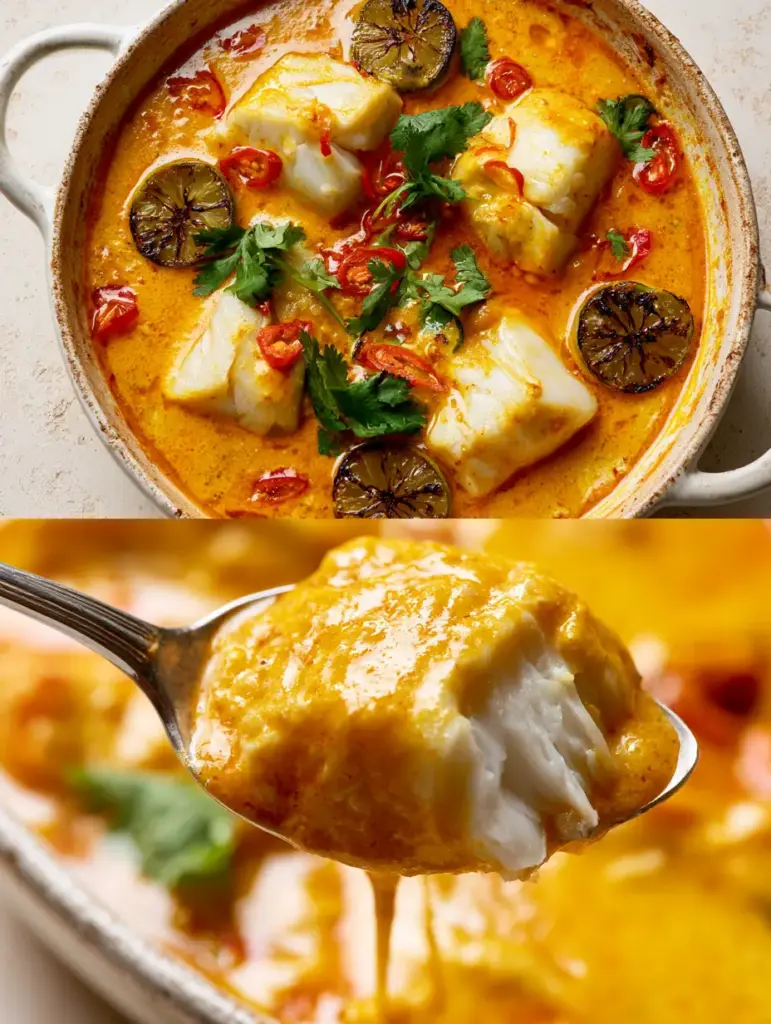
Pour in the full-fat coconut milk and stir until the paste is fully incorporated. Add the fish sauce and palm sugar. Bring the mixture to a gentle simmer, then reduce the heat to medium-low. Let it bubble gently for 8-10 minutes. You are looking for the sauce to thicken slightly so it can “cloak” the silver spoon, just like in the macro photo.
Phase 4: The Art of the Gentle Poach
Season your cod chunks lightly with salt. Gently nestle the white cod chunks into the simmering sauce. Do not crowd the pan. Spoon some of the hot liquid over the top of the fish. Cover the skillet and let the fish poach for 5-7 minutes. Look for the visual cue: the fish should transition from translucent to an opaque, milky white and should flake easily when pressured.
Phase 5: The Final Flourish and Garnish
Remove the lid and turn off the heat. Drizzle droplets of red chili oil across the surface. Scatter the fresh cilantro leaves and the thin red chili slices over the skillet. Place the charred lime halves back into the sauce for presentation. The steam wisps should carry the scent of fresh herbs and toasted citrus.
Expert Tips for Success in the Kitchen
- Temperature Control: Never let the coconut milk reach a rolling boil once the fish is added. High heat can cause the cod to toughen and the coconut milk to “break” or separate.
- Fish Choice: If cod isn’t available, halibut or monkfish are excellent substitutes as they maintain their structure during the poaching process.
- The “Gloss” Factor: If your sauce looks too thin, remove the fish and simmer the liquid for an extra 5 minutes before serving. A thick sauce is the key to that professional photography finish.
- Chili Heat: To control the spice level, de-seed the red bird-eye chilies before slicing. The visual effect remains the same, but the “burn” is significantly reduced.
Storage, Reheating, and Freezing Advice
Seafood is always best enjoyed fresh, but if you have leftovers, this curry can be stored in an airtight container in the refrigerator for up to 2 days. The flavors of the ginger and chili will actually deepen overnight.
When reheating, do so gently on the stovetop over low heat. Avoid the microwave, as it will likely overcook the cod, turning it rubbery. We do not recommend freezing this dish, as the coconut milk may grain and the delicate texture of the poached cod will be lost upon thawing.
What to Serve With Your Thai Curry
To soak up every drop of that golden-orange sauce, we recommend serving this dish alongside fluffy coconut curry rice. The subtle sweetness of the rice complements the savory heat of the curry perfectly. If you are looking for a lower-carb option, smashed potatoes can provide a crispy texture contrast to the soft fish.
For a multi-course Thai-inspired dinner, you might start with handmade dumplings or follow up with a dessert like moist banana muffins for a sweet ending. If you love the combination of coconut and spice, you should also try our creamy coconut lentil curry for a plant-based alternative.
Answering Your Thai Curry Questions
Yes, but ensure it is fully thawed and patted extremely dry with paper towels before poaching. Excess moisture from frozen fish can water down your thick, golden curry sauce.
Use full-fat coconut milk and simmer it for at least 8-10 minutes before adding the fish. The reduction process concentrates the fats and creates that signature professional sheen.
The spice level is medium. You can control the heat by adjusting the amount of red curry paste or by removing the seeds from the red bird-eye chili garnish.
Thick white fish like Atlantic cod, halibut, or monkfish are best because they maintain their succulent chunks and flake beautifully without disintegrating in the poaching liquid.
Charring the limes caramelizes the natural sugars in the citrus, reducing the sharp bitterness and adding a smoky, sophisticated depth to the Thai coconut cod curry.
Authentic Thai Coconut Cod Curry Recipe
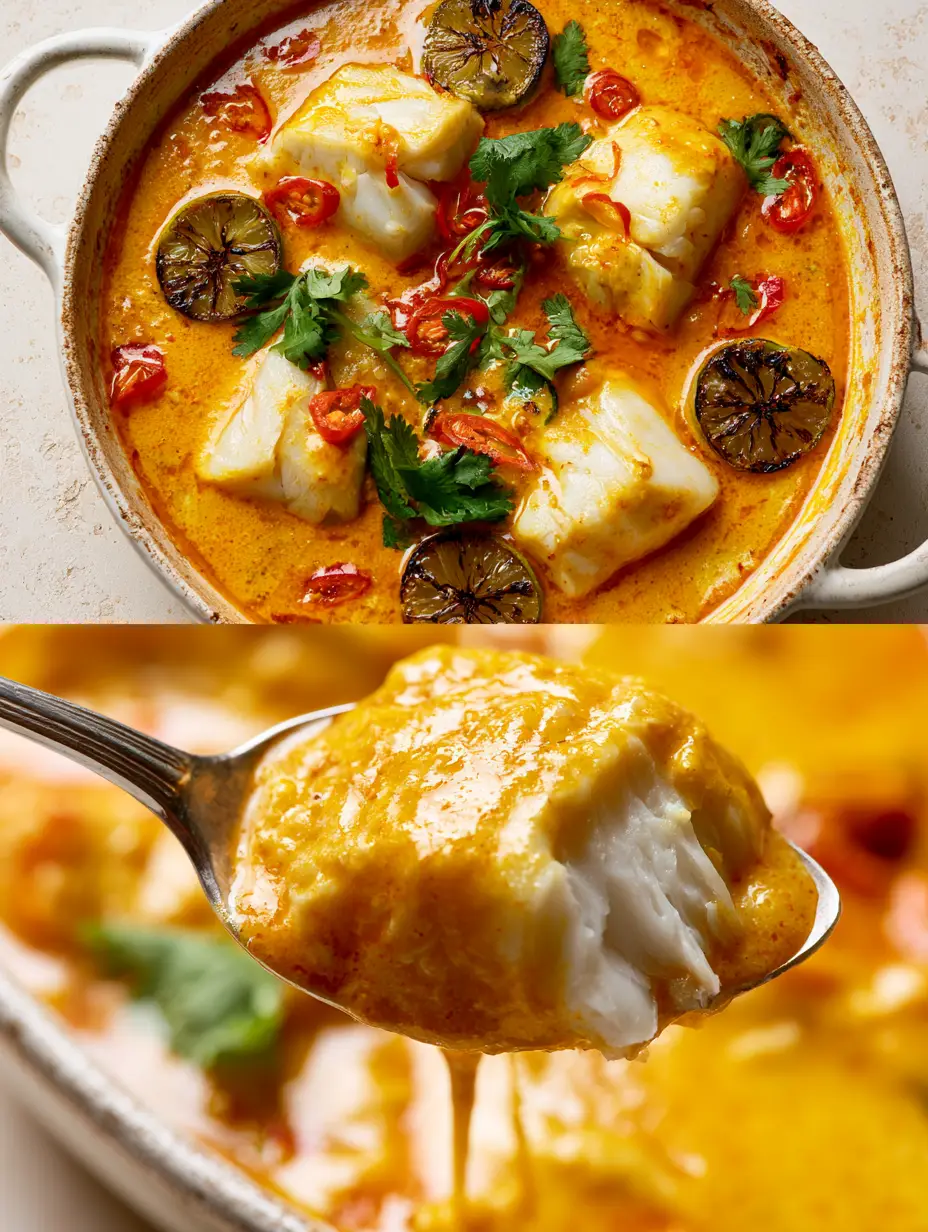
Thai Coconut Cod Curry with Zesty Charred Limes
Ingredients
Equipment
Method
- Place lime halves cut-side down in a hot dry skillet for 3-4 minutes until blackened and caramelized.
- Heat oil and sauté garlic, ginger, and curry paste for 1-2 minutes until fragrant and the oil turns orange.
- Add coconut milk, fish sauce, and sugar. Simmer for 10 minutes until slightly thickened and glossy.
- Nestle cod chunks into the sauce. Cover and poach for 5-7 minutes until the cod flakes easily with a silver spoon.
Notes
Charring the limes is essential for the smoky citrus flavor.
Join Our Culinary Community
If you enjoyed making this Thai coconut cod curry, we would love to hear about it! The combination of tender white fish and that glossy, aromatic broth is a favorite in our kitchen, and we hope it becomes a staple in yours too. Please leave a comment below with your results or any personal twists you added to the recipe.
Don’t forget to follow us on Pinterest for more visually stunning recipe inspiration. If you take a photo of your masterpiece, tag us—we love seeing those charred limes and steam wisps in action! Sharing this recipe helps us continue to provide high-quality, professional culinary guides for home cooks everywhere.