Baked salmon and asparagus is the quintessential weeknight luxury, a dish that proves high-end culinary results don’t require hours of labor. This recipe focuses on the interplay between succulent, flaky pink protein and the snap of vibrant, blistered greens, all brought together on a rustic dark metal sheet pan.
The secret to this specific version lies in the “Forensic Visual” approach—we aren’t just baking; we are searing, blistering, and caramelizing to achieve a handheld photo-worthy finish. By utilizing a high-heat environment, we mimic the golden-brown seared edges usually reserved for cast-iron pans while keeping the interior buttery and soft.
Whether you are a seasoned home cook or a beginner looking for a foolproof “wow” meal, this one-pan wonder delivers on every sensory promise. From the smell of sautéing minced garlic to the visual pop of bright green parsley against scorched lemon wheels, every element is intentional.
Why This One-Pan Masterpiece Works
- Textural Contrast: You will achieve a succulent, flaky pink interior shielded by a golden-brown seared crust that locks in moisture.
- Blistered Perfection: The asparagus isn’t just cooked; it’s high-heat blistered to maintain a crisp-tender bite with smoky charred tips.
- Liquid Gold Sauce: A translucent garlic butter sauce coats every crevice, infused with the oils from caramelized lemon wheels.
- Effortless Cleanup: By using a single dark metal baking sheet, the cleanup is as satisfying as the meal itself.
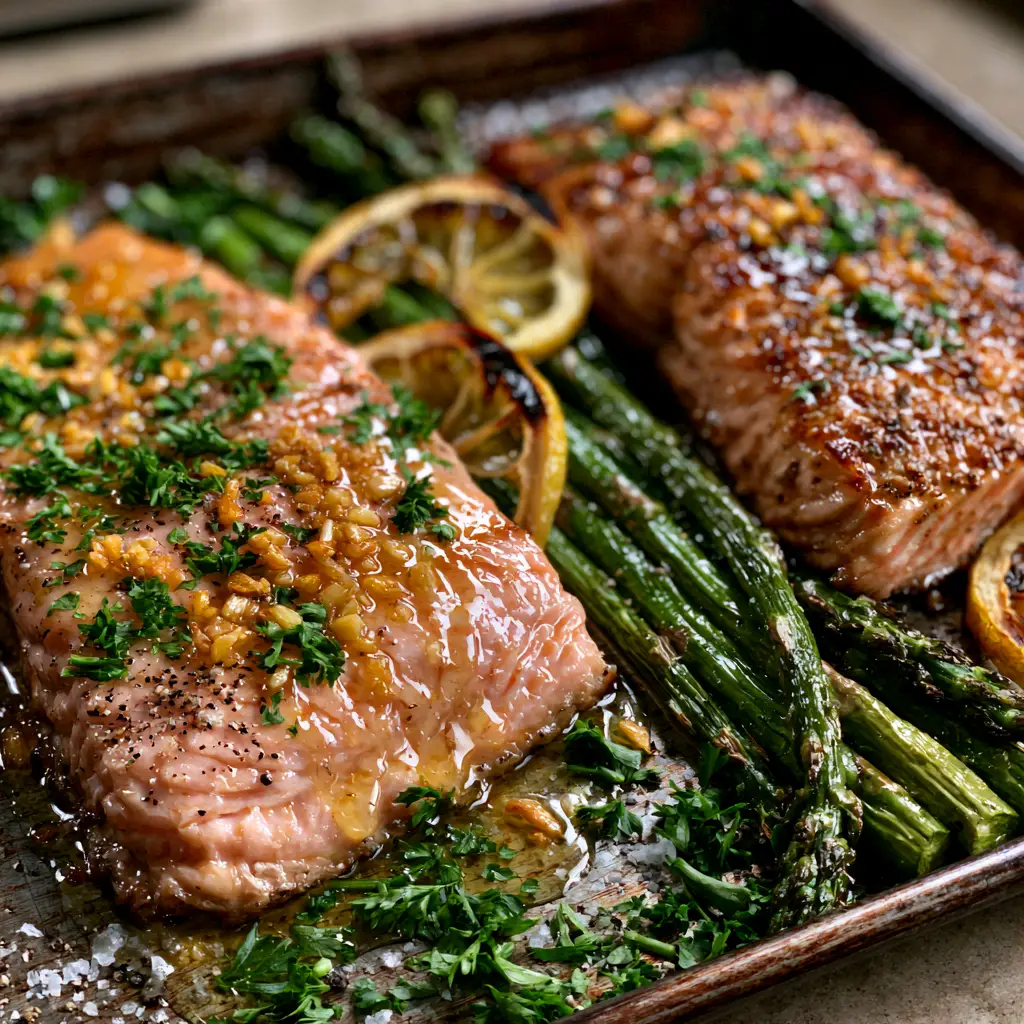
The Anatomy of Flavor: Ingredients and Essential Foundations
Center-Cut Salmon Fillets: 1.5 lbs (680g) of thick-cut salmon provides the necessary thermal mass to stay pink inside while the exterior sears. Look for fillets with vibrant color and firm flesh to ensure that classic flaky texture.
Fresh Green Asparagus: 1 lb (454g) of medium-thick spears work best here as they blister at the same rate the salmon reaches medium-rare. Thinner spears may overcook, so aim for the thickness of a standard pencil.
Unsalted Butter: 4 tbsp (56g) of high-quality butter serves as the base for our glistening sauce, carrying the garlic flavor deep into the fish. Using unsalted allows you to control the final seasoning with the coarse sea salt flakes.
Fresh Garlic: 4 cloves (approx. 20g) of minced garlic provide those golden-brown “bits” that add both crunch and pungent sweetness. Avoid the jarred variety, as fresh garlic is essential for the sautéed aroma we’re after.
Lemon Wheels: 1 medium lemon, sliced into thin wheels, caramelizes under the heat to release a mellow, concentrated acidity. These charred edges provide a sophisticated bitterness that cuts through the rich butter.
Fresh Flat-Leaf Parsley: 1/4 cup (15g) of finely chopped parsley is added at the very end to provide a burst of “bright green” color and herbaceous freshness. It acts as a visual and flavorful palate cleanser.
Foundational Seasonings: 1 tsp (5g) coarse sea salt flakes and 1/2 tsp (3g) cracked black pepper are the “visible” finishers. The large salt flakes provide a crunch that a fine table salt simply cannot replicate.
High-Smoke Point Oil: 1 tbsp (15ml) of avocado or light olive oil is the “invisible” hero that facilitates the initial sear. It prevents the salmon from sticking to the rustic dark metal sheet pan while encouraging browning.
Essential Gear for the Perfect Char
To achieve the specific visual of “charred lemon slices” and “blistered asparagus,” the type of pan you use is paramount. A rustic dark metal baking sheet is preferred because dark surfaces absorb more heat, leading to better browning on the bottom of your ingredients.
You will also need a sharp chef’s knife for mincing the garlic and parsley finely. A small saucepan is required to melt the butter and gently sauté the garlic before it ever hits the oven, ensuring those garlic bits don’t burn into bitterness.
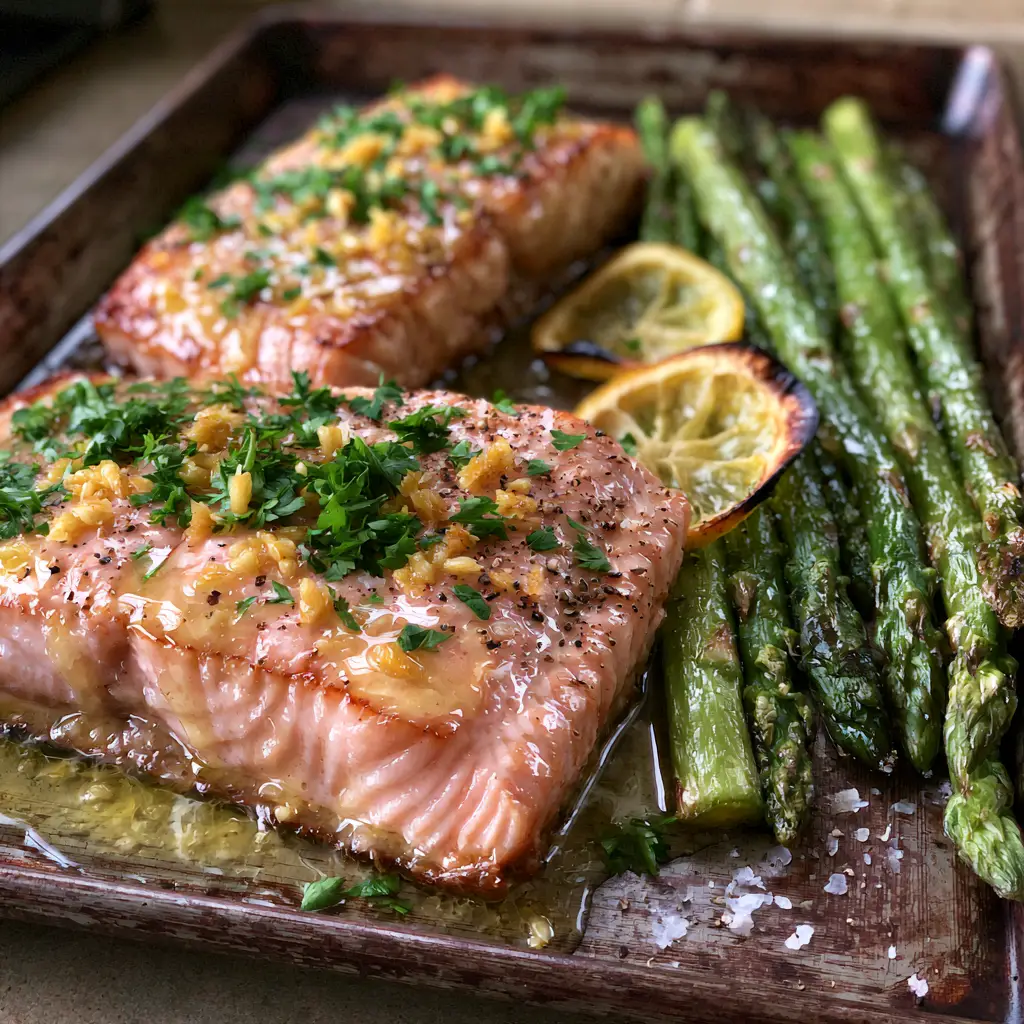
Step-by-Step to Golden-Brown Perfection
Preparing the High-Heat Environment
Start by preheating your oven to 425°F (220°C). If your oven has a convection setting, use it to encourage the “blistered” texture on the asparagus through better air circulation.
Place your dark metal baking sheet inside the oven while it preheats. This “hot pan start” is the secret to getting those seared edges on the bottom of the salmon without overcooking the top.
The Garlic Butter Infusion
While the oven heats, melt the 4 tbsp (56g) of butter in a small skillet over medium heat. Add the minced garlic and sauté for just 60 seconds until fragrant and just barely starting to turn golden.
Remove from heat immediately; the garlic will continue to cook in the residual heat. This ensures you have “minced golden sautéed garlic bits” rather than acrid, burnt pieces.
Prepping the Salmon and Greens
Pat the salmon fillets extremely dry with paper towels. Moisture is the enemy of a good sear; if the fish is damp, it will steam rather than brown.
Snap the woody ends off the asparagus and toss them in a bowl with a drizzle of oil and a pinch of salt. Arrange the lemon wheels in a single layer, as they need direct contact with the pan to caramelize.
The High-Heat Assembly
Carefully remove the hot baking sheet from the oven. Lay the salmon fillets in the center and arrange the asparagus and lemon wheels around them.
Drizzle the translucent golden garlic butter over the salmon and asparagus, ensuring the sautéed garlic bits are distributed across the top. Sprinkle generously with the cracked black pepper.
The Visual Cues of Doneness
Roast for 10-12 minutes. For the final 2 minutes, switch to the “Broil” setting to achieve those “slightly charred and blistered” edges on the asparagus and lemons.
Watch for the salmon to turn from translucent red to a “flaky pink” center. The edges should look “golden-brown” and the butter should be bubbling aggressively against the dark metal.
Expert Tips for Sheet Pan Success
- The Dryness Factor: Never skip patting the salmon dry. This is the difference between a “seared” look and a “boiled” look.
- Room Temperature: Let the salmon sit out for 15 minutes before cooking. This ensures the center warms up at the same rate the exterior browns.
- Don’t Over-Crowd: If the asparagus is piled on top of itself, it won’t blister. Give every spear its own space on the dark metal sheet.
- The Finishing Touch: Only add the fresh parsley and sea salt flakes after the pan comes out of the oven to preserve their “bright green” and “visible” qualities.
Smart Storage and Reheating Advice
This dish is best served immediately to enjoy the “glistening” butter sauce. However, leftovers can be stored in an airtight container in the refrigerator for up to 2 days.
To reheat without drying out the fish, place the salmon in a covered skillet over low heat with a splash of water. Avoid the microwave, as it will turn the “succulent” texture into something rubbery.
What to Serve with This Vibrant Meal
While this is a complete meal on its own, it pairs beautifully with light, Mediterranean-inspired sides. If you’re looking for a different flavor profile, you might enjoy my classic lemon garlic salmon which uses similar techniques with different aromatics.
For those who prefer a more contained cooking method, the baked salmon in foil technique offers a steamier, more delicate texture. If you find yourself with leftover salmon, it makes a world-class addition to a creamy salmon pasta the following night.
Frequently Asked Questions
Yes, but it must be completely thawed and patted extremely dry. If there is excess moisture from freezing, the salmon will steam rather than sear, losing that golden-brown crust.
No. By preheating the sheet pan, the bottom of the salmon sears instantly upon contact. The high oven heat and final broil will take care of the top and sides without needing to flip.
The salmon is done when it reaches an internal temperature of 145°F (63°C). Visually, the flesh should be opaque and flaky on the outside while remaining a succulent, slightly translucent pink in the very center.
If using ‘pencil-thin’ asparagus, add it to the sheet pan 5 minutes after the salmon has started roasting. This prevents the delicate stalks from burning before the fish is cooked through.
Dark metal absorbs and radiates heat more efficiently than glass or light-colored pans. This is crucial for achieving the ‘blistered’ texture on the asparagus and ‘charred’ edges on the lemon wheels.
The Ultimate Baked Salmon and Asparagus Recipe
Baked Salmon and Asparagus with Glistening Garlic Butter and Charred Lemon
Ingredients
Equipment
Method
- Preheat oven to 425°F (220°C) with a dark metal sheet pan inside.
- Melt butter in a skillet; sauté minced garlic for 60 seconds until golden. Set aside.
- Pat salmon dry. Arrange salmon, asparagus, and lemon wheels on the hot baking sheet.
- Drizzle garlic butter over salmon and vegetables. Season with cracked pepper.
- Bake for 10-12 minutes, broiling for the last 2 minutes until asparagus is blistered and salmon is flaky.
- Top with fresh parsley and coarse sea salt flakes before serving.
Notes
Use a dark baking sheet to maximize the charred effect on the lemon and asparagus.
Join the CrispChop Community!
We hope this baked salmon and asparagus becomes a staple in your kitchen. There is nothing quite like the satisfaction of a restaurant-quality meal made in under 30 minutes on a single pan.
If you made this, please leave a comment below and let us know how your “blistered asparagus” turned out! Don’t forget to follow us and share your creations on Pinterest to help other home cooks find this recipe.