There is a specific, intoxicating magic that happens when a carbon steel wok meets high-intensity heat, wide rice noodles, and a fistful of Thai basil. This Pad Kee Mao is not just a meal; it is a sensory journey that captures the essence of Bangkok’s vibrant street food scene. With its signature charred edges and a sauce so dark and glossy it reflects the kitchen lights, this dish is the pinnacle of savory-sweet-spicy balance.
The Pad Kee Mao experience is defined by the contrast of textures: the “toothsome” pull of the noodles, the snap of baby corn, and the tender sear on the chicken breast. Every bite carries a controlled burn from fresh bird’s eye chilies, softened by the aromatic, peppery floral notes of Thai basil leaves. If you have been searching for a recipe that replicates that elusive “wok hei”—the breath of the wok—you have arrived at your destination.
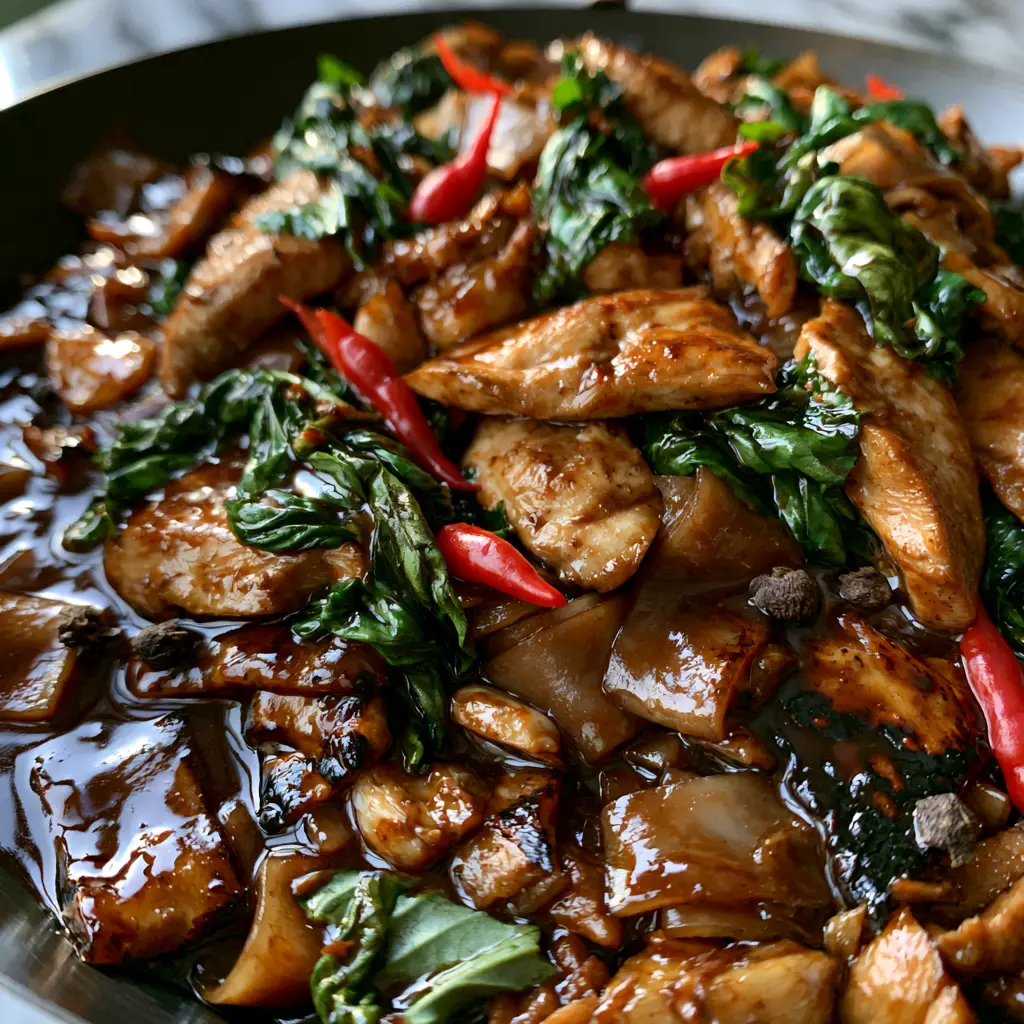
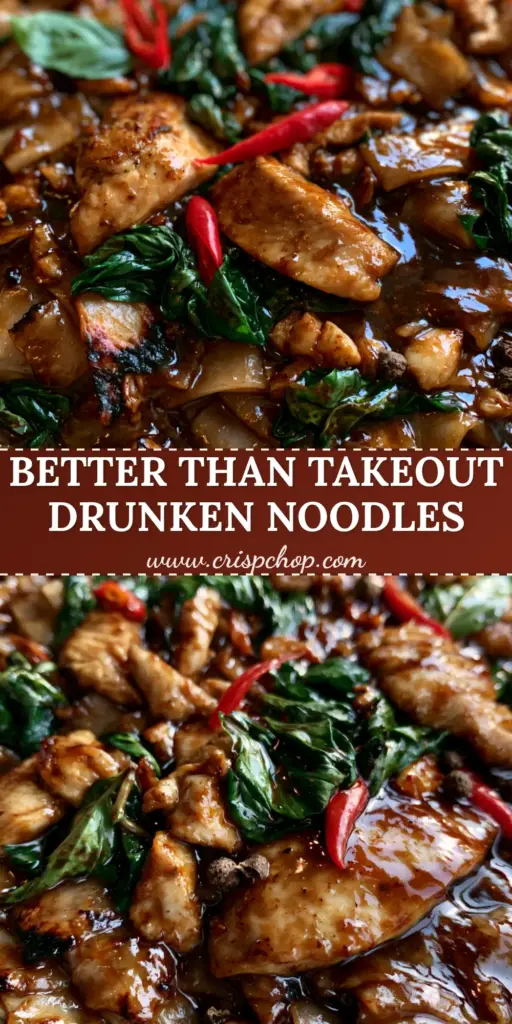
Our visual blueprint for this dish emphasizes a deep mahogany glaze and visible aromatics that promise a bold flavor profile. Whether you are a seasoned stir-fry master or a curious home cook, this guide will walk you through the culinary science of achieving that perfect glistening finish. Prepare your palate for a dish that is as visually stunning as it is delicious.
The Anatomy of a Perfect Spicy Drunken Noodle
- Signature Wok Char: Achieving those distinct brown, blistered edges on the wide flat rice noodles is essential for an authentic smoky flavor profile.
- Glossy Mahogany Glaze: A multi-dimensional sauce using dark soy and oyster sauce creates a thick, glistening coating that clings to every ingredient.
- Aromatic Heat: The combination of smashed (not minced) garlic and sliced red bird eye chilies provides a rustic, layered heat that builds with every forkful.
- Textural Contrast: Soft, moist chicken breast slices paired with the crunch of baby corn spears and the delicate wilt of fresh Thai basil.
- Peppery Finish: A generous inclusion of cracked black pepper adds a foundational warmth that differentiates this from other Thai noodle dishes.
Foundational Ingredients for an Authentic Mahogany Glaze
Wide Flat Rice Noodles (Sen Yai): You will need 1 lb (450g) of fresh wide rice noodles or prepared dried ones. These noodles are the canvas for the sauce and require careful handling to ensure they char rather than turn to mush.
Chicken Breast: 1/2 lb (225g) of chicken breast, thinly sliced against the grain. This ensures the protein remains tender and sears quickly under high heat, mirroring the “seared chicken breast” requirement of our visual blueprint.
Thai Bird Eye Chilies: 4-6 chilies (10g), sliced into thin slivers. These provide the characteristic “Kee Mao” kick; adjust the quantity based on your personal heat tolerance while maintaining the visual red pop.
Smashed Garlic: 5 cloves (15g) of fresh garlic, smashed with the side of a knife. Smashing releases essential oils differently than mincing, leading to the rustic, visible aromatics seen in professional wok cooking.
Baby Corn Spears: 1/2 cup (75g) of canned or fresh baby corn. These add a much-needed structural crunch and a pale yellow visual contrast to the dark noodles.
Thai Basil Leaves: 1 cup (30g) of fresh, loosely packed Thai basil. Unlike Italian basil, Thai basil is sturdy and spicy, wilting into a vibrant green that perfumes the entire dish.
Dark Soy Sauce: 1 tbsp (15ml) of dark soy sauce. This is primarily for the deep, mahogany color and a hint of molasses-like sweetness that coats the noodles.
Oyster Sauce: 2 tbsp (30ml) of premium oyster sauce. This acts as the thickening agent, providing the “glossy” and “moist” surface texture described in our Midjourney prompt.
Fish Sauce: 1 tbsp (15ml) of high-quality fish sauce. This provides the essential salty, umami backbone that defines Southeast Asian cuisine.
Foundational Liquid/Fat: 3 tbsp (45ml) of neutral high-smoke point oil (like canola or grapeseed). This is technically required to sear the chicken and blister the noodles without smoking out the kitchen.
Cracked Black Pepper: 1 tsp (2g) of freshly cracked black pepper. This adds a sharp, earthy heat that complements the fresh chilies perfectly.
Essential Wok Tools for Achieving Signature Char
To recreate the handheld smartphone photo aesthetic of a professional Pad Kee Mao, a well-seasoned carbon steel wok is your best friend. The thin walls of the wok allow for rapid temperature changes, which is crucial for searing the chicken and noodles without overcooking the delicate basil. If you do not have a wok, a large cast-iron skillet is a secondary choice due to its high heat retention.
You will also need a sturdy wok spatula or “hoak.” Its curved edge is designed to scrape the bottom of the wok, ensuring the dark soy glaze doesn’t burn while allowing the noodles to sit long enough to develop those charred brown edges. A high-heat source, such as a gas range or a dedicated outdoor stir-fry burner, will produce the best results for that “glistening and moist” finish.
The Masterclass: Wok Techniques for Smoldering Heat
Step 1: Tempering the Aromatics
Heat 1 tbsp (15ml) of oil in your wok over medium-high heat until it begins to shimmer. Add the 5 cloves (15g) of smashed garlic and the slivers of red bird eye chilies. Stir-fry for 30 seconds until the garlic is golden and fragrant, ensuring the oils are infused with the chili heat. Listen for the sizzle; this is the sound of flavor developing.
Step 2: Searing the Chicken Breast
Increase the heat to high and add the sliced chicken breast (225g) in a single layer. Let the chicken sit undisturbed for 60 seconds to develop a deep golden-brown crust. Toss the chicken with the garlic and chilies for another minute until it is 80% cooked through, then remove the chicken and aromatics from the wok and set aside to prevent overcooking.
Step 3: The Noodle Char and Glaze
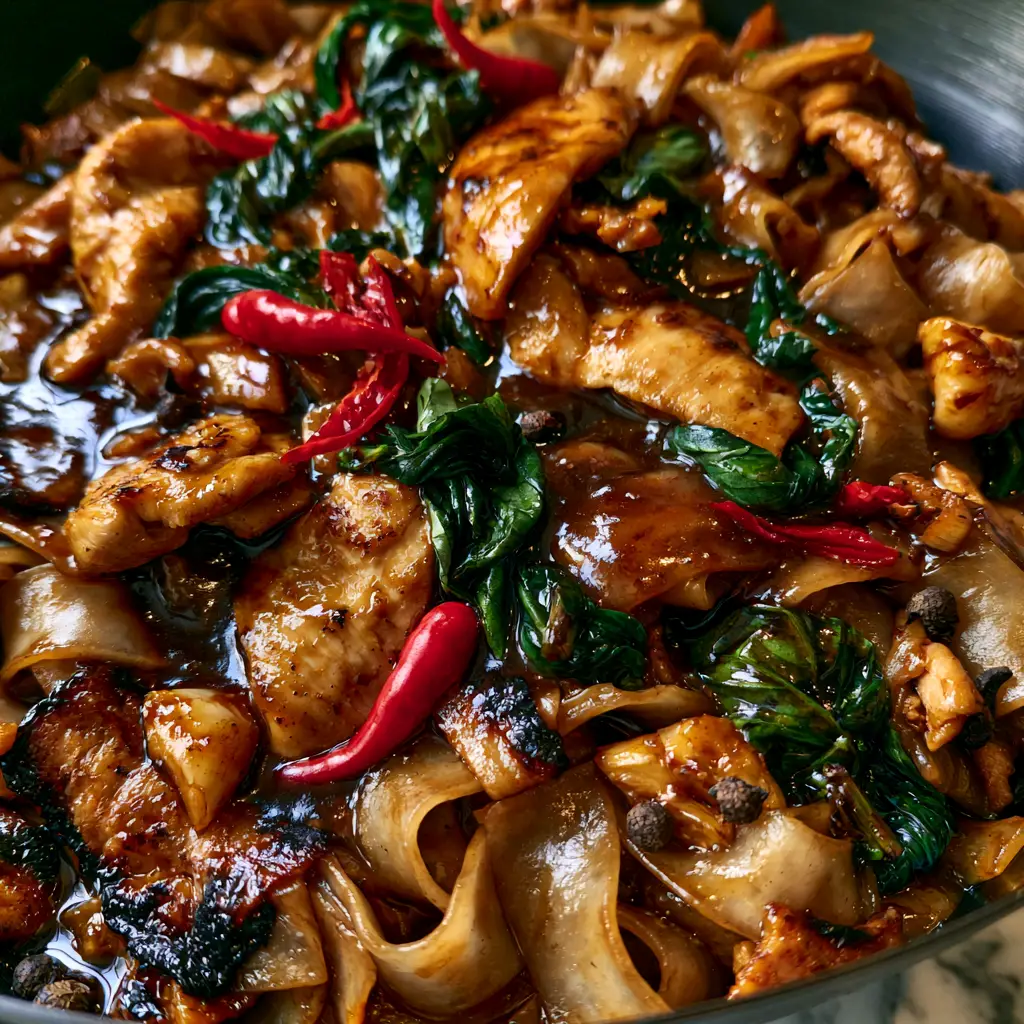
Add the remaining 2 tbsp (30ml) of oil to the scorching hot wok. Carefully add the 1 lb (450g) of wide rice noodles, spreading them out as much as possible. Let them sear for 1-2 minutes until you see visible charred brown edges. Pour in the mixture of dark soy sauce, light soy sauce, oyster sauce, and fish sauce. The sauce will bubble vigorously and thicken into a glossy, dark mahogany glaze that clings to the noodles.
Step 4: Incorporating the Textures
Return the chicken and aromatics to the wok. Add the baby corn spears (75g) and the 1 tsp (2g) of cracked black pepper. Toss everything together rapidly using a folding motion to ensure the “thick, glossy sauce” is evenly distributed. The high heat will slightly caramelize the sugars in the dark soy sauce, creating that glistening surface highlight.
Step 5: The Final Wilt
Turn off the heat—this is critical for preserving the color of the herbs. Add the 1 cup (30g) of fresh Thai basil leaves. Toss gently for 15-20 seconds. The residual heat will wilt the leaves until they are vibrant and soft, releasing their floral aroma without turning them brown or bitter.
Expert Tips for Success
- Noodle Preparation: If using fresh noodles, make sure they are at room temperature. Cold noodles are brittle and will break into small pieces rather than remaining wide and flat.
- The “Breath of the Wok”: Do not crowd the pan. If your stove isn’t powerful, cook the noodles in two batches to ensure they sear and char instead of steaming.
- Sauce Balance: If the sauce is too thick, add 1 tbsp (15ml) of water or chicken stock to maintain that “moist” appearance without diluting the flavor.
- Basil Varieties: Always use Thai Holy Basil or Thai Sweet Basil. Never substitute with Italian basil, as the flavor profile will shift from spicy/floral to sweet/peppery, ruining the authenticity.
Storage, Reheating & Freezing
Pad Kee Mao is best enjoyed immediately while the noodles are at their peak “toothsome” texture. However, you can store leftovers in an airtight container in the refrigerator for up to 2 days. The noodles will naturally absorb more sauce over time, so the “glossy” appearance may dull slightly.
To reheat, add a splash of water to a skillet over medium heat. Add the noodles and toss gently until heated through. Avoid using a microwave if possible, as it can make the rice noodles rubbery. This dish does not freeze well, as the texture of the wide rice noodles degrades significantly upon thawing.
What to Serve With This
Since this dish is heavy on savory and spicy notes, it pairs beautifully with refreshing, fruit-forward sides. If you are hosting a themed dinner, consider starting with a crisp salad or following up with a tropical dessert like this authentic mango bingsu.
For those looking to build a full Thai-inspired spread, our Thai basil chicken fried rice offers a familiar flavor profile in a different format. If you prefer a lighter protein option on the side, a perfectly seared tuna steak recipe can provide a sophisticated contrast. Finally, if you are planning a summer gathering, these spicy noodles are a fantastic alternative to traditional 4th of July food (coming soon) for those who crave a bit of heat.
Frequently Asked Questions
Absolutely. Replace the chicken with tofu or extra vegetables and swap the fish sauce and oyster sauce for vegan stir-fry sauce and light soy sauce.
Yes, but they must be soaked in lukewarm water until pliable (not soft) before stir-frying. Fresh noodles are preferred for the best texture and char.
Avoid over-stirring. Let the noodles sit in the hot wok to develop a crust, then use a gentle folding motion with a wide spatula rather than vigorous tossing.
Pad See Ew is a mild, sweet, and salty dish focused on dark soy sauce and Chinese broccoli. Pad Kee Mao is much spicier, featuring fresh chilies, Thai basil, and aromatics like garlic and pepper.
While there are many theories, the most popular is that the dish is so spicy it requires a lot of cold beer to wash it down, or that it’s the perfect late-night meal for those who have had a few drinks.
Authentic Pad Kee Mao: Step-by-Step Drunken Noodles
Pad Kee Mao: The Ultimate Guide to Authentic Spicy Thai Drunken Noodles
Ingredients
Equipment
Method
- Sauté smashed garlic and chilies in oil over medium-high heat until golden.
- Add sliced chicken breast on high heat; sear until deep golden edges form, then remove from wok.
- Add noodles to the scorching wok; let sit to create charred brown edges before adding the sauce mixture.
- Combine all ingredients, add baby corn and black pepper, then toss with Thai basil off-heat until wilted.
Notes
Use a high-smoke point oil like canola for the best char.
Closing & Call to Action
Mastering the Pad Kee Mao is a rite of passage for any lover of Southeast Asian cuisine. By focusing on high-heat techniques and the specific balance of dark soy and fresh Thai basil, you can create a restaurant-quality meal in the comfort of your own kitchen. The visual appeal of the charred noodles and glossy sauce is matched only by the explosion of flavor in every bite.
Did you manage to get that perfect wok char? We would love to hear about your results! Leave a comment below, sign up for our newsletter for more professional culinary blueprints, and don’t forget to share your creations and pin this recipe to your favorite boards on Pinterest.