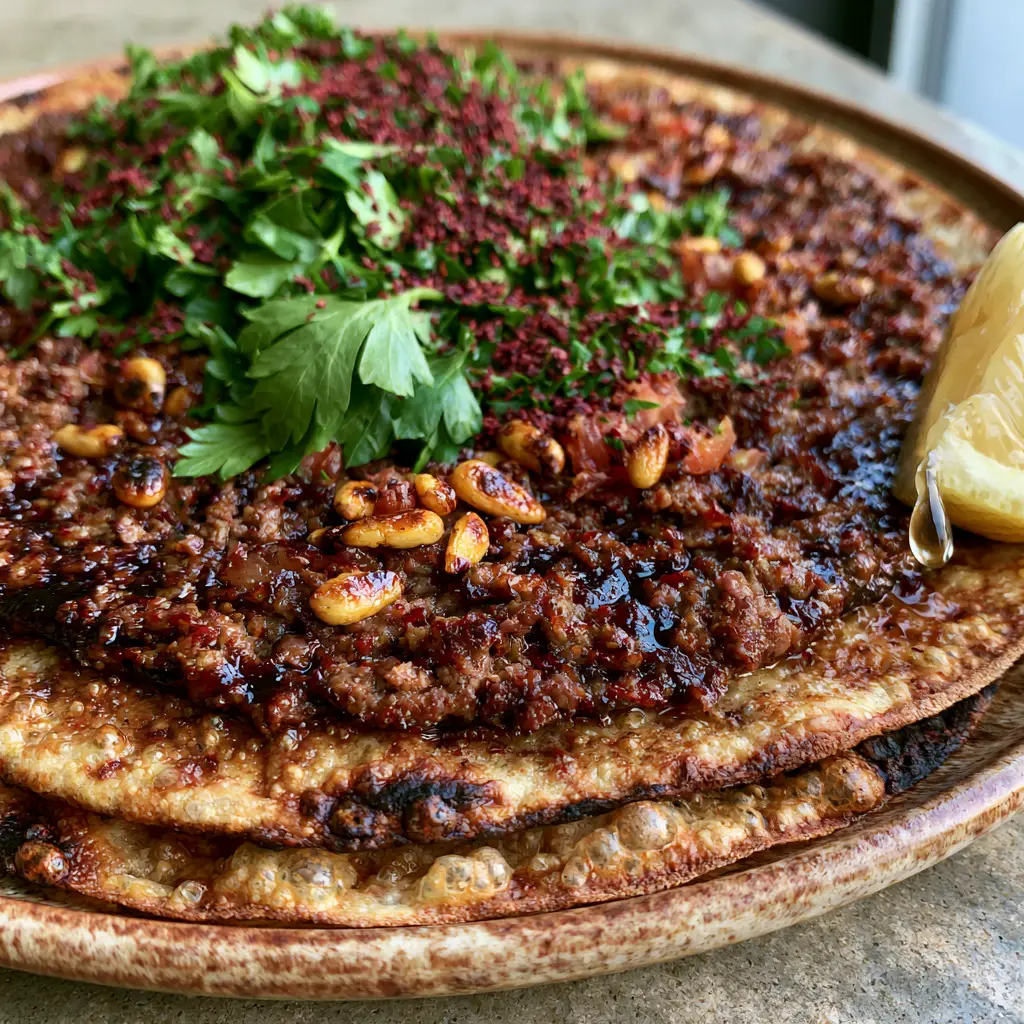
Lahm Bi Ajeen is more than just a meal; it is a sensory journey through the Levant. Imagine a paper-thin, golden-brown crispy dough that shatters with every bite, topped with a rich, savory layer of spiced beef. This isn’t your average flatbread; it is a masterpiece of textures, from the slightly charred, bubbly edges of the crust to the dark, glossy sheen of a pomegranate molasses glaze.
When you pull these meat pies from the oven, the aroma of toasted pine nuts and warm allspice fills the kitchen, signaling the start of a truly authentic culinary experience. The visual contrast of vibrant green flat-leaf parsley against the crimson dust of sumac makes this dish as beautiful as it is delicious. Whether served as a centerpiece for a family gathering or a sophisticated appetizer, this recipe delivers professional results every time.
Achieving the perfect Lahm Bi Ajeen requires a balance of high-heat precision and high-quality ingredients. We are going to dive deep into the techniques required to mimic that authentic stone-oven finish in your home kitchen. From the glistening droplets of fresh lemon juice to the finely diced raw tomatoes that add a cooling crunch, every element in this recipe serves a specific visual and flavorful purpose.
The Visual Allure and Texture Profile of Authentic Sfeeha
- The Cracker-Thin Foundation: A dough so thin it achieves a translucent quality before baking, resulting in a snap-crisp texture.
- The Glossy Meat Glaze: A rich topping of ground beef that shines thanks to the addition of high-quality pomegranate molasses.
- High-Contrast Garnishes: The ruby-red pop of sumac and the bright emerald of fresh parsley provide a visual “wow” factor.
- Artisanal Char: Micro-blisters and darkened edges that provide a smoky depth of flavor and professional aesthetic.
- Textural Harmony: The combination of soft, juicy meat and crunchy, buttery toasted pine nuts.
Foundational Ingredients for the Perfect Topping and Crust
High-Protein Bread Flour: You need 3.5 cups (420g) of bread flour to develop enough gluten for that characteristic thin, strong dough. This ensures the base can hold the heavy meat topping without tearing or becoming soggy.
Active Dry Yeast: Use 1 tsp (3g) to provide just enough lift for those beautiful, bubbly charred edges. We aren’t looking for a thick loaf, but rather a subtle aeration that creates a light, crispy mouthfeel.
80/20 Ground Beef: 1 lb (454g) of ground beef with a 20% fat content is essential for the “glossy” look. The rendered fat mixes with the molasses to create that signature dark, glistening finish described in our visual blueprint.
Pomegranate Molasses: 3 tbsp (45ml) of this thick, tangy syrup provides the deep mahogany color and the essential acidic “zing.” It acts as both a flavor enhancer and a visual glazing agent for the meat.
Toasted Pine Nuts: 1/4 cup (35g) of pine nuts provides the “golden” visual element and a buttery crunch. Toasting them beforehand is non-negotiable for unlocking their essential oils.
Sumac and Fresh Herbs: 1 tbsp (8g) of ground sumac and 1/2 cup (15g) of fresh chopped parsley. The sumac adds a citrusy astringency and a crimson dust, while the parsley provides a fresh, cooling counterpoint to the rich beef.
Finely Diced Tomatoes: 2 medium (approx. 200g) tomatoes, seeded and finely diced. These are added raw or lightly cooked to maintain a bright, fresh contrast against the dark, cooked meat topping.
Essential Culinary Tools for a Professional Char
To achieve the “extreme close-up” quality of professional Lahm Bi Ajeen, you need the right gear. A heavy-duty baking stone or steel is the most important tool in your arsenal. These tools retain massive amounts of thermal energy, which is what causes the dough to blister and char instantly upon contact, mimicking a traditional Middle Eastern brick oven.
A rolling pin is necessary to get the dough to that “paper-thin” state, but a professional-grade dough docker can also help prevent the center from puffing up too much. For the topping, a fine-mesh strainer is helpful to drain excess liquid from the diced tomatoes, ensuring the crust stays crispy rather than soggy. Finally, a high-quality smartphone or camera with a macro lens will help you capture those glistening lemon juice droplets for your own social media feed.
Step-by-Step Evolution of a Masterpiece
Preparing the High-Elasticity Dough
In a large bowl, whisk together 3.5 cups (420g) bread flour, 1 tsp (6g) fine sea salt, and 1 tsp (4g) sugar. In a separate measuring cup, combine 1.25 cups (300ml) warm water (105°F/40°C) with 1 tsp (3g) active dry yeast and 2 tbsp (30ml) extra virgin olive oil. Let the yeast bloom for 5 minutes until foamy.
Gradually stir the liquid into the dry ingredients until a shaggy dough forms. Knead by hand for 10 minutes or in a stand mixer for 6 minutes until the dough is silky, smooth, and passes the windowpane test. Cover and let rise in a warm spot for 60-90 minutes, or until doubled in size. This rest is crucial for gluten relaxation, allowing you to roll the dough paper-thin later.
Creating the Glossy Meat Filling
While the dough rises, prepare the topping. In a large bowl, combine 1 lb (454g) ground beef, 1 finely grated yellow onion (squeezed of all juice), 2 minced garlic cloves, 1 tsp (2g) allspice, and 1/2 tsp (1g) cinnamon. Add 3 tbsp (45ml) pomegranate molasses and mix thoroughly. You will notice the meat takes on a dark, glossy, and slightly tacky texture.
Fold in 1/2 of your finely diced tomatoes and half of the toasted pine nuts. The mixture should look rich and well-integrated. If the mixture seems too wet, let it sit in a colander for 10 minutes to drain. We want a juicy topping that doesn’t compromise the crispy integrity of the thin base.
Rolling, Topping, and The High-Heat Bake
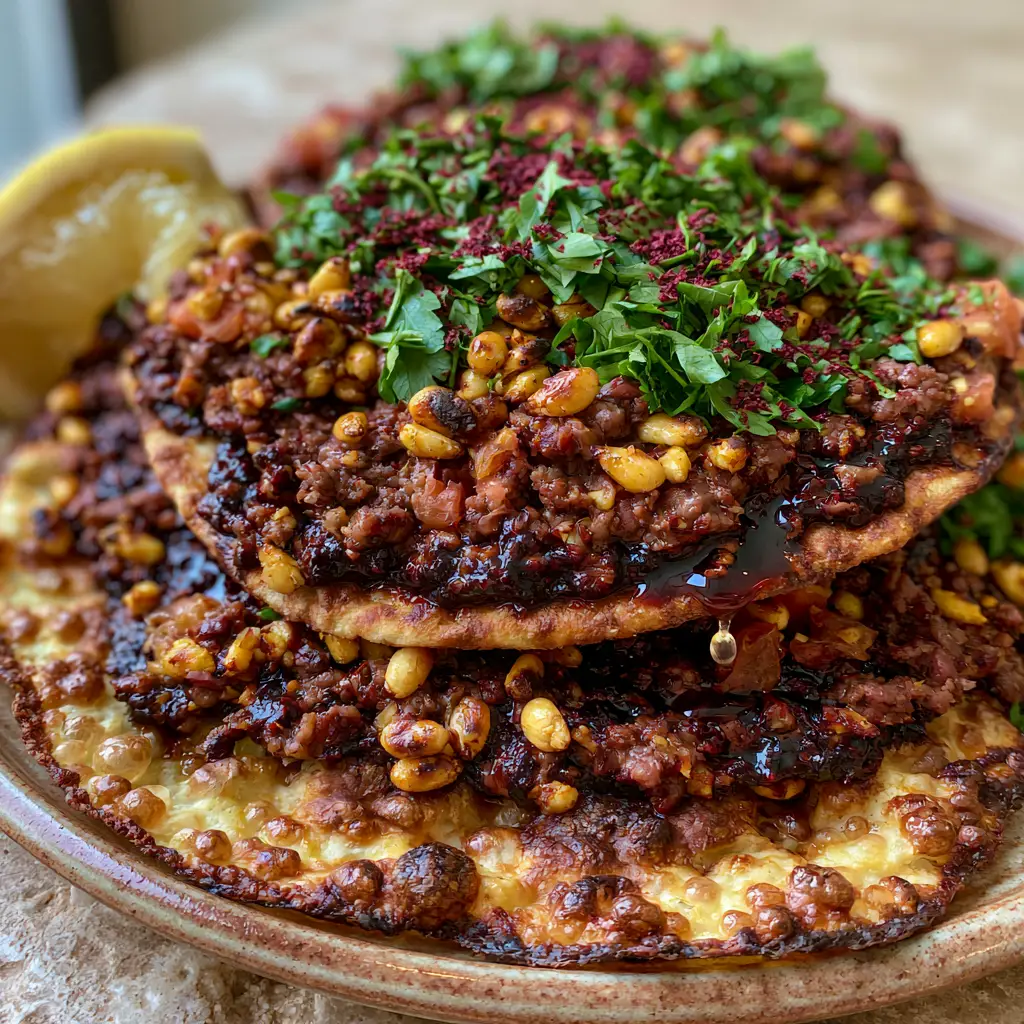
Preheat your oven to its highest setting (usually 500°F/260°C) with your baking stone inside for at least 45 minutes. Divide the dough into small balls, roughly the size of a golf ball. On a lightly floured surface, roll each ball out until it is paper-thin and roughly 6-8 inches (15-20cm) in diameter.
Spread a thin layer of the meat mixture over the dough, pressing it down firmly with your fingers so it adheres. Transfer to the hot stone using a pizza peel. Bake for 5-7 minutes. Watch for the visual cues: the edges should be bubbly and charred, and the meat should be sizzling in its own glossy juices. The bottom should be golden-brown and stiff enough to hold its shape.
Expert Tips for Success
- Cold Fermentation: For even better flavor and easier stretching, let your dough rise in the fridge for 24 hours. This develops complex sugars that lead to better charring.
- Dry the Vegetables: Always squeeze the liquid out of your grated onions and seeded tomatoes. Excess water is the enemy of a crispy Lahm Bi Ajeen.
- The Lemon Squeeze: As seen in the visual prompt, always finish with a fresh squeeze of lemon right before serving. The glistening droplets add a bright acidity that cuts through the richness of the beef.
- Don’t Overcrowd: Bake in batches. Overcrowding the oven lowers the temperature and prevents that essential rapid char.
Flavor Pairings and Regional Side Dishes
Lahm Bi Ajeen is traditionally served with a side of creamy labneh or a fresh salad. If you are looking to round out a Mediterranean feast, consider serving this alongside Mediterranean baked feta eggs for a protein-packed brunch. The tanginess of the feta complements the pomegranate molasses perfectly.
For those who love variety in their breads, these meat pies pair excellently with Moroccan herb stuffed flatbread on a large mezze platter. If you’re planning a larger gathering like a 4th of July food celebration, these pies are a fantastic unexpected addition that travels well and stays delicious at room temperature.
If you prefer a lighter pairing, a simple arugula salad or even a tuna steak recipe can provide a sophisticated contrast to the rustic, hearty nature of the lamb or beef pies.
Frequently Asked Questions
Absolutely. Authentic versions often use ground lamb or a mix of lamb and beef. Just ensure the meat has enough fat content to create that signature glossy sheen.
Allow the dough to rest for at least 60 minutes. This relaxes the gluten, making the dough extensible enough to roll into a translucent, thin sheet that becomes crispy when baked.
The glossy finish is achieved by combining the natural fats of the ground beef with pomegranate molasses, which carmelizes slightly under high heat.
While similar, Lahm Bi Ajeen (Levantine) often uses pomegranate molasses for a tangy, dark, glossy finish, whereas Turkish Lahmacun typically relies more on red pepper paste and is often served with a salad rolled inside.
Sogginess usually comes from excess moisture in the onions or tomatoes. Ensure you grate the onions and squeeze out their juice, and seed the tomatoes before dicing.
Authentic Lahm Bi Ajeen Recipe Card
Lahm Bi Ajeen: The Ultimate Guide to Crispy Middle Eastern Meat Pies
Ingredients
Equipment
Method
- Combine flour, salt, and sugar. Add bloomed yeast mixture and olive oil. Knead for 6-10 minutes until smooth and elastic.
- Place in a greased bowl, cover, and let rise in a warm spot for 60-90 minutes until doubled in size.
- Mix ground beef with grated onion, pomegranate molasses, allspice, and cinnamon until glossy and dark.
- Fold in half of the diced tomatoes and half of the toasted pine nuts.
- Divide dough into small balls and roll out into paper-thin circles on a floured surface.
- Spread a thin layer of meat mixture to the edges. Bake on a preheated stone at 500°F (260°C) for 5-7 minutes until edges are charred and bubbly.
- Remove from oven, sprinkle with sumac, fresh parsley, remaining tomatoes, and pine nuts. Squeeze fresh lemon juice droplets over the top before serving.
Notes
Drain all moisture from onions and tomatoes to prevent a soggy crust.
Closing & Call to Action
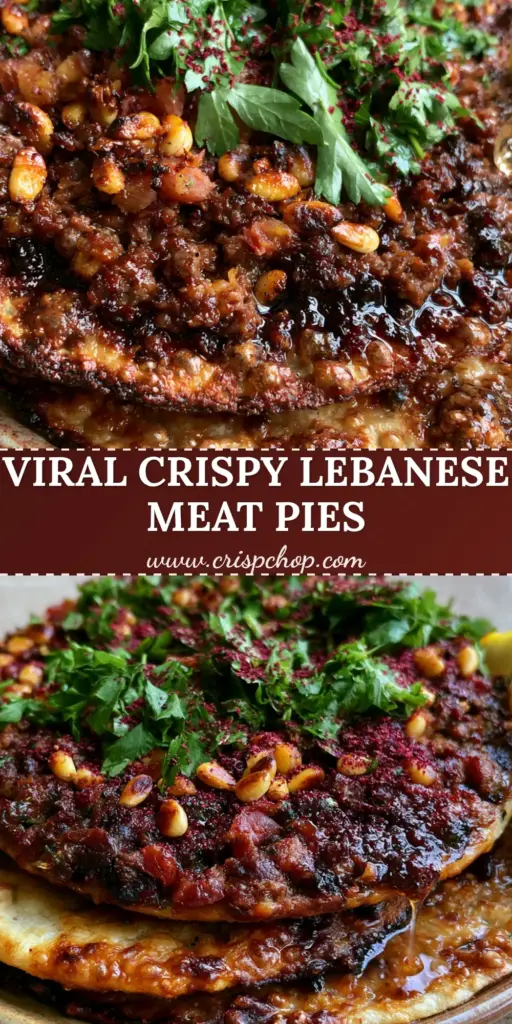
Mastering the art of Lahm Bi Ajeen brings the authentic flavors of the Middle East straight to your kitchen. With its paper-thin crispy base and tangy, glossy meat topping, it’s a dish that never fails to impress both visually and gastronomically. The key is the high heat and the quality of your pomegranate molasses—don’t skip them!
Did you manage to get those perfect charred edges? We want to see your results! Leave a comment below and let us know how your batch turned out. If you loved this recipe, please share it and follow our latest culinary adventures on Pinterest for more inspiration. Happy baking!