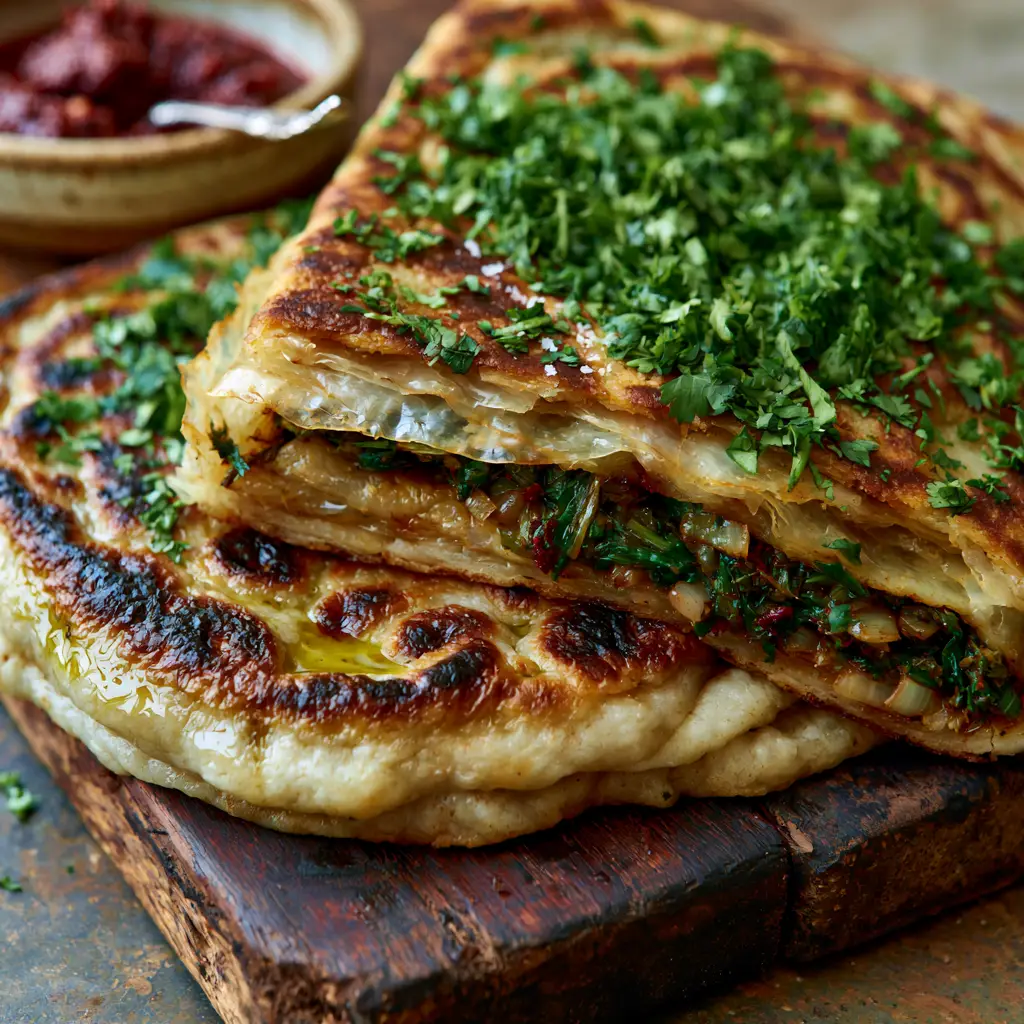
The aroma of toasted cumin seeds and sizzling olive oil is enough to transport anyone to the vibrant streets of Marrakech. This Moroccan herb-stuffed flatbread, traditionally known as Msemen or Mahjouba, is a culinary masterpiece of texture and flavor. Imagine tearing into a golden-brown, pan-seared crust to reveal paper-thin, translucent layers of dough infused with sautéed green herbs and aromatic spices.
Whether you are looking for a show-stopping brunch centerpiece or a savory snack, this Moroccan herb-stuffed flatbread delivers a satisfying crunch followed by a buttery, melt-in-your-mouth interior. The secret lies in the lamination of the dough and the precise sautéing of the onion and herb filling to ensure every bite is packed with savory depth.
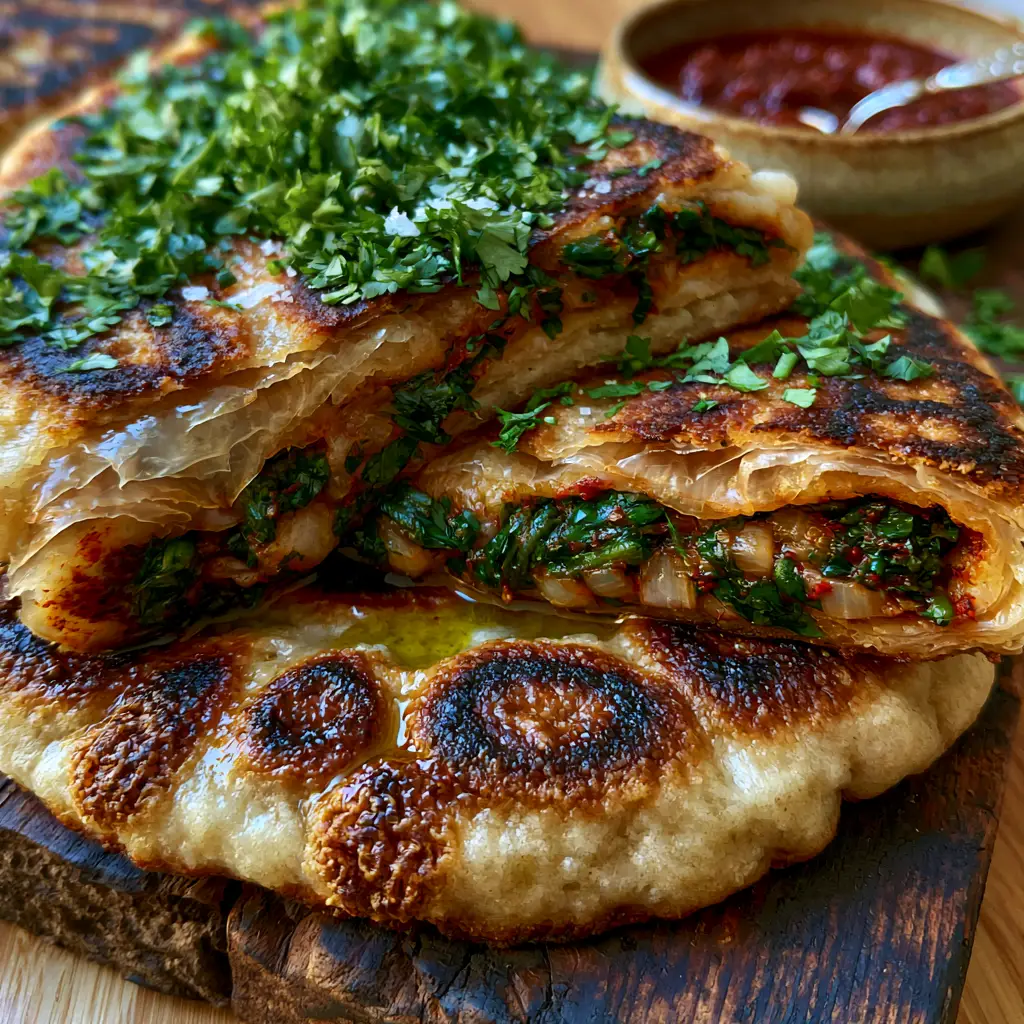
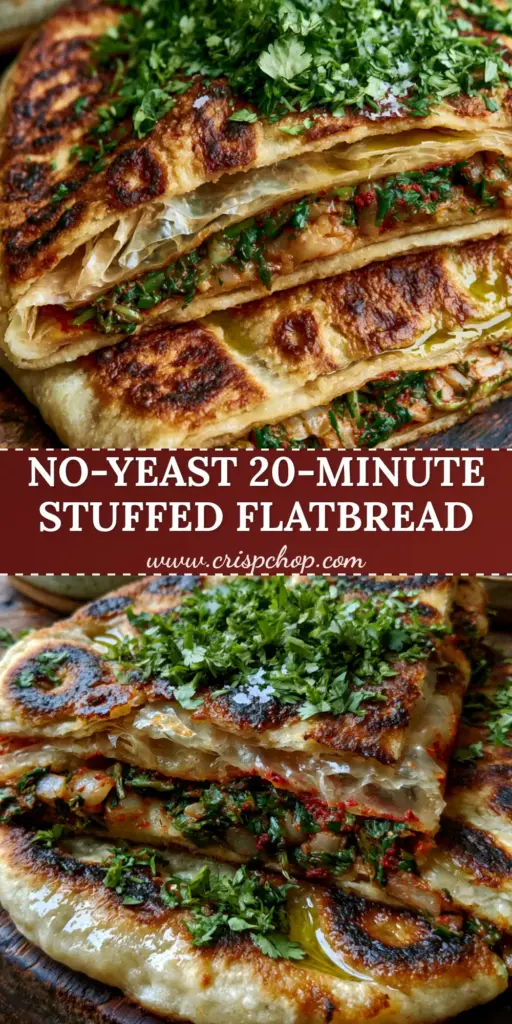
Our version stays true to the visual heritage of North African street food, featuring those iconic charred “leopard spots” and a glistening finish of extra virgin olive oil. Served alongside a fiery red harissa paste, this dish is a masterclass in balancing heat, salt, and herbaceous freshness. It is a fantastic addition to any global feast or even a unique twist for your 4th of July food spread.
Why You Will Crave This Moroccan Herb-Stuffed Flatbread
- Textural Contrast: The combination of a crispy, pan-seared exterior and multiple flaky, tender internal layers creates a professional-grade mouthfeel.
- Aromatic Filling: Sautéed translucent onions, toasted cumin, and a vibrant mix of herbs provide a complex flavor profile that is both earthy and bright.
- Visually Stunning: With its golden-brown leopard spots and fresh cilantro garnish, this flatbread looks like it came straight from a high-end food photography set.
- Versatility: It pairs beautifully with everything from morning eggs to evening stews, making it a staple for any time of day.
The Essential Pantry Staples for Authentic Msemen
To achieve the specific elasticity and flakiness required for a Moroccan herb-stuffed flatbread, you need a balance of proteins and fats. Here is what you will need to gather.
Fine Semolina Flour: 1 cup (160g). Semolina provides the signature “tooth” and structural integrity that allows the dough to be stretched paper-thin without tearing.
All-Purpose Flour: 2 cups (250g). This provides the softness and gluten network necessary for those tender, translucent internal layers.
Warm Water: 1 1/4 cups (300ml). Essential for hydrating the flour and activating the gluten; it should feel like warm bathwater to the touch.
Sea Salt Flakes: 1 tsp (5g) for the dough, plus extra for finishing. Salt is the primary flavor enhancer that bridges the gap between the dough and the savory filling.
Olive Oil: 1/2 cup (120ml). Used for both sautéing the filling and coating the dough layers to prevent them from sticking together during the folding process.
Yellow Onions: 2 medium (200g), finely minced. These must be sautéed until translucent to provide a subtle sweetness without a crunchy raw texture.
Fresh Parsley and Cilantro: 1 cup (60g), finely chopped. These green herbs form the vibrant heart of the filling, offering a burst of freshness in every bite.
Cumin Seeds: 1 tbsp (6g). Toasting these seeds in the pan before adding the onions releases essential oils that define the North African flavor profile.
Red Chili Flakes or Paprika: 1/2 tsp (2g). This provides the “hint of red spices” mentioned in our visual blueprint, adding a gentle warmth to the herb mixture.
Red Harissa Paste: For serving. This spicy, smoky condiment is the traditional accompaniment, cutting through the richness of the seared dough.
Kitchen Gear for Achieving the Perfect Char
To replicate the high-resolution food photography results, you need tools that manage heat effectively. A heavy-bottomed cast iron skillet or a traditional Moroccan farrah is ideal for creating those distinct charred leopard spots.
You will also need a large, clean work surface (like a marble countertop or a large wooden board) for stretching the dough. A sharp chef’s knife is required for the fine mincing of onions and herbs, ensuring the filling is distributed evenly without puncturing the delicate pastry layers.
Step 1: Mastering the Elastic Semolina Dough
Begin by combining the all-purpose flour, fine semolina, and sea salt in a large mixing bowl. Slowly incorporate the warm water while stirring with your hand or a wooden spoon until a shaggy mass forms.
Turn the dough onto a lightly floured surface and knead for at least 10 minutes. You are looking for a specific sensory cue: the dough should become extremely smooth, elastic, and slightly tacky but not sticky. Cover the dough and let it rest for 30 minutes; this relaxation period is non-negotiable for achieving the thin, translucent layers later.
Step 2: Preparing the Fragrant Herb and Cumin Filling
While the dough rests, place a skillet over medium heat with a tablespoon of olive oil. Add the cumin seeds and toast them for 1-2 minutes until they become fragrant and start to dance in the oil. Add the minced onions and a pinch of salt.
Sauté the onions until they are completely translucent and soft, which should take about 8-10 minutes. Stir in the chopped green herbs (parsley and cilantro) and the red spices. Remove from heat immediately to preserve the vibrant green color. Let the mixture cool completely before stuffing the dough.
Step 3: The Art of the Fold (Creating the Layers)
Divide the rested dough into 8 equal balls. Work with one ball at a time, keeping the others covered. Drench your hands and the work surface in olive oil. Flatten the ball and stretch it outwards from the center until it is a large, translucent square—you should almost be able to see the grain of the wood through it.
Spread a thin layer of the herb and onion mixture over the center. Fold the top third down and the bottom third up, then the sides in, creating a smaller folded square. This multi-layer “envelope” fold is what creates the flaky pastry effect seen in the Moroccan herb-stuffed flatbread.
Step 4: Searing for Golden Perfection and Leopard Spots
Heat your cast iron skillet over medium-high heat with a light glistening of olive oil. Gently flatten your stuffed dough square one last time with your palms and place it in the hot pan. Listen for a sharp sizzle—this indicates the immediate formation of the crust.
Cook for 2-3 minutes per side. Look for the visual change: the dough will puff up slightly as steam builds between the layers, and deep golden-brown “leopard spots” will appear. The exterior should be crispy to the touch while the inside remains tender and herbaceous.
Pitfalls to Avoid: Pro Tips for Non-Stop Flakiness
- Don’t Rush the Rest: If the dough keeps springing back when you try to stretch it, it needs more time to rest. Patience results in thinner layers.
- Cool the Filling: Putting hot onions on the raw dough will melt the structure and lead to a soggy mess. Always use room-temperature filling.
- Oil is Your Friend: Do not be afraid of the olive oil. It acts as a barrier between the folds, ensuring the layers separate rather than fusing into a solid block.
- Control the Heat: If the bread is browning too fast but the inner layers feel doughy, lower your flame. A consistent medium heat is best for a thorough sear.
Preserving the Crunch: Storage and Reheating
This Moroccan herb-stuffed flatbread is best enjoyed fresh from the pan while the edges are at their crispiest. However, if you have leftovers, they store remarkably well. Wrap them tightly in foil and keep them in the refrigerator for up to 3 days.
To reheat, avoid the microwave, as it will make the dough rubbery. Instead, place the flatbread back into a dry skillet over medium heat for 2 minutes per side. This will revive the oils in the dough and restore that signature “shatter” to the outer layers. You can also freeze the uncooked folded squares between sheets of parchment paper for up to a month.
Global Pairings: What to Serve with Your Flatbread
This savory flatbread is incredibly versatile. For a complete North African breakfast, serve it with Mediterranean Baked Feta Eggs. The runny yolks create a natural dipping sauce for the flaky dough.
If you’re hosting a dinner party, these flatbreads act as the perfect vessel for scooping up a hearty stew or alongside a fresh Tuna Steak Recipe for a fusion of Mediterranean and North African flavors. To wash it all down, a cold Pineapple Mango Rum Punch provides a sweet, tropical counterpoint to the earthy cumin and spicy harissa.
If you enjoy the process of making stuffed doughs, you might also want to try your hand at Lahm Bi Ajeen, a Middle Eastern meat-topped flatbread that shares a similar soul to this Moroccan classic.
Your Burning Flatbread Questions Answered
While you can use all-purpose flour entirely, the semolina provides a unique stretch and a slight crunch that defines authentic Moroccan flatbread. If you must skip it, increase the kneading time to develop extra gluten.
Yes, you can refrigerate the dough balls for up to 24 hours. Just ensure they come to room temperature before stretching, or the gluten will be too tight to achieve translucent layers.
The secret is a very hot, heavy-bottomed skillet (like cast iron) and a light coating of olive oil on the dough. The high heat flash-sears the high points of the uneven dough surface.
While the flatbread is flavorful on its own, the red harissa paste provides a smoky heat that perfectly balances the buttery, herbaceous filling. You can substitute with a spicy yogurt dip if preferred.
The traditional mix is parsley and cilantro, but you can also add finely sliced scallions or a touch of fresh mint for a more complex green profile.
The Full Recipe: Moroccan Herb-Stuffed Flatbread
Moroccan Herb-Stuffed Flatbread: The Ultimate Guide to Flaky Msemen
Ingredients
Equipment
Method
- Combine flours and salt; gradually add warm water. Knead for 10 minutes until smooth and elastic.
- Cover dough and let rest for 30 minutes to relax the gluten.
- Toast cumin seeds in olive oil until fragrant.
- Add onions and sauté until translucent. Stir in herbs and red spices, then cool completely.
- Stretch dough paper-thin, add filling, and fold into an envelope square using olive oil.
- Cook in a hot cast iron skillet for 2-3 minutes per side until golden with leopard spots.
Notes
A heavy cast iron pan is the best way to get professional-looking charred spots.
Closing & Call to Action
Mastering the Moroccan herb-stuffed flatbread is a rite of passage for any home cook looking to explore the depths of North African cuisine. The combination of technique and simple, high-quality ingredients results in a dish that is far greater than the sum of its parts. Don’t forget to garnish with plenty of fresh cilantro and a generous pinch of sea salt flakes before serving with that essential bowl of harissa.
Did your flatbread achieve those perfect leopard spots? We’d love to see your results! Leave a comment below or share your photos with us. For more culinary inspiration and visual recipes, be sure to follow us on Pinterest and subscribe to our newsletter.