Mango bango is the ultimate refreshing summer treat that brings together the vibrant flavors of the tropics in one luscious, creamy bowl. This beloved Filipino-inspired dessert, also known for its signature mango bango texture, features a thick coconut cream base, chewy sago pearls, and the unmistakable sweetness of sun-ripened Manila mangoes. If you have been searching for the perfect crowd-pleasing sweet, this is the one.
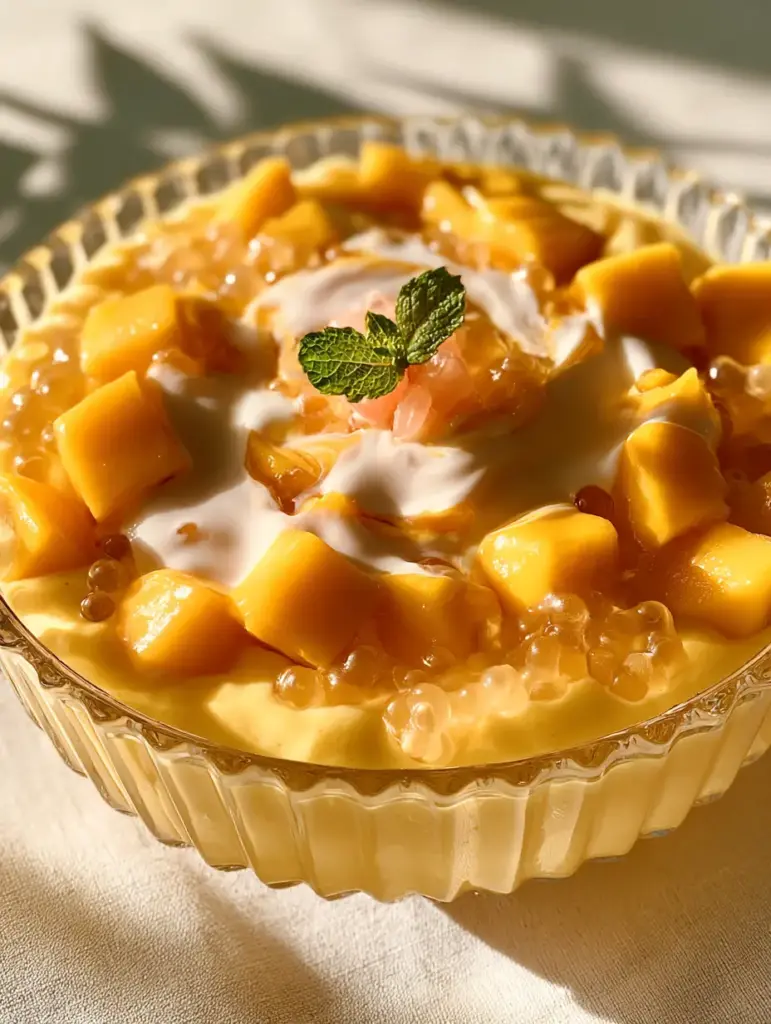
The beauty of this mango bango lies in its contrasting textures. You get the soft, pudding-like consistency of the mango cream paired with the delightful pop of translucent sago pearls. It is visually stunning, making it a viral favorite on Pinterest, especially when topped with a marbleized drizzle of chilled evaporated milk and bright pink pomelo segments.
Whether you are serving this at a summer backyard party or enjoying a quiet bowl at home, this mango bango recipe is designed to impress. Much like a classic creamy mango pudding, it hits all the right notes of sweetness and creaminess without being overly heavy.
Why You Will Crave This Creamy Mango Bango
- Ultra-Silky Texture: The combination of blended Manila mangoes and thick coconut cream creates a base that is velvety and rich.
- Chewy Sago Pearls: Perfectly boiled, translucent sago adds a playful, chewy element that makes every bite interesting.
- Tropical Citrus Burst: The addition of pink pomelo pulp provides a sophisticated acidity that balances the sweet mango perfectly.
- Visual Masterpiece: With its vibrant golden hue, white milk swirls, and fresh mint garnish, it looks like it belongs in a professional food magazine.
Essential Ingredients for Authentic Mango Bango
To achieve that signature professional look and taste, quality ingredients are non-negotiable. Here is what you will need for your mango bango journey:
Fresh Manila Mangoes: Known for their buttery texture and lack of fibers, Manila mangoes are the gold standard here. You will use some for the cream base and some for the fresh cubes.
Small Sago Pearls: These are the “bango” in the mango bango. Once cooked, they become translucent and glossy, absorbing the flavor of the cream.
Thick Coconut Cream: Use full-fat coconut cream (not coconut milk) for that ultra-thick, pudding-like consistency that clings to the spoon.
Sweetened Condensed Milk: This provides the sweetness and contributes to the silky mouthfeel of the mango bango base.
Evaporated Milk: A chilled drizzle of evaporated milk on top creates that beautiful marbleized effect and adds a hit of dairy richness.
Pink Pomelo: These tiny segments add a pop of color and a citrusy “snap” that cuts through the creaminess. If you love fruit-forward desserts, you might also enjoy a fresh mango tart.
Fresh Mint: A single sprig adds a cooling aroma and a necessary pop of green to the golden bowl.
Step-by-Step Instructions for the Perfect Mango Bango
1. Prepare the Sago Pearls
Bring 6 cups (1.4 liters) of water to a rolling boil in a large pot. Carefully pour in 1/2 cup (100g) of small sago pearls. Do not rinse them before boiling or they will dissolve.
Boil for 10 minutes, stirring occasionally to prevent sticking. Turn off the heat, cover the pot, and let them sit for 15 minutes until they are completely translucent and glossy.
Drain the sago and immediately plunge them into a bowl of ice water. This stops the cooking and keeps them perfectly chewy for your mango bango.
2. Create the Silky Mango Cream Base
Peel and pit 2 large Manila mangoes. Place the flesh into a high-speed blender. Add 1 cup (240ml) of thick coconut cream and 1/2 cup (120ml) of sweetened condensed milk.
Blend on high until the mixture is ultra-silky and a pale yellow color. It should be thick enough to coat the back of a spoon, similar to a mango mousse.
3. Fold and Chill
In a large mixing bowl, combine the mango cream base with the drained sago pearls. Fold gently so you don’t break the pearls.
Cover and refrigerate for at least 2 hours. The mango bango will thicken significantly as it chills, reaching that desired pudding-like state.
4. Assembly and Garnishing
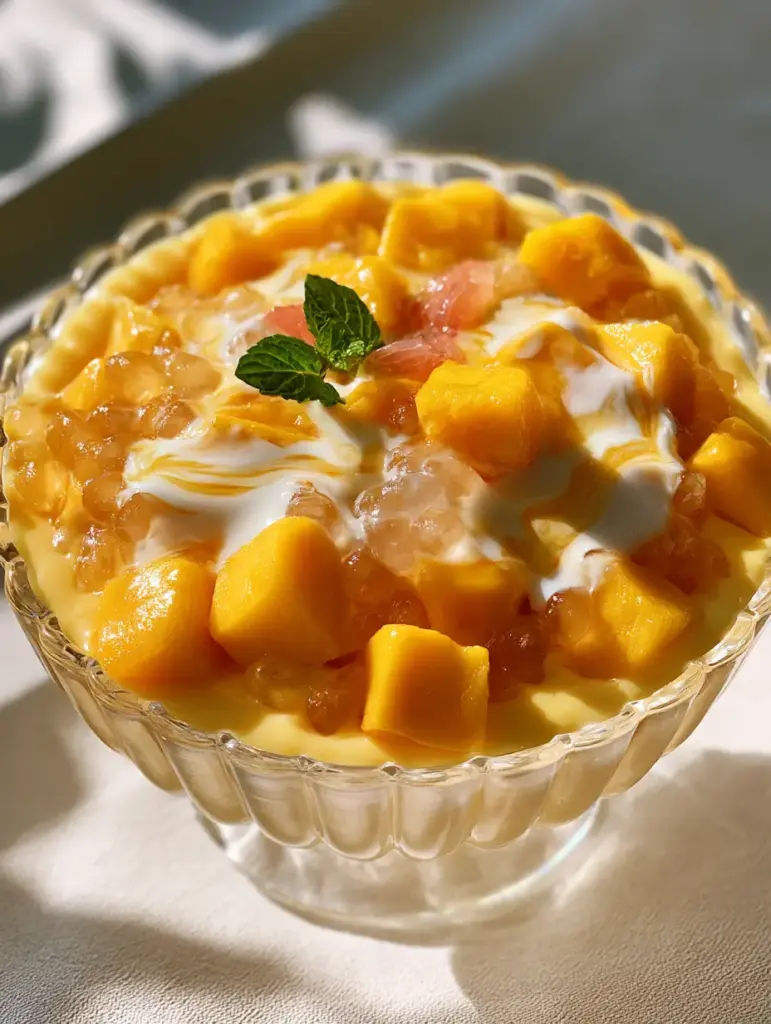
Scoop the chilled mango bango into fluted glass bowls. Top with a generous amount of freshly cubed Manila mangoes.
Slowly pour 2 tablespoons (30ml) of chilled evaporated milk over the top, letting it marbleize and swirl into the mango cream.
Finish with a few segments of pink pomelo pulp and a single sprig of fresh mint. The contrast between the yellow, white, pink, and green is stunning.
Expert Tips for Mango Bango Success
- Wait for Transparency: Never undercook your sago. If you see a white dot in the center, they are still raw and will be crunchy.
- Chill Your Dairy: Make sure the evaporated milk is ice-cold before drizzling. This helps it sit on top of the mango cream rather than immediately sinking.
- Mango Quality: If your mangoes aren’t sweet enough, add an extra tablespoon of condensed milk. For a different vibe, try this technique with a banana peach smoothie base.
- Prevent Sticking: Stir the sago constantly during the first 3 minutes of boiling to ensure they remain individual pearls.
Storage and Serving Suggestions
Mango bango is best served within 24 hours. The sago pearls tend to absorb liquid over time, which can make the dessert too thick if left for days.
If it becomes too thick, simply stir in a splash of whole milk or extra coconut cream to loosen it up. We do not recommend freezing this dish, as the texture of the sago pearls will become grainy and unappetizing.
What to Serve With Mango Bango
Since this is a rich and sweet dessert, it pairs beautifully with light, savory dishes. It is the perfect palate cleanser after a meal of garlic shrimp scampi or a fresh Mediterranean shrimp bowl.
If you are hosting a tropical-themed dinner, serve this alongside mango sticky rice for a full mango extravaganza!
Frequently Asked Questions
You can use thawed frozen mango for the blended cream base, but we highly recommend fresh Manila mangoes for the cubed topping for the best flavor and visual appeal.
Small sago pearls are traditional because they blend better with the cream, but you can use small tapioca pearls. Large pearls are not recommended as they overwhelm the delicate mango base.
Mango bango is best enjoyed within 24 hours. After that, the sago pearls will continue to absorb moisture and may lose their pleasant chewy texture.
While similar, mango bango typically refers to a thicker, more pudding-like version of the traditional mango sago, often enriched with extra coconut cream and distinctive toppings like pomelo.
If sago pearls have a white center, they are undercooked. Ensure you let them soak in the hot water after boiling until they are completely translucent.
The Ultimate Mango Bango Recipe Card
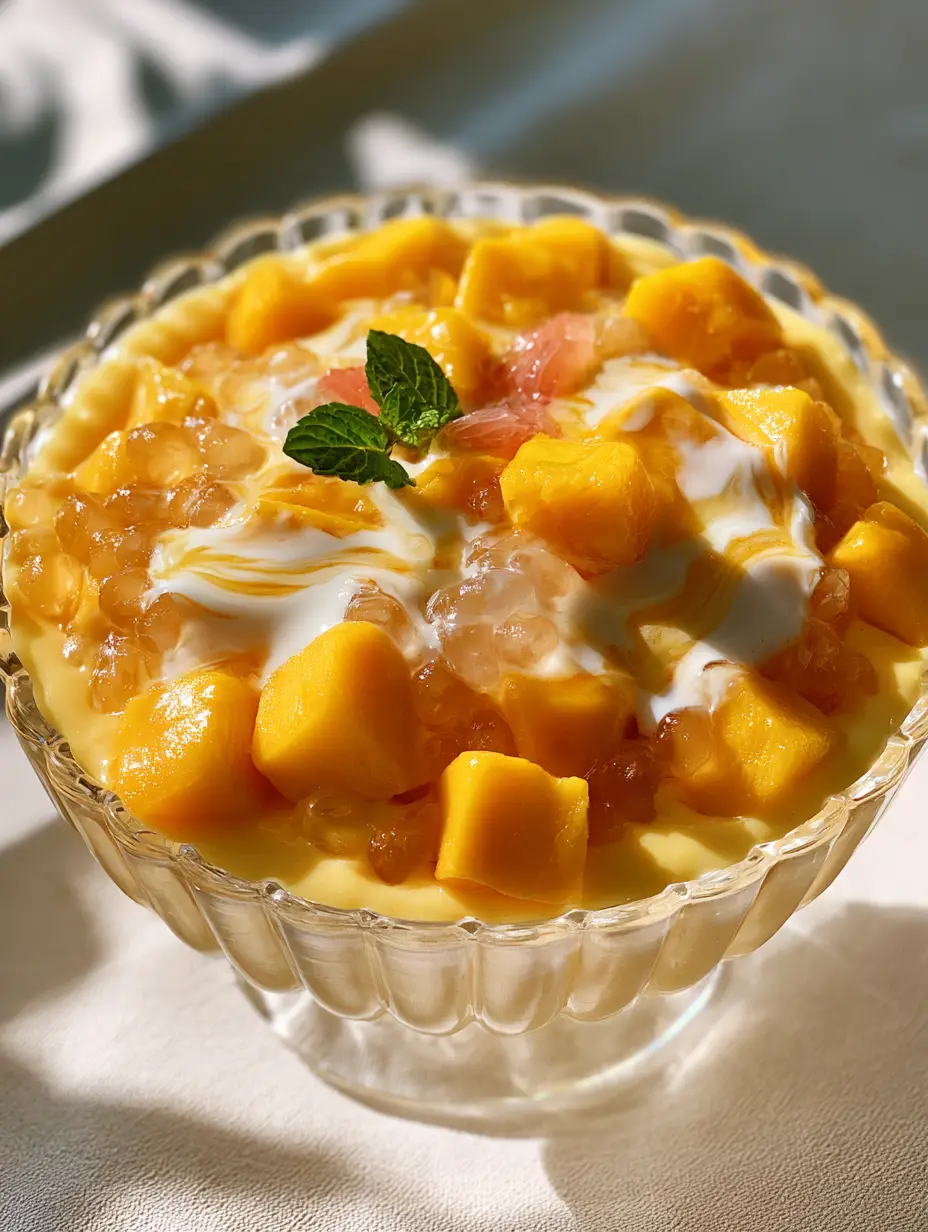
Mango Bango Recipe: The Ultimate Creamy Filipino Mango Sago Dessert
Ingredients
Equipment
Method
- Bring 6 cups (1.4L) of water to a boil. Add sago pearls and cook for 10 minutes, stirring constantly at the start.
- Remove from heat, cover, and let sit for 15 minutes until translucent. Rinse under cold water and drain well.
- In a blender, combine 2 mangoes, coconut cream, condensed milk, and salt. Blend until ultra-smooth and thick.
- Fold the cooked sago pearls into the mango cream. Chill in the refrigerator for at least 2 hours.
- Portion into bowls. Top with mango cubes, a drizzle of evaporated milk, pomelo segments, and a mint sprig.
Notes
Ensure sago is completely translucent before rinsing or they will be hard in the center.
Join the CrispChop Community!
Did you make this mango bango? We want to see your beautiful creations! Save this recipe to your Pinterest Dessert Board so you never lose it.
Follow @crispchop on Pinterest for more tropical dessert inspiration and viral recipes. Don’t forget to leave a 5-star rating in the recipe card above and upload a photo of your dish in the comments below!