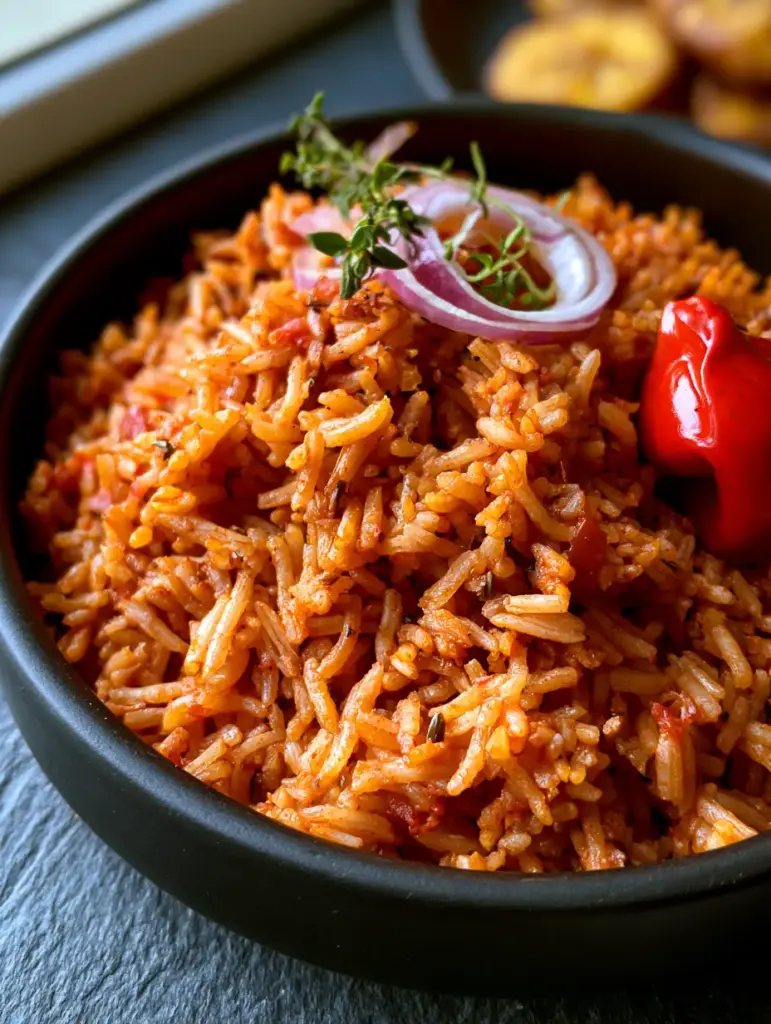
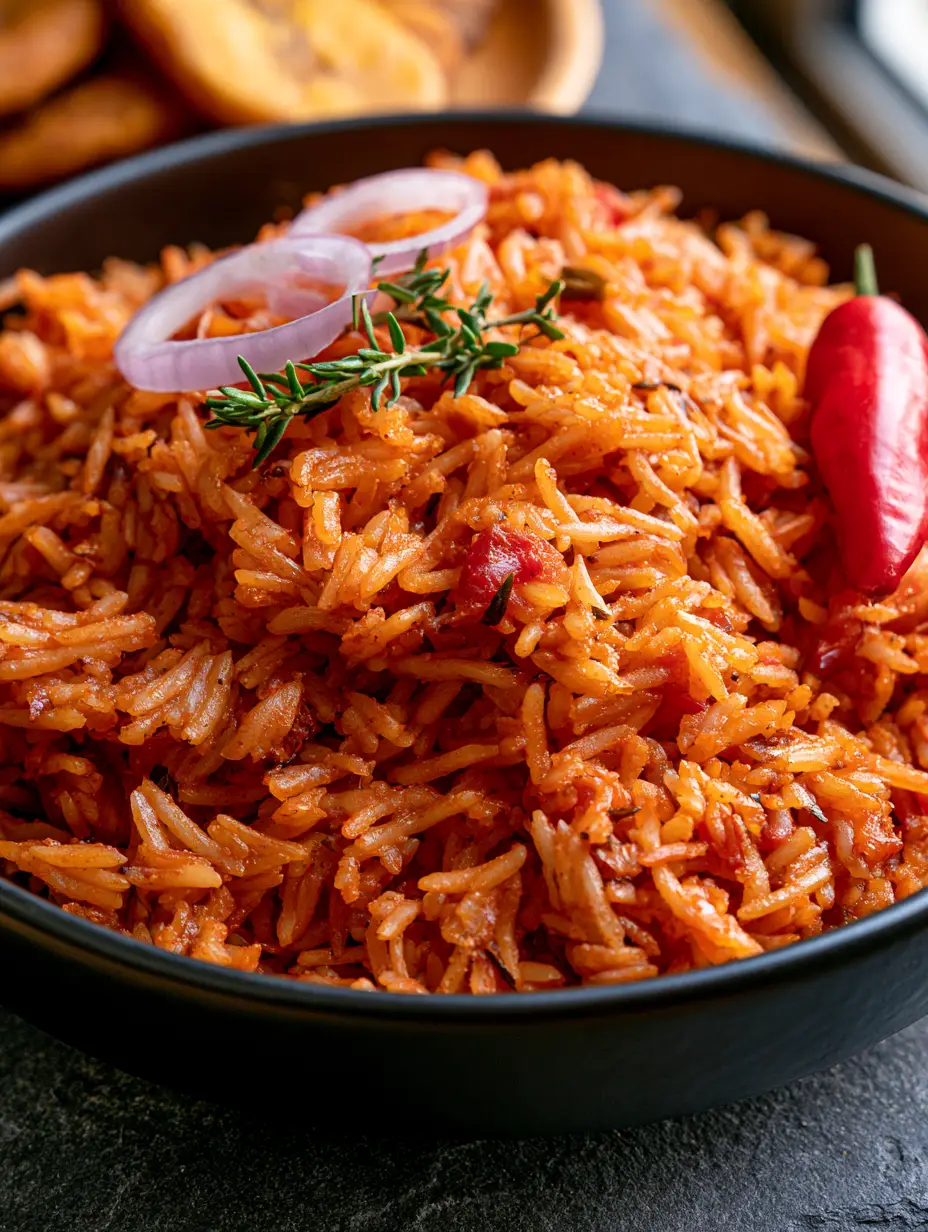
There is nothing quite like a steaming heap of authentic Ghana Jollof Rice served in a shallow matte black clay bowl, its vibrant reddish-orange grains glistening under soft natural daylight. When prepared correctly, each individual grain of long-grain basmati stands proud, perfectly separated and infused with a concentrated tomato and red pepper stew base that carries a gentle heat. The visual appeal is undeniable: translucent thin rings of raw red onion scattered across the top, a vibrant green sprig of fresh thyme, and a single bright red scotch bonnet pepper nestled on the side, promising a culinary experience that is as beautiful as it is delicious.
This recipe isn’t just about cooking rice; it is about mastering the delicate balance of aromatics and steam. As the steam vapors rise from the bowl, they carry the scent of caramelized onions, blooming thyme, and the fruity essence of habanero peppers. Whether you are a seasoned pro or a curious newcomer, achieving that signature “party style” texture—where every grain is coated in a light sheen of aromatic oil—is the ultimate goal for any enthusiast of West African cuisine.
Why This Fluffy Ghana Jollof Rice Stands Above the Rest
- Individual Grain Definition: By using long-grain basmati rice, we achieve a level of fluffiness and separation that is the hallmark of the Ghanaian style, avoiding the clumping often found in lesser versions.
- Deep Umami Base: Our concentrated stew base is fried until the water evaporates, leaving behind a rich, oil-infused tomato essence that clings to every grain.
- Visually Stunning Garnish: The contrast of golden-brown fried plantain slices (known as kelewele) against the deep orange rice creates a plate that is restaurant-quality and Pinterest-ready.
- Aromatic Depth: The inclusion of fresh thyme specks and a whole steamed scotch bonnet provides layers of flavor without overwhelming the palate with raw heat.
The Anatomy of Flavor: Essential Ingredients for Success
To achieve the specific visual and textural results seen in professional photography, you must start with the right building blocks. Every ingredient serves a structural and flavor-driven purpose in this Ghana Jollof Rice.
Long-Grain Basmati Rice: 3 cups (600g). Unlike parboiled rice, basmati offers an elongated shape and a delicate floral aroma that defines the elite Ghanaian version of this dish.
Vegetable Oil: 1/2 cup (120ml). This provides the “glistening sheen” described in our visual blueprint and ensures the grains don’t stick together during the long steaming process.
Tomato Paste: 6 oz (170g). Concentrated paste is the secret to that vibrant reddish-orange color; it must be fried until it turns a deep maroon to remove acidity.
Fresh Tomatoes and Red Bell Peppers: 3 medium tomatoes and 2 large peppers. These are blended into a smooth purée to form the bulk of the cooking liquid, providing natural sweetness and body.
Red Onions: 2 large onions. Half are blended into the base, while the other half are sliced into thin raw rings for that sharp, crunchy finish that cuts through the rich rice.
Scotch Bonnet Pepper: 1-2 peppers. One is blended for heat, while a whole red pepper is steamed atop the rice to provide a fruity aroma and a stunning visual centerpiece.
Chicken or Vegetable Stock: 2 cups (480ml). This adds foundational savory notes that water simply cannot provide, ensuring the rice is seasoned from the inside out.
Fresh Thyme: 4-5 sprigs. The leaves provide visible green specks against the orange rice, offering an earthy counterpoint to the spicy tomato base.
Professional Tools for the Perfect Steam
Achieving the perfect Ghana Jollof Rice requires more than just a pot; it requires heat management tools. You will need a heavy-bottomed pot (like a Dutch oven) to distribute heat evenly and prevent the bottom from burning before the top is cooked.
Equally important is aluminum foil or parchment paper. Because basmati rice is delicate, we use the “foil-seal method” to trap steam vapors, allowing the rice to cook in the residual moisture of the stew rather than boiling in excess liquid, which leads to mushiness.

Mastering the Craft: Step-by-Step Instructions
Phase 1: Blending the Aromatic Base
Start by blending your fresh tomatoes, red bell peppers, half of your red onions, and one scotch bonnet pepper until completely smooth. You want a liquid that is vibrant and uniform, as this will coat each grain of rice. Set this mixture aside while you prepare the pot.
Phase 2: Frying the Tomato Stew
Heat the vegetable oil in your heavy-bottomed pot over medium heat. Sauté finely diced onions until translucent, then add the tomato paste. Fry the paste for 5-8 minutes, stirring constantly, until it darkens in color and the oil begins to separate; this is the secret to a rich Ghanaian Jollof Rice. Pour in the blended pepper mix and let it simmer for 15-20 minutes until the volume reduces by half and it becomes a thick, concentrated sauce.
Phase 3: Preparing the Basmati Rice
While the sauce simmers, wash your long-grain basmati rice in cold water at least 3-4 times. You must rinse until the water runs clear to remove excess starch, which is the primary cause of sticky or clumpy rice. Drain the rice thoroughly in a fine-mesh sieve.
Phase 4: The Marriage of Rice and Sauce
Add the washed rice to the concentrated stew base, stirring gently to ensure every grain is coated in the aromatic oil and tomato mixture. Pour in your stock—just enough to barely cover the rice. Season with salt, bouillon, and fresh thyme leaves. The liquid should look like a thick, orange slurry.
Phase 5: The Low and Slow Steam
Cover the pot tightly with a layer of aluminum foil, then place the lid on top. Turn the heat down to the lowest possible setting. The Ghana Jollof Rice needs to steam, not boil. After 20 minutes, gently fluff the rice with a fork, add the whole scotch bonnet on top, and reseal for another 10-15 minutes until the grains are tender and elongated.
Expert Tips for Culinary Success
- The “Less is More” Liquid Rule: It is always better to start with less stock and add a splash more later. Basmati absorbs steam efficiently; too much liquid will ruin the individual grain definition.
- Don’t Skip the Foil: The foil creates a pressurized environment that forces the flavors of the thyme and peppers deep into the rice grains.
- The Bottom Crust: In Ghana, the slightly burnt rice at the bottom (called “kanzo”) is a delicacy. If you smell a slight toastiness, don’t panic—it adds a smoky depth to the entire pot.
- Rest Before Serving: Let the rice sit, covered and off the heat, for 10 minutes before serving. This allows the moisture to redistribute, resulting in a fluffier texture.
Serving Suggestions and Perfect Pairings
For a truly authentic presentation, serve your Ghana Jollof Rice in a wide bowl to showcase the steam and vibrant colors. No Ghanaian feast is complete without a side of golden-brown fried plantains, specifically spicy fried plantains, which offer a sweet and ginger-infused contrast to the savory rice.
If you are looking to expand your Jollof horizons, you might also enjoy comparing this version to a Nigerian Jollof Rice or even a smoky Classic Jollof Rice to see which style suits your palate best. For protein, grilled chicken, shito (black pepper sauce), and a simple salad are the traditional accompaniments.
Frequently Asked Questions
Yes! Simply use a high-quality vegetable stock instead of chicken stock; the deep flavor comes primarily from the fried tomato and pepper base.
The color comes from frying the tomato paste and red bell pepper purée until the water evaporates and the oil turns red.
Ghana Jollof typically uses Basmati or Jasmine rice and focuses on a highly aromatic, spiced stew base, while Nigerian Jollof traditionally uses parboiled long-grain rice and a smoky ‘party’ flavor from cast iron cooking.
Long-grain Basmati or Jasmine rice is preferred in Ghana for its fragrance and ability to remain fluffy and separated after steaming.
Mushiness usually comes from adding too much water or not washing the starch off the rice. Use the foil-steam method to cook the rice in vapor rather than liquid.
The Authentic Ghana Jollof Rice Recipe
Ghana Jollof Rice: The Ultimate Guide to Perfectly Fluffy Basmati Jollof
Ingredients
Equipment
Method
- Blend tomatoes, red bell peppers, half of the red onion, and one optional scotch bonnet until smooth.
- Heat oil in a pot. Sauté diced onions, then add tomato paste and fry for 8 minutes until deep maroon.
- Stir the washed basmati rice into the fried stew until every grain is coated in oil and red sauce.
- Add stock and thyme. Cover with foil and a lid. Simmer on low heat for 30-35 minutes until tender.
- Top with raw red onion rings and the whole scotch bonnet pepper before serving hot with plantains.
Notes
Use a tight foil seal to trap steam; this is more important than the amount of water used.

Closing & Call to Action
Mastering the Ghana Jollof Rice is a rite of passage for any home cook looking to explore the rich flavors of West Africa. With its glistening oil sheen, perfectly separated grains, and aromatic heat, it is a dish that commands attention at any dinner table. We would love to hear how your version turned out! Did you achieve the perfect kanzo? Leave a comment below and share your photos with us. Don’t forget to save this recipe to your favorite boards on Pinterest so you can return to it every time you crave that authentic smoky flavor.