Mastering the Greek moussaka recipe is often considered a rite of passage for any serious home cook. It is a dish of architectural beauty, combining earthy vegetables, a robust tomato-herb center, and a cloud-like topping of bechamel.
If you have ever been disappointed by a soggy, oily moussaka, this recipe is your solution. We focus on culinary forensics to ensure every slice is a clean cross-section of perfection.
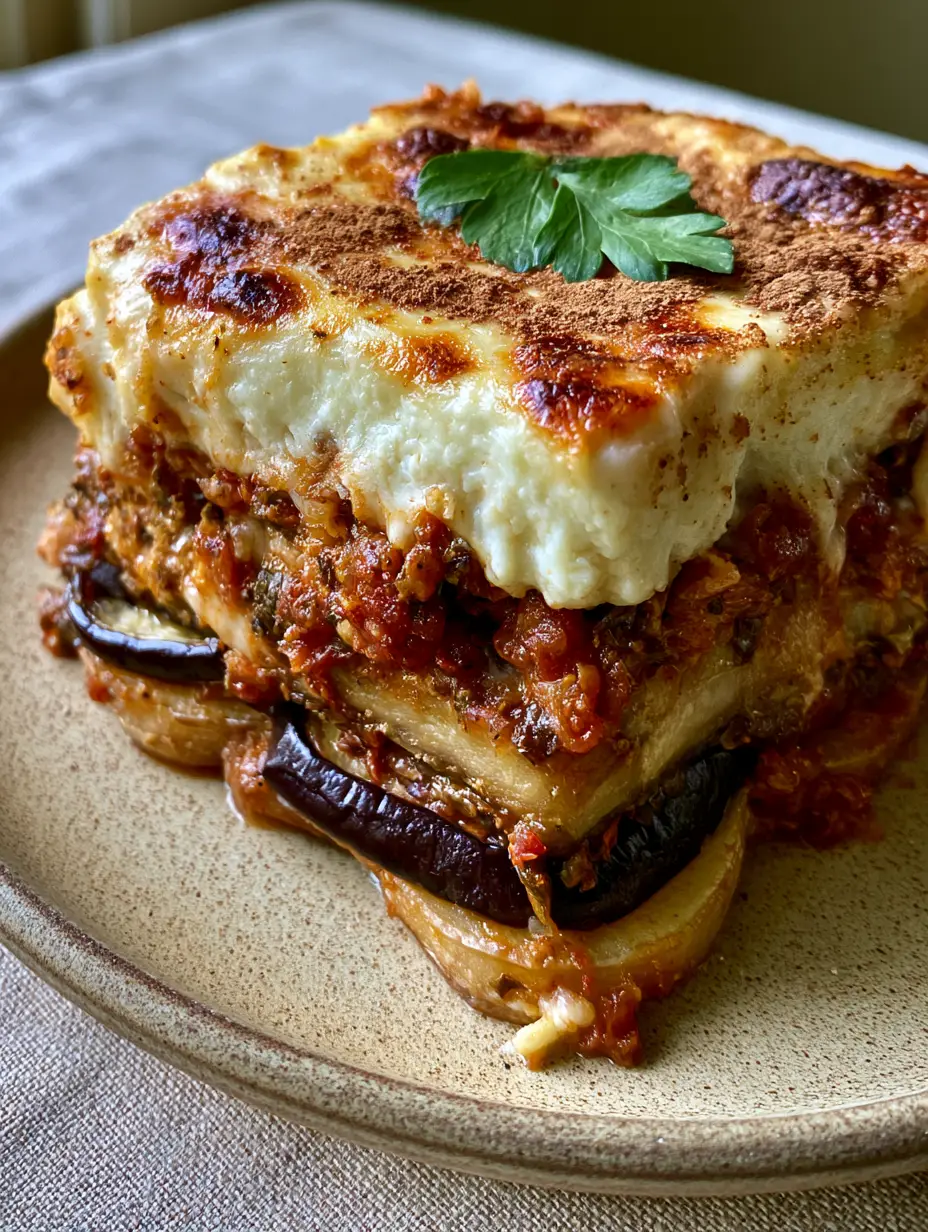
Our method swaps traditional frying for precision roasting. This technique ensures those roasted potato rounds and eggplant slices with purple skins maintain their integrity without a drop of oil pooling on your plate.
Why This Is the Only Greek Moussaka Recipe You Need
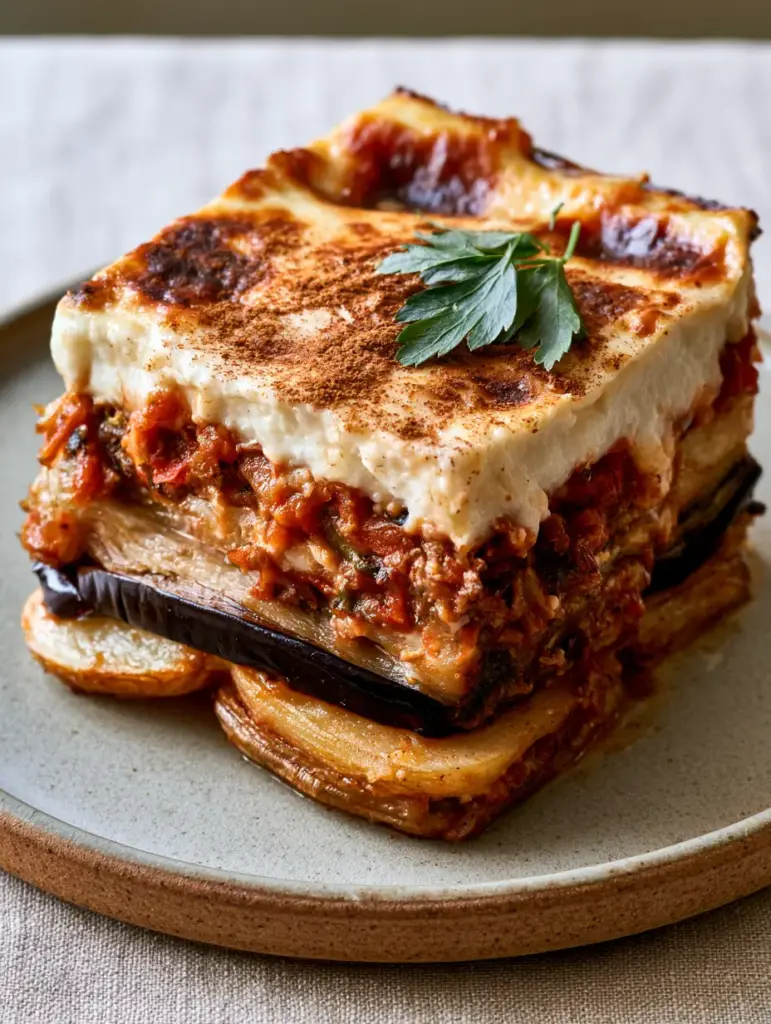
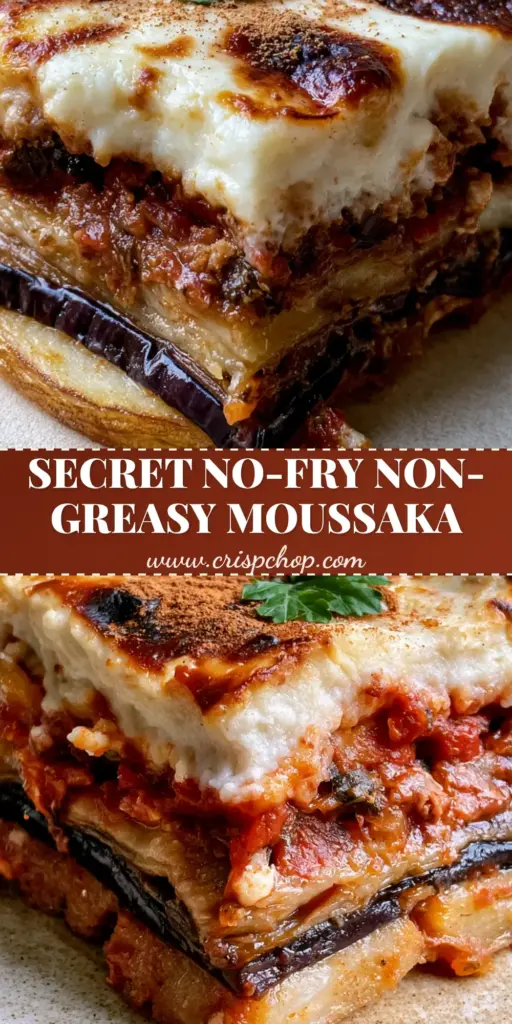
- Structural Integrity: No more “moussaka soup.” This recipe creates a clean, 2-inch thick bechamel layer that stands tall when sliced.
- Visual Contrast: We leave the deep purple skins on the eggplant to provide a stunning visual boundary between the potato and sauce layers.
- Enhanced Aromatics: A specific pinch of ground cinnamon at the end elevates the earthy tones of the roasted vegetables.
- Oil-Free Foundation: By roasting the vegetables instead of frying them, we achieve a light, non-greasy finish that highlights the natural flavors.
This dish is the crown jewel of authentic Greek recipes, offering a complexity of flavor that rivals a slow-cooked ragu or a classic lasagna.
Essential Ingredients for a High-End Moussaka
Large Eggplants (approx. 2 lbs / 900g): Choose firm eggplants with glossy skins. We keep the purple skins on for that iconic visual cross-section and added fiber.
Russet Potatoes (1.5 lbs / 680g): These starchy potatoes provide a sturdy foundation. When sliced into rounds and roasted, they act as the “crust” of the dish.
Extra Virgin Olive Oil (4 tbsp / 60ml): Used sparingly for brushing the vegetables. This provides the necessary conductivity for browning without the heaviness of deep-frying.
Crushed Tomatoes (28 oz / 800g): This forms the base of our chunky tomato herb sauce. Use high-quality San Marzano or Greek tomatoes for the best acidity balance.
Ground Cinnamon (1/2 tsp / 1.5g): A hallmark of the Greek moussaka recipe. It adds a warm, mysterious depth that distinguishes it from Italian pasta sauces.
Whole Milk (4 cups / 960ml): The liquid gold for our velvety bechamel. Ensure it is full-fat for the thickest, most luxurious results.
Unsalted Butter (1/2 cup / 115g): The base of our roux. It provides the fat needed to suspend the flour for a 2-inch thick sauce layer.
All-Purpose Flour (1 cup / 125g): We use a higher flour-to-milk ratio here than in a standard sauce. This ensures the bechamel is “velvety” yet structurally sound.
Kefalotyri or Parmesan Cheese (1 cup / 100g): This salty, hard cheese creates those beautiful toasted golden-brown scorched spots on the crust.
Fresh Flat-Leaf Parsley (1/4 cup / 10g): Finely chopped for a burst of green color and a fresh, herbaceous finish to cut through the richness.
Must-Have Equipment for Culinary Success
To achieve the “extreme macro” look of a professional kitchen, you need the right tools. A sharp mandoline is essential for getting perfectly even potato and eggplant rounds.
You will also need two large rimmed baking sheets for roasting the vegetables simultaneously. For the final assembly, a deep 9×13 inch (23×33 cm) ceramic baking dish is required to accommodate that 2-inch thick bechamel top.
Finally, a heavy-bottomed saucepan and a sturdy balloon whisk are non-negotiable for crafting a lump-free, velvety white sauce.
Constructing the Perfect Layers: Step-by-Step Instructions
Phase 1: Roasting the Vegetable Foundation
Preheat your oven to 400°F (200°C). Slice your potatoes into 1/4 inch (6mm) rounds and your eggplants into 1/2 inch (12mm) rounds, keeping the purple skins intact.
Arrange them on baking sheets lined with parchment paper. Lightly brush with olive oil and season with salt. Roast the potatoes for 20-25 minutes until golden-brown and the eggplants for 15-20 minutes until tender.
Visual Cue: Look for the eggplant skins to shrivel slightly while the flesh turns a translucent, creamy color. The potatoes should be slightly crisp on the edges.
Phase 2: The Chunky Tomato Herb Sauce
In a large skillet, sauté finely diced onions and garlic until translucent. If you are making a traditional meat version, add your ground lamb or beef now, or keep it strictly vegetarian with extra mushrooms.
Stir in the crushed tomatoes, dried oregano, and half of the cinnamon. Simmer on low heat for 30 minutes until the liquid has reduced by a third. You want a “chunky” consistency that doesn’t run.
Stir in half of your fresh chopped parsley right before removing from heat. This preserves the bright green color and fresh aroma.
Phase 3: The 2-Inch Velvety White Bechamel
In a saucepan, melt the butter over medium heat. Whisk in the flour and cook for 2 minutes to remove the raw flour taste. Slowly pour in the milk, whisking constantly to prevent lumps.
Continue cooking until the sauce is very thick—it should coat the back of a spoon heavily. Remove from heat and whisk in two egg yolks (this is the secret for that 2-inch thick stability) and half of the grated cheese.
Sensory Cue: The sauce should smell buttery and slightly nutty. It should have the consistency of a thick pudding rather than a liquid gravy.
Phase 4: Assembly and The Golden Crust
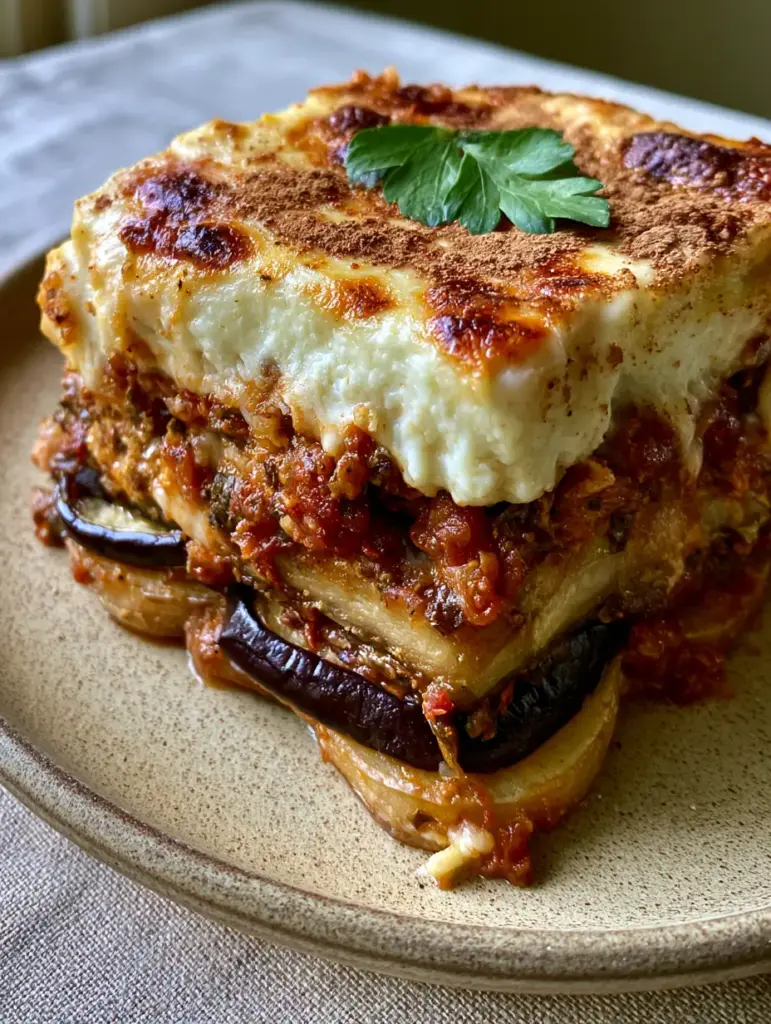
In your baking dish, layer the roasted potato rounds first, overlapping them slightly. Follow with a dense layer of roasted eggplant slices with the purple skins facing the sides of the dish.
Spread the chunky tomato herb sauce evenly over the vegetables. Pour the thick bechamel over the top, smoothing it to the edges. Sprinkle with the remaining cheese and a final pinch of ground cinnamon.
Bake at 375°F (190°C) for 45 minutes. Turn on the broiler for the last 3-5 minutes to achieve those beautiful toasted golden-brown scorched cheese spots.
Expert Tips for a Non-Greasy Moussaka
- The Salting Secret: Salt your eggplant rounds for 30 minutes before roasting to draw out moisture. Pat them dry thoroughly; this prevents “oil pooling” during the bake.
- Cool Before Cutting: This is the most important step for a clean cross-section. Let the moussaka rest for at least 45-60 minutes after baking. The layers need time to set.
- Bechamel Density: Do not be afraid of the thickness of the sauce. A thin bechamel will soak into the vegetables, ruining the distinct layers.
- Potato Selection: Use Russets for their starch content. This starch acts as a natural binder for the bottom layer.
Storage, Reheating, and Freezing Advice
Moussaka is one of those rare dishes that actually tastes better the next day. The flavors of the Greek moussaka recipe have time to meld and the structure becomes even firmer.
Store leftovers in an airtight container in the refrigerator for up to 4 days. To reheat, use the oven at 350°F (175°C) covered with foil to preserve the moisture in the bechamel.
For freezing, cut the moussaka into individual squares and wrap them tightly in plastic wrap and then foil. It will stay fresh for up to 3 months. Thaw in the fridge overnight before reheating.
What to Serve With Authentic Greek Moussaka
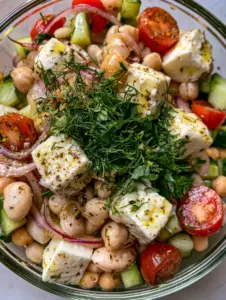
Because moussaka is quite rich and decadent, you want to pair it with something bright and acidic. A refreshing Greek bean salad is an excellent choice to balance the palate.
If you are hosting a larger Mediterranean-themed dinner, consider serving smaller portions alongside a traditional Greek meat pie for a truly festive spread.
For more inspiration, explore our full range of Greek-inspired recipes to complete your menu.
Frequently Asked Questions
Absolutely. It is actually better if made a day ahead, refrigerated, and then reheated. This allows the structural layers to set perfectly for clean slicing.
No! Keeping the purple skins on provides essential structure for the layers and adds a beautiful visual contrast to the white bechamel and red sauce.
The secret is a high flour-to-milk ratio and the addition of egg yolks once the sauce has cooled slightly; this creates a stable, custard-like texture.
Kefalotyri is traditional, but a sharp Parmesan or Pecorino Romano provides the same salty bite and beautiful toasted brown spots.
This usually happens when eggplants are fried or not salted properly. Our recipe roasts the vegetables to remove excess moisture and uses a thick bechamel to lock layers in place.
The Ultimate Greek Moussaka Recipe
Greek Moussaka Recipe: The Ultimate Guide to Perfect Structural Layers
Ingredients
Equipment
Method
- Arrange potato rounds on a baking sheet, brush with oil, and roast at 400°F (200°C) until golden brown (about 25 minutes).
- Roast eggplant slices with skins on for 20 minutes until tender and translucent.
- Combine tomatoes, herbs, and cinnamon in a skillet. Simmer until chunky and reduced.
- Create a roux with butter and flour, whisk in milk until very thick. Finish with egg yolks and cheese.
- Layer potatoes, then eggplant, then tomato sauce. Top with the 2-inch thick bechamel layer.
- Bake at 375°F (190°C) for 45 minutes, broiling at the end for golden-brown scorched spots.
Notes
Wait at least 45 minutes before slicing to ensure the clean structural cross-section.
Closing & Call to Action
Creating this Greek moussaka recipe is an act of culinary love. From the roasted potato rounds to the 2-inch thick bechamel, it is a dish designed to impress both the eyes and the palate.
Did your bechamel reach that perfect velvety thickness? Did those scorched cheese spots make your kitchen smell like a taverna in Athens? We want to hear about it!
Leave a comment below with your results, and don’t forget to save this recipe to your “Mediterranean Favorites” board on Pinterest.