Transport your kitchen to the sun-drenched shores of the Swahili Coast with this East African Coconut Chicken Curry. Known locally as Kuku Paka, this dish is a masterful fusion of African, Indian, and Arabic culinary influences.
The hallmark of a truly elite East African Coconut Chicken Curry lies in the contrast between the smoky, charred exterior of the chicken and the velvet-smooth, golden coconut base. This isn’t just a stew; it is a sensory journey through Mombasa and Zanzibar.
Every bite of this East African Coconut Chicken Curry delivers a complex profile of earthy turmeric, pungent ginger, and the cooling richness of full-fat coconut milk. If you have enjoyed our Brazilian Coconut Chicken, you will find this version offers a deeper, smokier profile thanks to the unique searing technique.
The Sensory Architecture of Authentic Kuku Paka
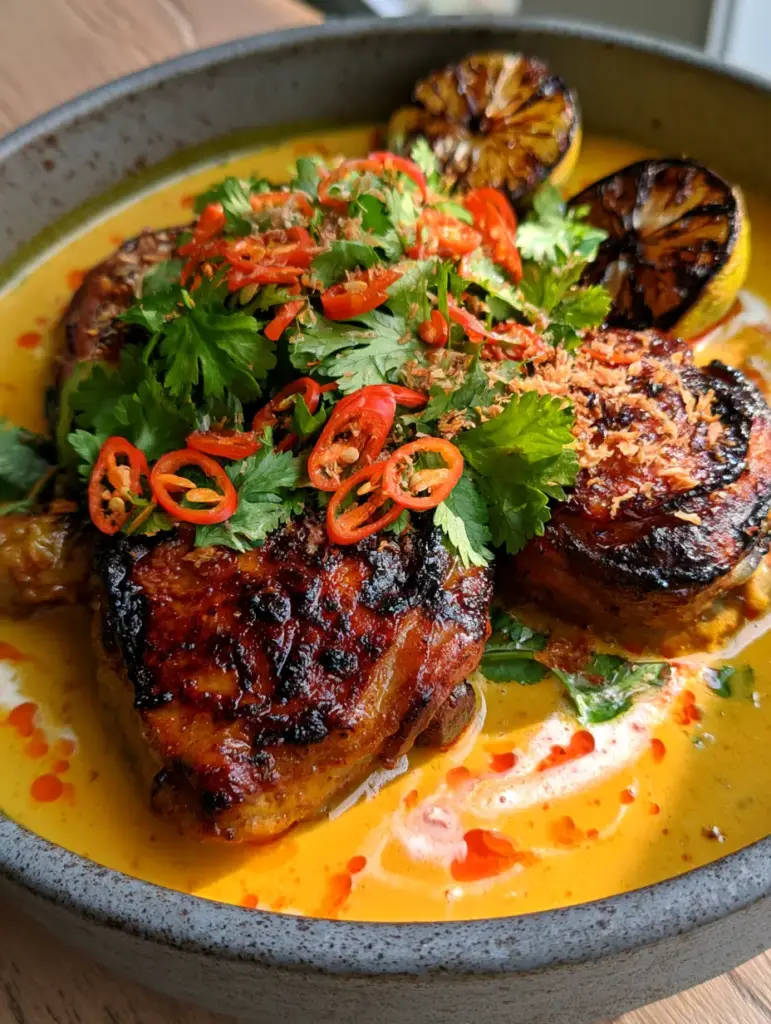
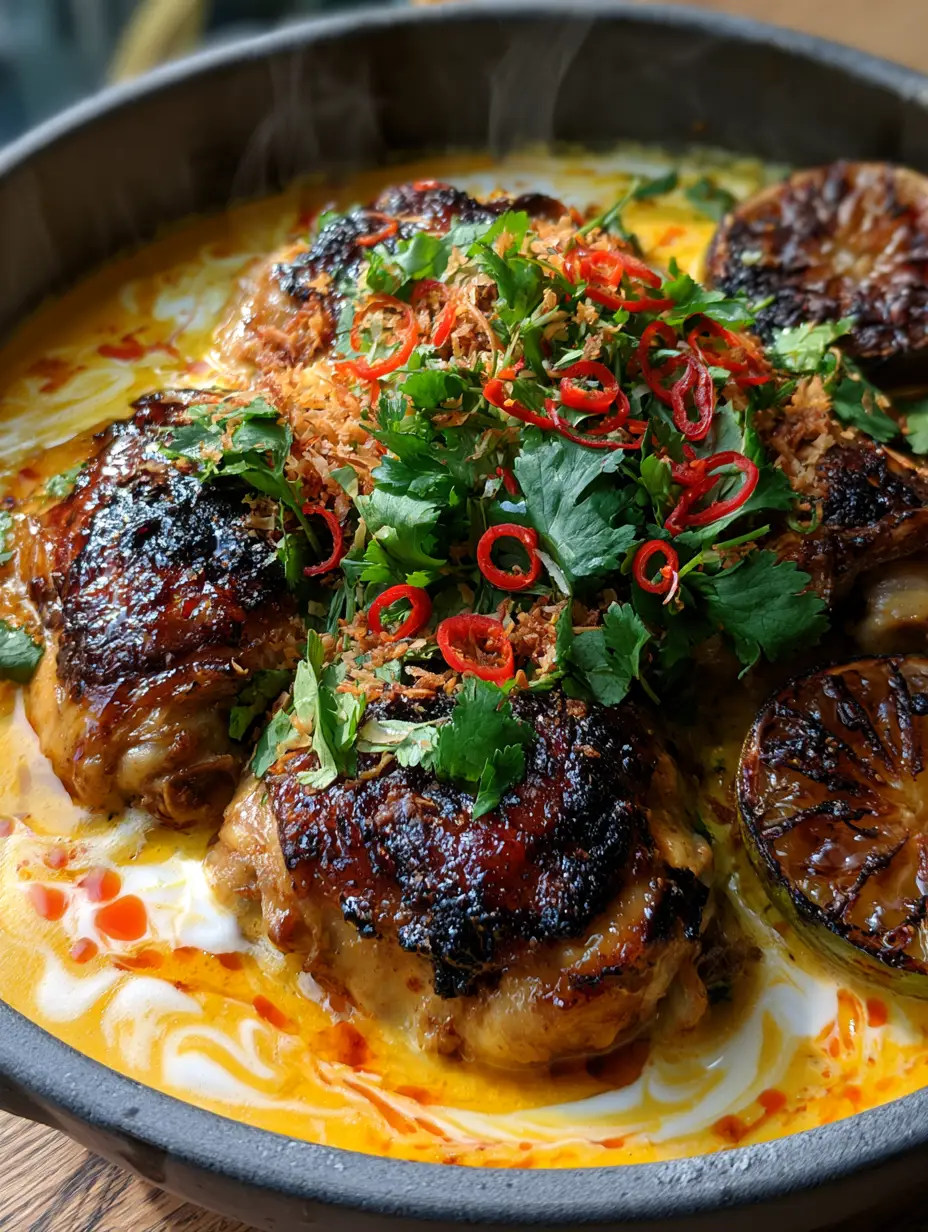
- Deep Mahogany Char: Unlike standard curries where chicken is simply simmered, this recipe requires a high-heat sear to create dark, caramelized marks that provide a structural smoky counterpoint to the sweet coconut.
- Golden Velvet Texture: The sauce is a thick, vibrant golden-yellow, achieved through the precise blooming of high-curcumin turmeric in hot fat.
- Visual Contrast: We finish the dish with swirls of pure white coconut cream and vivid red chili oil droplets for a restaurant-quality presentation that mimics professional handheld photography styles.
- Textural Layers: A light dusting of toasted coconut flakes provides a subtle crunch that elevates the succulent, tender bone-in thighs.
Essential Components for Your East African Coconut Chicken Curry
Bone-in, Skin-on Chicken Thighs: 4 large thighs (approx. 800g) are essential because the bone insulates the meat during the high-heat searing process. This ensures the chicken remains glistening and succulent rather than drying out.
Full-Fat Coconut Milk: 2 cans (800ml) are required, with the thick cream separated from one can to create those iconic white swirls. Low-fat versions will fail to provide the necessary viscosity for the golden curry sauce.
Fresh Aromatics: A heavy hand of grated ginger (2 tbsp / 30g) and minced garlic (1.5 tbsp / 22g) creates the foundational “zing” that cuts through the fat of the coconut. These aromatics are the soul of the East African Coconut Chicken Curry.
The Spice Trinity: Ground turmeric, cumin, and coriander form the spice base. The turmeric is particularly vital, providing that vibrant yellow-gold hue visible in the rustic matte charcoal pot.
Bird’s Eye Chilies: 3-4 small red chilies (10g) are sliced into thin rings. These provide a sharp, clean heat that balances the earthy spices and creamy sauce.
Foundational Invisible Ingredients: Neutral oil with a high smoke point (such as avocado or grapeseed oil) is used for the sear, while fine sea salt is applied liberally to the skin to draw out moisture for better browning.
Professional Tools for the Perfect Sear
To achieve the specific visual results of this East African Coconut Chicken Curry, a rustic black stoneware pot or a heavy-bottomed cast iron skillet is recommended. These materials retain heat efficiently, allowing for those deep mahogany char marks without overcooking the interior of the meat.
A handheld microplane is also essential for processing the ginger and garlic into a fine paste. This ensures they melt into the sauce rather than leaving gritty fragments in your thick golden coconut curry base.
If you love the depth of flavor that comes from high-heat pan work, you might also enjoy our Pan-Seared Rainbow Trout or our signature Peruvian Grilled Chicken.
Step-by-Step Evolution of the Golden Curry
Phase 1: The High-Heat Architectural Sear
Pat the chicken thighs completely dry with paper towels. Season both sides aggressively with sea salt and a touch of cracked black pepper.
Heat 2 tbsp (30ml) of oil in your black stoneware pot over medium-high heat until it begins to shimmer. Place the chicken skin-side down and do not move it for at least 6-8 minutes.
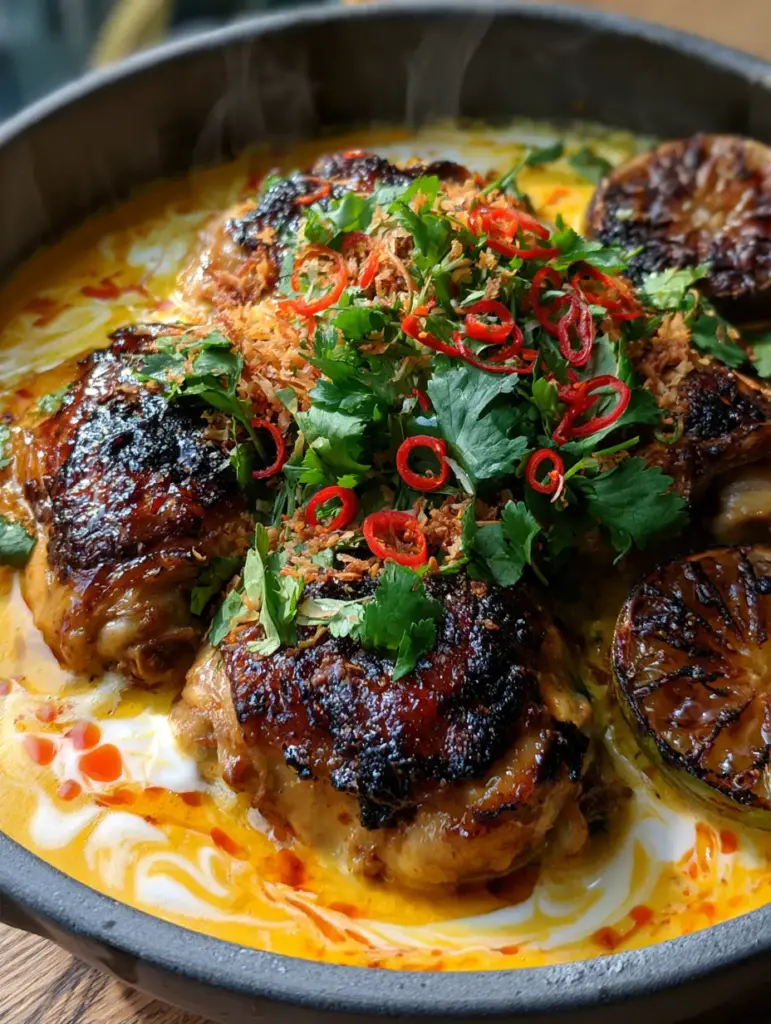
Look for the visual cue: the skin should be a deep mahogany with visible dark char marks. Flip and sear the other side for 3 minutes, then remove the chicken from the pot and set aside.
Phase 2: Blooming the Aromatics and Spices
In the same pot, add your diced onions and cook in the chicken fat until translucent. Stir in the garlic, ginger, and sliced bird’s eye chilies, allowing them to soften for 2 minutes.
Add the turmeric, cumin, and coriander. You will notice the oil turning a bright orange-yellow; this is the spices blooming and releasing their fat-soluble flavor compounds.
Deglaze the pot with a splash of water or chicken stock, scraping up all the brown bits (fond) from the bottom. This is where the deep, smoky flavor of the East African Coconut Chicken Curry originates.
Phase 3: The Slow Coconut Reduction
Pour in 1.5 cans (600ml) of the coconut milk, reserving the thickest cream from the remaining half-can. Bring the mixture to a gentle simmer, never a rolling boil, to prevent the coconut fats from breaking.
Nestle the seared chicken thighs back into the sauce, ensuring the crispy skin remains above the liquid line to maintain its texture. Cover and simmer for 20-25 minutes until the chicken reaches an internal temperature of 165°F (74°C).
At this stage, the sauce should have thickened into a vibrant, opaque golden-yellow glaze that coats the back of a spoon.
Phase 4: Finishing with Forensic Accuracy
While the chicken finishes, place 1/4 cup (20g) of coconut flakes in a small dry pan. Toast over medium heat until they are golden brown and fragrant, which should take about 3 minutes.
Place two lime halves cut-side down in a hot skillet until they are blackened and charred. These charred lime wedges will provide a smoky acidity to the final dish.
Drizzle the reserved white coconut cream in concentric circles over the sauce. Use a spoon to dot the surface with red chili oil, creating those delicate droplets that pop against the yellow base.
Expert Tips for Success
- Don’t Crowd the Pot: If the chicken thighs are too close together, they will steam instead of searing. Work in batches to ensure the dark mahogany char is achieved.
- The “Swirl” Technique: To get the perfect white coconut swirls, ensure the sauce is not boiling when you add the cream; a gentle stir with a toothpick can help create the marbleized effect.
- Control the Heat: If you prefer a milder East African Coconut Chicken Curry, remove the seeds from the bird’s eye chilies before slicing.
- Rest the Meat: Let the dish sit for 5 minutes before serving. This allows the sauce to thicken further and the chicken juices to redistribute.
Preserving Your Kuku Paka
This East African Coconut Chicken Curry actually tastes better the next day as the spices continue to marry. Store in an airtight container in the refrigerator for up to 3 days.
When reheating, do so gently on the stovetop over low heat. Adding a tablespoon of water or a splash of coconut milk will help loosen the sauce back to its original velvety consistency.
Freezing is possible for up to 2 months, though the coconut milk may slightly grain upon thawing. A vigorous whisking during reheating usually restores the texture.
Perfect Pairings for Your Swahili Feast
To soak up every drop of that golden sauce, serve this curry alongside fragrant basmati rice or traditional Kenyan chapati. The smoky notes also pair beautifully with Jerk Chicken Bowls for a multi-cultural fusion dinner party.
For a side dish that matches the sweetness of the coconut, consider trying our Kelewele (Spicy Fried Plantains). The contrast between the soft plantains and the succulent chicken thighs is extraordinary.
If you are looking for a lighter accompaniment, a simple Chicken Salad or a refreshing cucumber-mint slaw can cut through the richness of the coconut milk.
Common Questions About Kuku Paka
You can, but bone-in thighs are highly recommended to prevent the meat from drying out during the high-heat searing required for authentic char marks.
The golden color comes from blooming high-quality ground turmeric in oil at the start of the cooking process, which releases its natural pigments.
It has a warming heat from ginger and bird’s eye chilies, but the coconut milk provides a significant cooling balance. You can adjust the spice by removing chili seeds.
Ensure your chicken skin is bone-dry and your pan is very hot. Use a high-smoke-point oil and leave the chicken undisturbed for several minutes.
While it uses similar spices, Kuku Paka is unique for its East African technique of char-grilling or searing the chicken separately before simmering it in a rich, coconut-heavy sauce.
The Ultimate East African Coconut Chicken Curry Recipe
East African Coconut Chicken Curry: The Authentic Swahili Kuku Paka Experience
Ingredients
Equipment
Method
- Heat oil in a stoneware pot. Place salted chicken skin-side down. Sear for 8 minutes until deep mahogany char marks appear. Flip and sear for 3 minutes. Remove and set aside.
- In the same pot, sauté onions, garlic, ginger, and chilies until fragrant. Add turmeric, cumin, and coriander; bloom for 1 minute.
- Add 600ml of coconut milk. Nestle chicken back into the sauce. Simmer for 20-25 minutes until the sauce is thick and golden and the chicken is tender.
- Drizzle with reserved coconut cream and red chili oil. Top with toasted coconut, cilantro leaves, and bird's eye chilies. Serve with charred lime wedges.
Notes
Use full-fat coconut milk for the necessary thick golden sauce consistency.
Bringing the Coast to Your Table
Mastering the East African Coconut Chicken Curry is a rewarding endeavor for any home cook. The combination of high-heat searing and gentle coconut simmering creates a dish that is as visually stunning as it is delicious.
We invite you to share your results and tag us in your photos. Did you manage to get those perfect mahogany char marks? Let us know in the comments below!
For more global culinary inspiration and professional plating tips, follow us on Pinterest and join our community of enthusiastic home cooks.